From watching a scare to entering one
A theater audience experiences horror from a seat, looking toward a stage where actors and effects create a story. A walkthrough attraction changes the audience’s job: visitors move through the frightening scene themselves. That shift turns theatrical tricks into part of an environment. A concealed performer, a sudden sound, or an illusion in a cramped passage can make the visitor feel that the danger is nearby rather than safely framed by a proscenium—the architectural border around a stage.
Theatrical horror, made physical
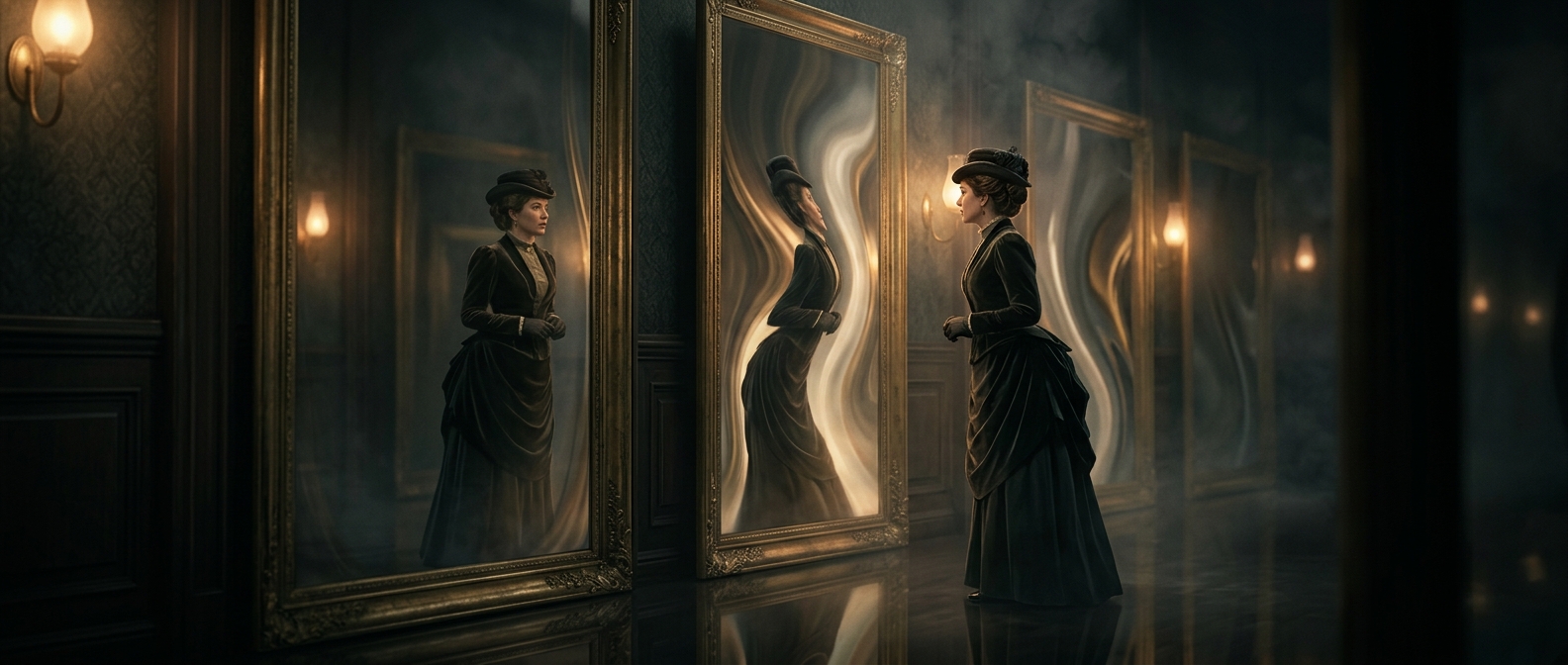
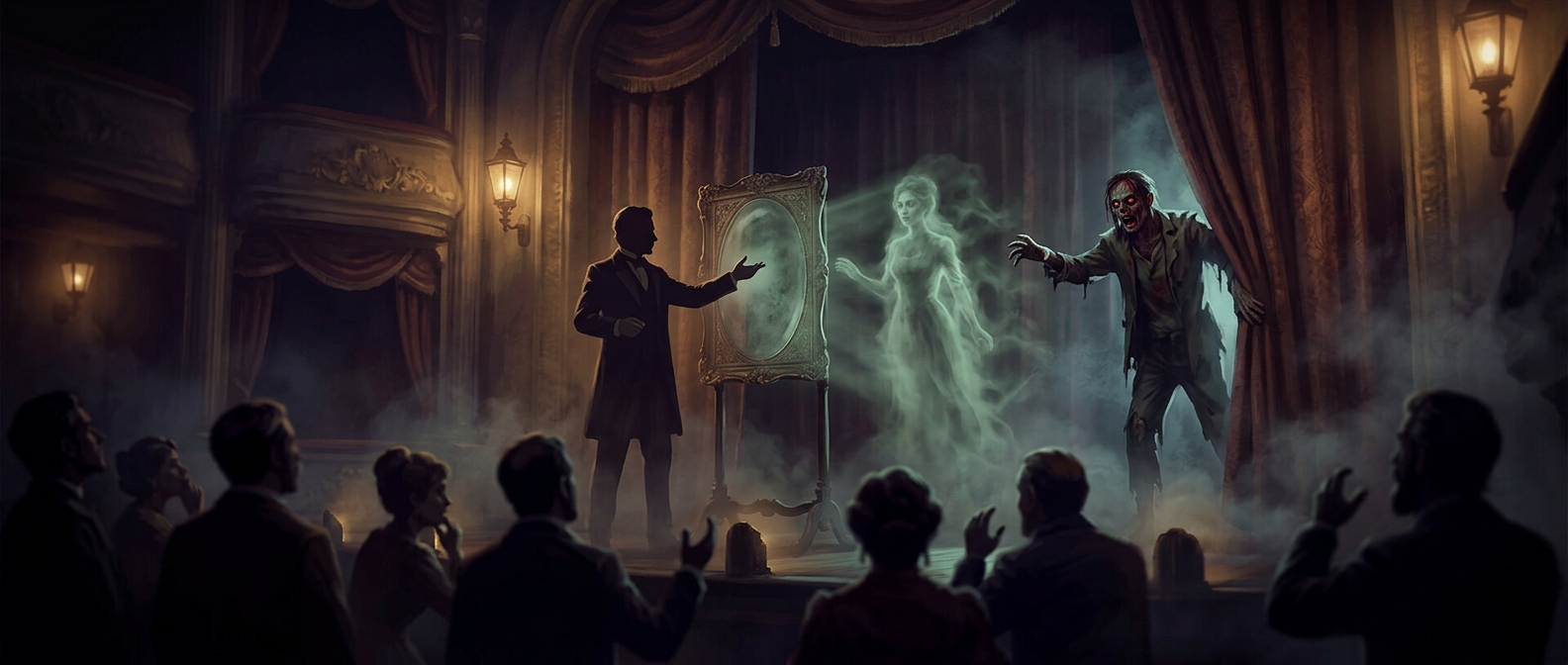
Paris’s Grand Guignol theater made sensational horror a stage spectacle, while Victorian stage magic demonstrated how lighting, concealed mechanisms, and misdirection could make the impossible seem present. Walkthrough attractions could borrow the underlying techniques without carrying over a theater’s full script. Instead of following characters through a plot, visitors encounter a succession of rooms and surprises, with darkness and uncertainty helping link one scare to the next.
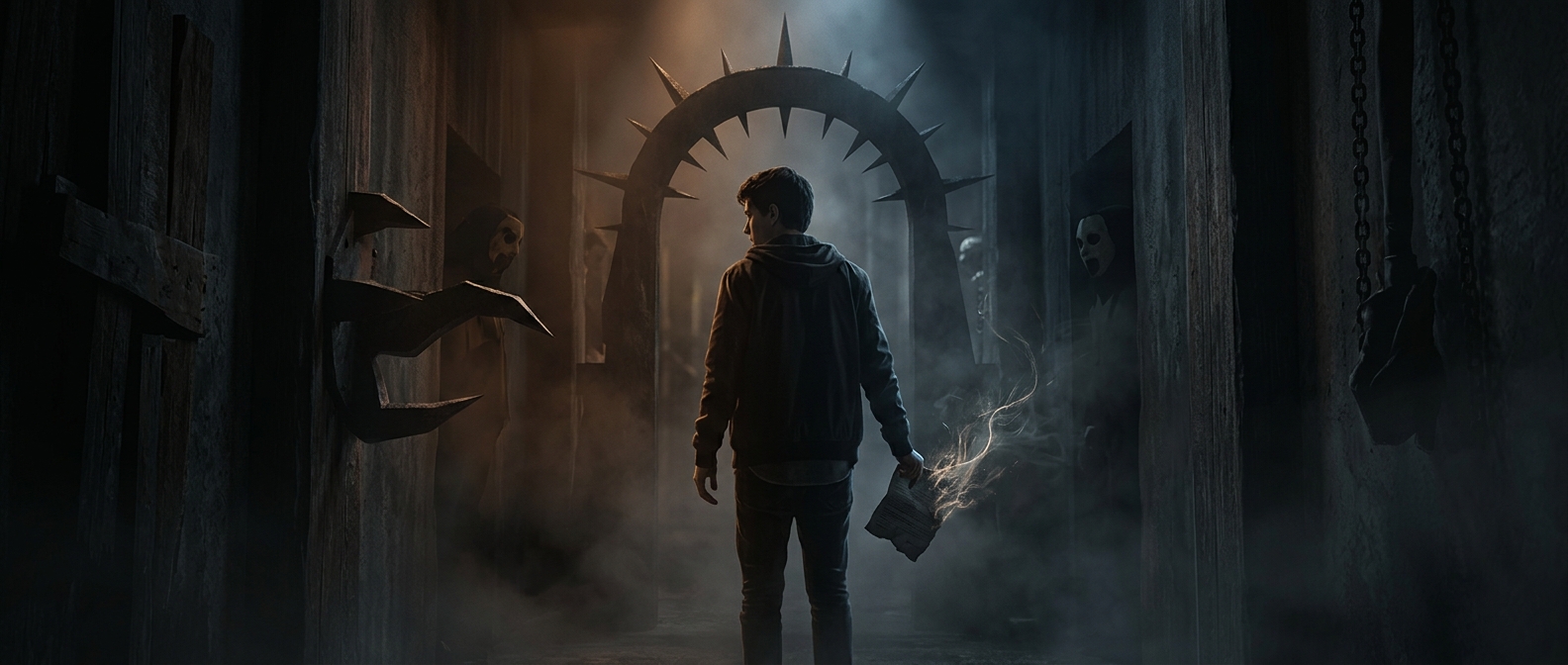
That format also changes how the effects work. In a theater, the audience watches the same moment together. In a maze, each visitor’s pace and position shape what they see: someone may notice a figure before a companion does, or enter a room without knowing what happened to the group ahead. The route itself becomes part of the suspense.
A story replaced by a sequence
Removing a continuous plot makes the experience easier to understand in motion: visitors do not need to remember names or follow complicated motives. The attraction can concentrate on anticipation, surprise, and the brief relief after each encounter. Its basic dramatic unit is not a scene that advances a story, but a space that sets up a reaction.
The result is a form of horror built around the visitor’s body. The old theatrical question—what frightening thing will happen onstage?—becomes more immediate: what might be waiting around the next turn?