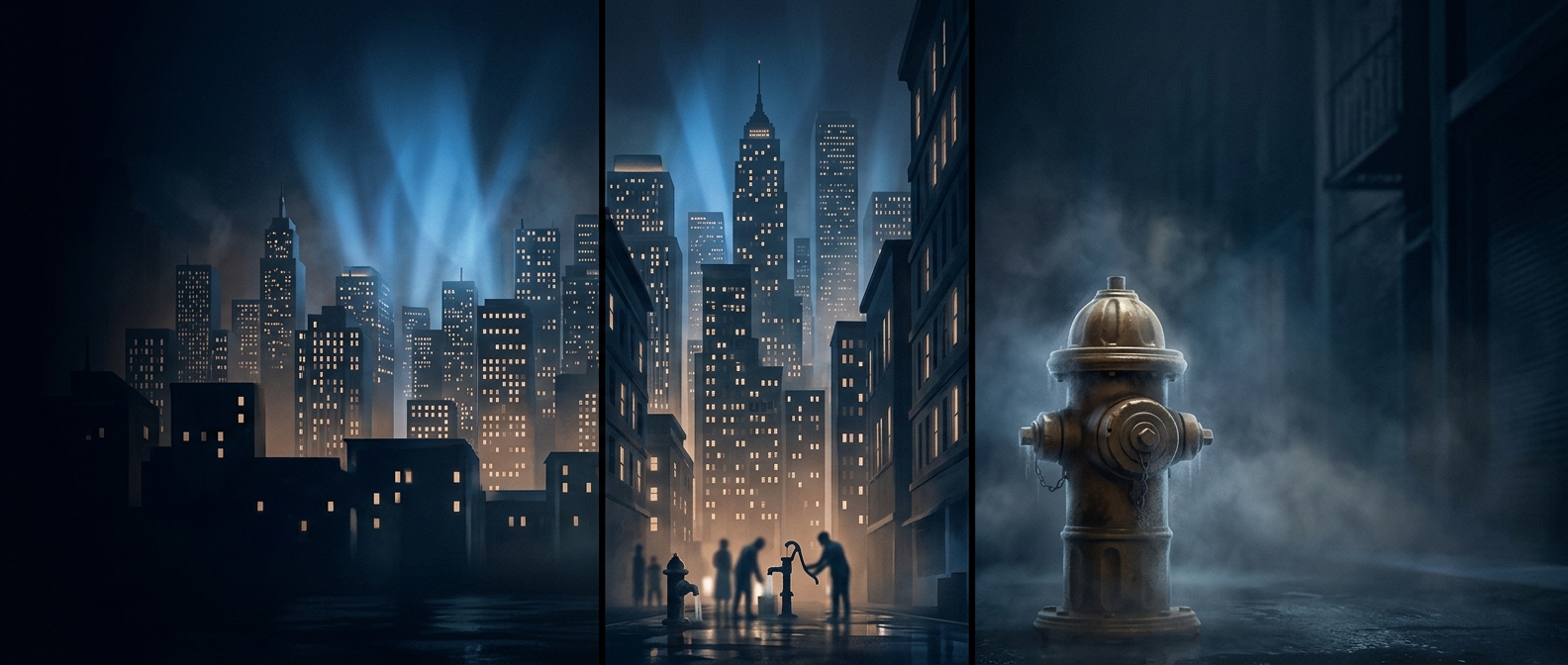
Why a TV finale could be felt at the tap
A toilet flush is a small, ordinary demand on a water system. Millions of people flushing within the same few minutes are different: the neighborhood’s pipes must deliver water to many homes at once, just as viewers turn on taps and showers after a broadcast ends.
Water pressure is the force that pushes water through those pipes. When demand rises faster than pumps, storage tanks, and the local distribution network can replenish it, pressure can sag—especially in parts of a system already near its peak capacity. The effect would not mean the city had run out of water; it would be a temporary mismatch between how quickly people were drawing water and how quickly the system could supply it.
The credits created a shared cue
The unusual ingredient was timing. A popular finale gave viewers across a large area a common reason to wait, then act at nearly the same moment. A toilet’s tank refills after it flushes, so the demand does not end with the initial rush: many tanks begin drawing water again together, extending the brief surge.
Water utilities plan for heavy-use periods, but ordinary household routines are usually spread across time. A broadcast finale could concentrate a routine task into a narrow window, making demand more synchronized than usual. The episode ended on screen; for the water network, the busiest moment could come just after the credits.