When asking for help became part of the show
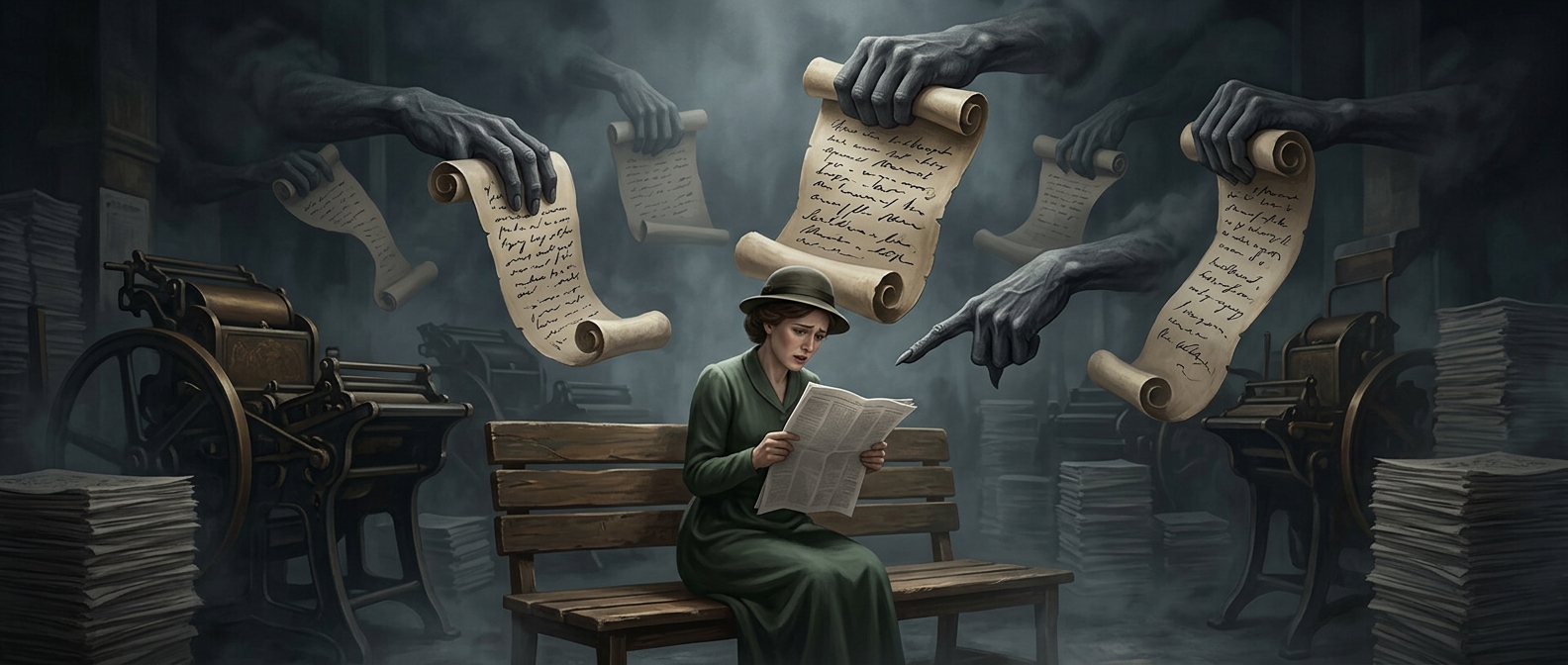
In some early advice publications, a reader’s letter was not treated as a private problem awaiting a kind answer. It became material for public entertainment: the publication could expose a confused choice or personal failure, then invite readers to laugh at the person who had asked for help.
That reversal made the column work on two levels. The letter supplied a small human drama; the response turned it into a lesson about what the publication considered foolish, improper, or socially unacceptable. Readers could enjoy the spectacle while also learning which behaviors were likely to draw ridicule.
Advice as public judgment
Printing a plea for guidance gave editors a ready-made scene: someone had made a mistake and was vulnerable enough to describe it. Mockery made the response sharper—and potentially more engaging—than patient counsel. It also shifted the column’s authority. Instead of simply helping one correspondent decide what to do, the publication positioned itself, and its audience, as judges of the correspondent’s character.
The result was advice that could instruct through embarrassment rather than empathy. A letter sent in search of a solution might leave its writer exposed to strangers’ amusement, while other readers learned the cost of stepping outside the column’s standards. The striking part is that the request for help itself could become the entertainment.