A different game became Mario’s next adventure
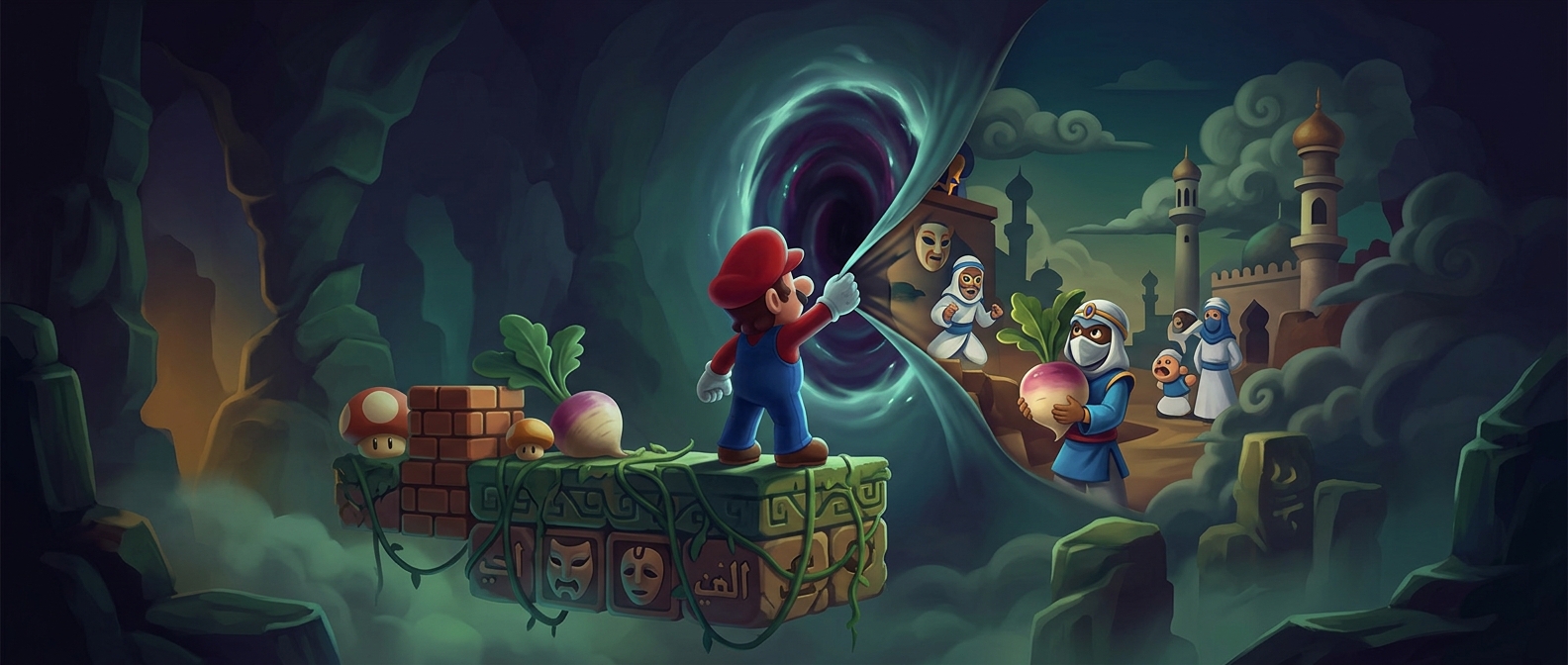
After the original Super Mario Bros., Nintendo made a sequel for Japan that kept the first game’s fast, scrolling style but made it much harder. For the Western market, Nintendo chose another route: it adapted Yume Kōjō: Doki Doki Panic, a game originally built around characters from a Japanese media event, and recast its heroes as Mario and friends. The result was the game released in the West as Super Mario Bros. 2.
That history explains why the sequel feels so unlike the first game. Its stages, enemies, and basic actions were already part of a different design; swapping in familiar Mario characters did not turn it into a conventional Mario platformer.
Why throwing vegetables fits the game
In the adapted game, many enemies cannot simply be defeated by jumping on them. Instead, the player plucks vegetables from the ground—or picks up other objects—and throws them. The enemy roster, including the masked Shy Guys, was designed for a world where lifting and tossing things is a central way to fight.
That action also gives the levels a different rhythm. Players look for objects to use, judge when an enemy is vulnerable, and turn parts of the scenery into weapons. The vegetables are not a random Mario-themed gag: they are evidence of the game’s original design surviving beneath its new cast.
The sequel that became part of the series
Nintendo’s character swap made the game recognizable to Western players, while its unusual mechanics gave it an identity of its own. The adaptation proved durable: characters and ideas introduced in this version, including Shy Guys, became part of the broader Mario world. A game that began with a different cast therefore helped expand what a Mario game—and its enemies—could look like.