The arcade came before the pizza chain
Nolan Bushnell’s challenge was not simply inventing arcade games; it was finding places willing to install them. Full-sized arcade cabinets were bulky, costly pieces of equipment, and a restaurant owner had to believe they would attract enough customers to justify the floor space and expense.
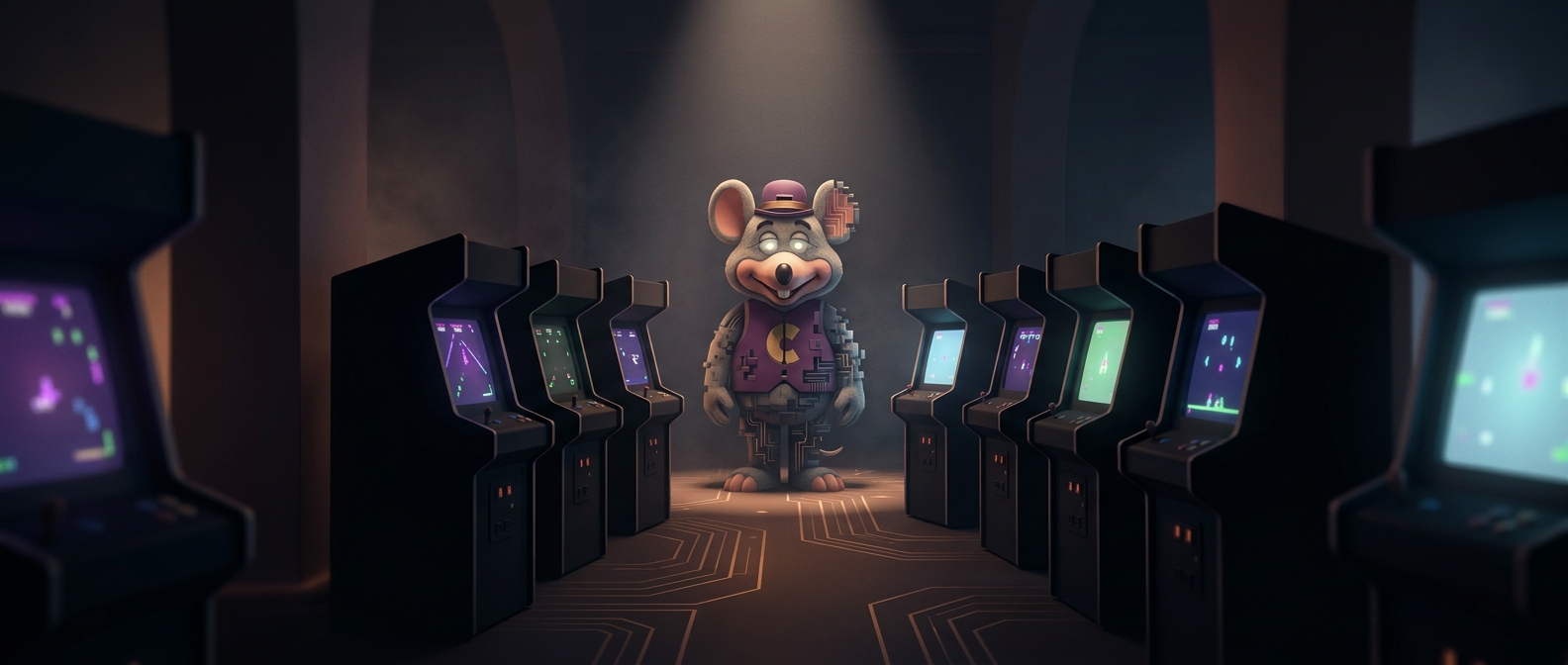
Rather than persuade each business to take that gamble, Bushnell built a venue where the games were part of the attraction from the start. Chuck E. Cheese paired pizza with an arcade, so families could eat while children played. The restaurant supplied a dependable setting for the machines—and the machines gave customers a reason to spend time there.
A built-in showroom, with a business of its own
That arrangement turned the restaurant into more than a place to sell food. It let Bushnell put arcade games directly in front of the people most likely to enjoy them, while avoiding the need to convince unrelated restaurants to make room for cabinets. Customers could try the games during an ordinary family outing; the venue earned from the overall experience rather than relying on a separate business to host the equipment.
The strategy also shaped the format. A standalone arcade asked families to come specifically to play. A pizza restaurant with games offered a broader occasion: a meal, entertainment for children, and a place for a group to linger. The games were not an add-on to the original plan—they helped make the restaurant plan work.