How Atari’s E.T. Cartridges Ended Up in a Landfill
The burial was the end of a supply problem, not a deliberate stunt. Atari had produced far more cartridges than it could sell, and the E.T. the Extra-Terrestrial game became the most famous symbol of the glut. When unsold stock had little prospect of finding buyers, disposing of it was cheaper than storing it indefinitely.
A Holiday Deadline Met a Crowded Market
Atari wanted the game ready for the 1982 holiday season, leaving designer Howard Scott Warshaw only a short time to make it. He built an unusual game around exploring, collecting objects, and helping E.T. escape. But players expecting a straightforward adventure could find its rules and movement confusing, and falling into pits repeatedly could make the experience frustrating.
The game was not the sole cause of Atari’s troubles. The company was also facing a crowded market, with more games competing for buyers and retailers left holding unsold inventory. A major release could still become a costly liability if demand fell short of the number of cartridges made.
From Excess Inventory to Industry Legend
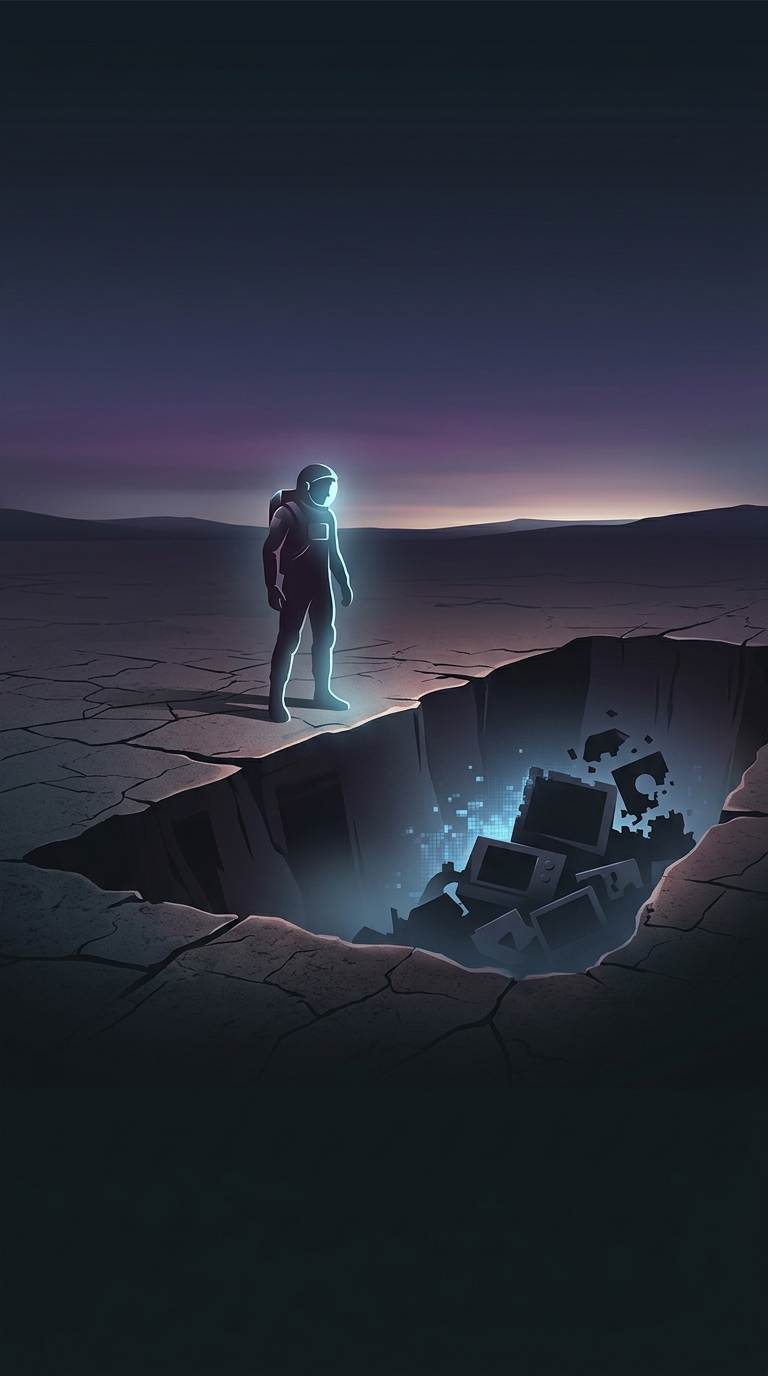
Atari sent discarded cartridges and other material to a landfill near Alamogordo, New Mexico, where the contents were crushed and covered. The reported burial of millions of games became a powerful story because it seemed to make a business failure visible: a product made for living rooms reduced to buried waste.
The episode is a reminder of a basic risk in physical media. A digital game can remain available without filling a warehouse, but cartridges must be manufactured before anyone knows exactly how many customers will want them. When a publisher guesses badly, the unsold copies do not simply disappear—they become a costly pile that someone has to store or destroy.