Why a fixed light can seem to wander
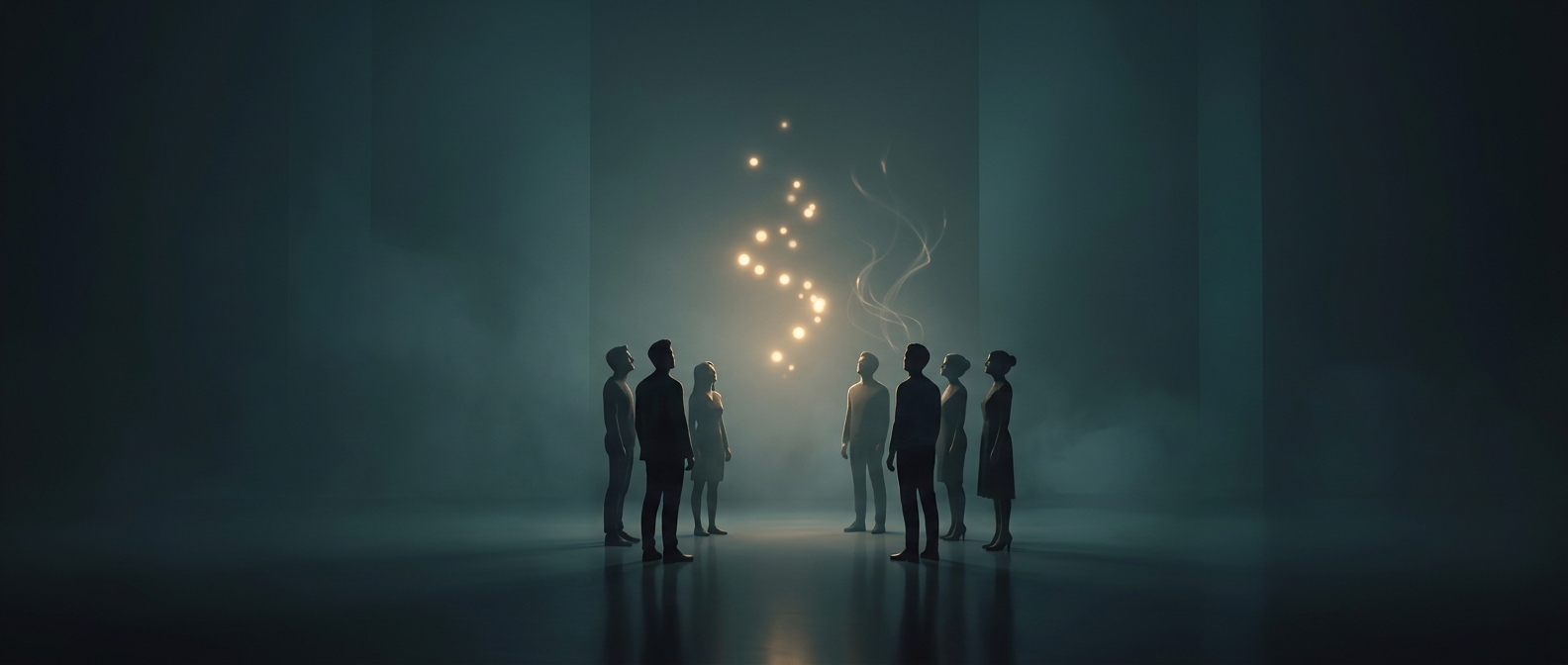
In a dark room, a small light has no nearby edges or objects to show where it is. The eyes still make tiny, involuntary movements, even when a person tries to stare steadily. Normally, the visual system uses the surrounding scene to distinguish those eye movements from movement in the world. Without landmarks, that stabilizing comparison is weak, and the light can appear to drift.
How a private impression becomes a shared one
The sensation is ambiguous: a viewer may notice motion without being sure of its direction or path. If people describe what they think they see, each account can shape what the others expect to notice. A suggestion such as “it’s moving left” gives attention a direction to look for; small, uncertain changes can then fit that expectation.
This is social influence, not evidence that the light has begun to move. People are using one another’s reports to interpret a visual signal that is difficult to read on its own. Once a group settles on a shared description, members may remember the experience as more consistent than their first impressions actually were.
Agreement is not the same as confirmation
A group can converge on the same apparent journey because its members share the same conditions and exchange interpretations—not because the motion is objectively present. That distinction matters whenever people compare uncertain perceptions: agreement can make an impression feel more convincing, while leaving the underlying evidence unchanged.