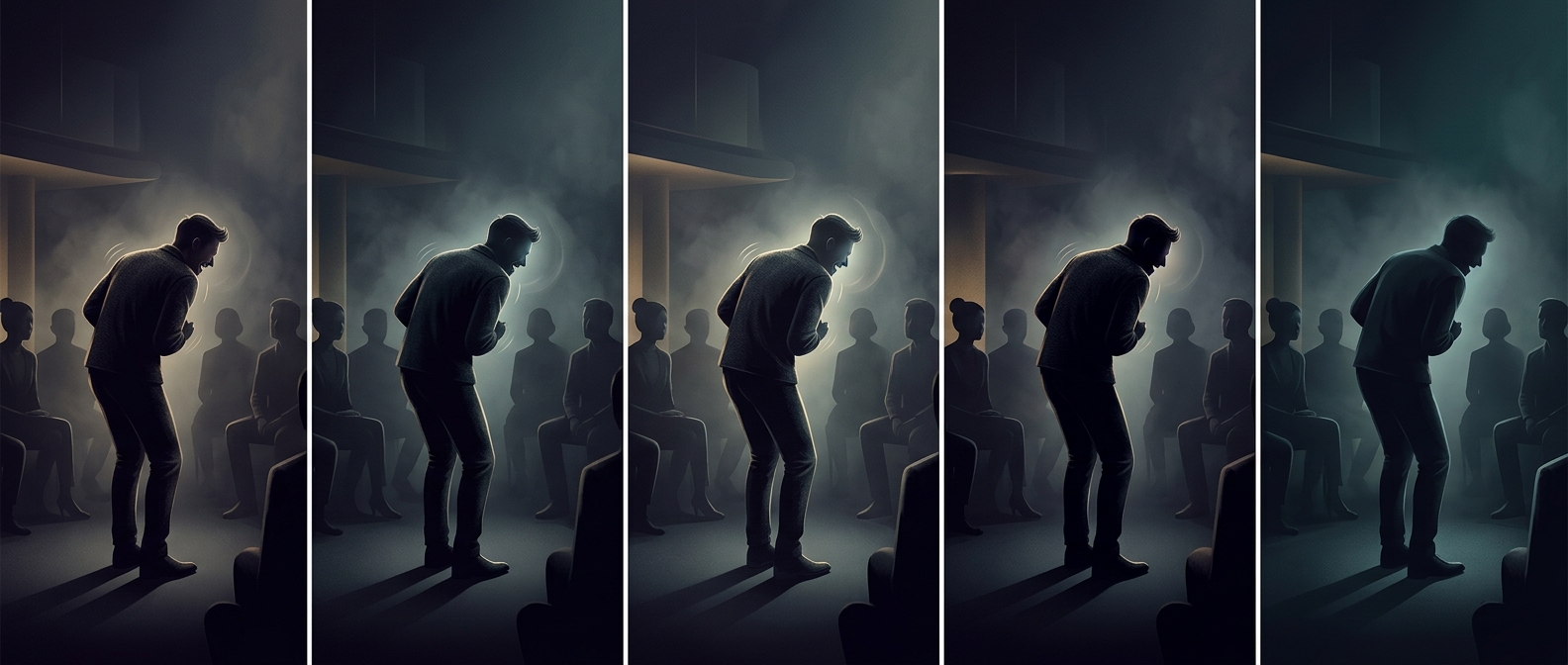
Laughter can work before a joke makes sense
A joke has two routes into a room. Its words carry the story, while the laugh that follows is a separate sound people can recognize almost instantly. A burst of laughter tells listeners that someone nearby found the moment enjoyable—and often that it feels socially safe to join in.
That signal matters because laughter is not only a reaction to humor. It also helps people coordinate: laughing together can show warmth, ease tension, or mark a moment as shared. When others laugh, you may respond to that social meaning before you have figured out what caused it.
How the reaction spreads
Laughter is especially easy to echo. People often match one another’s expressions and vocal rhythms without deciding to do so; hearing a laugh can make your own face and voice more ready to join. This kind of social matching does not require you to understand the punchline—or even to find it funny yet.
The response is not simply a reflex. You might laugh because you trust the people laughing, because their reaction makes an awkward moment seem less threatening, or because joining helps you feel part of the group. In a crowded room, the sound of several people laughing can reinforce itself: each person’s reaction becomes another cue for the next listener.
The story can catch up afterward
Sometimes you hear the joke a moment later and laugh for real. Sometimes you never catch it, but the shared reaction still feels natural. The contagious part is often the social signal, not the humor itself. That is why a laugh can travel across a room before its punchline does.