How a cave’s stone ornaments grow
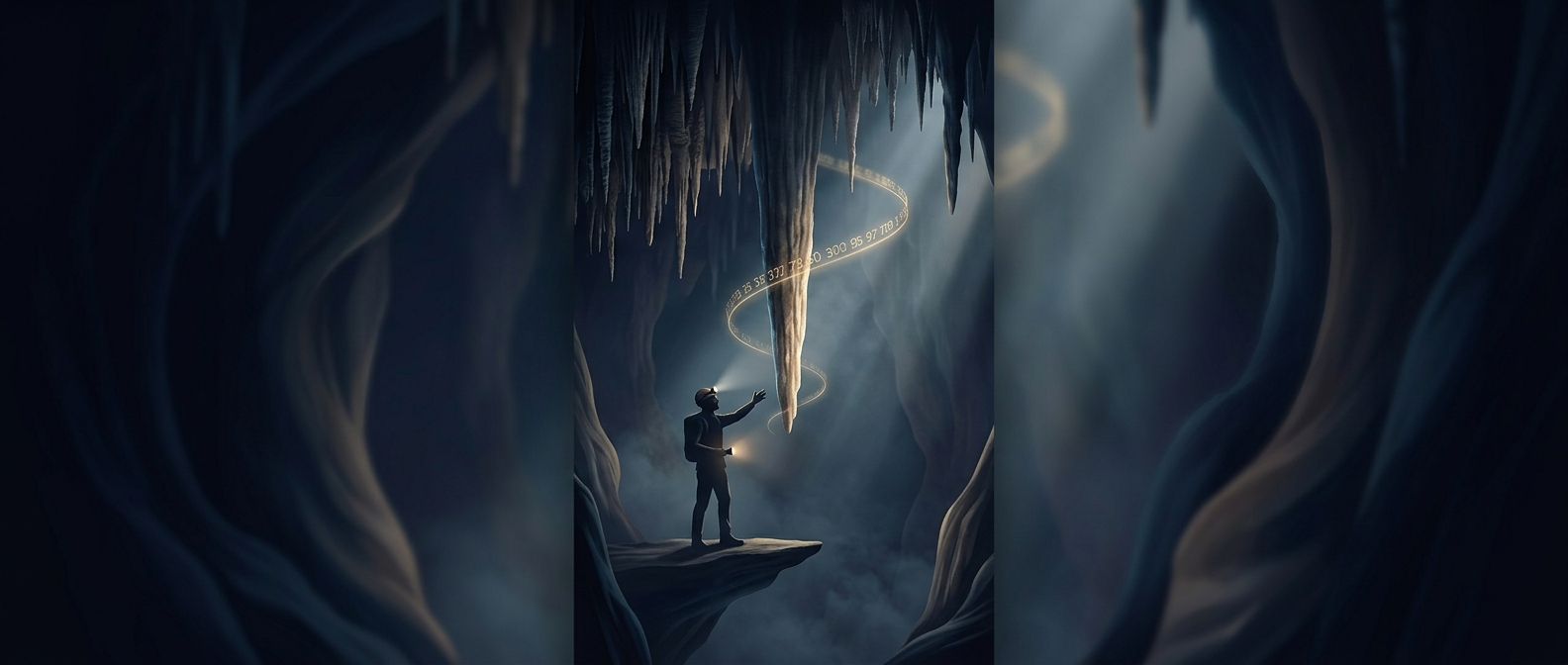
A stalactite begins when water seeps through limestone above a cave. As the water picks up carbon dioxide from soil and rock, it dissolves a little calcium carbonate. Inside the cave, some carbon dioxide escapes from each drip, leaving a thin mineral deposit behind. Repeated drips can build a hanging stalactite; deposits on the floor may form a stalagmite.
The process is slow, but not steady. Growth depends on how much water reaches a spot and on conditions such as rainfall, temperature, and the chemistry of the water. A large formation is not automatically older than a small one: it may simply have grown faster or received more drips.
What an age can—and cannot—tell you
Scientists can estimate the age of some cave deposits by analyzing tiny samples of their mineral layers. The resulting date applies to the layer sampled, not necessarily to every part of the formation. A formation may have grown in stages, with long pauses when conditions changed. Its oldest mineral can therefore be far older than its newest surface.
That distinction matters on a tour. A stated age may refer to a particular layer, an estimate for the whole formation, or the cave itself—three different things that can sound interchangeable to visitors. Adding millions of years makes the story feel more dramatic, but age cannot reliably be read from a formation’s size or appearance alone.
The scale behind the spectacle
A cave formation can preserve a record of changing water and climate conditions, layer by layer. Its great age is not just a number attached to an impressive shape: it reflects how long mineral-rich water kept returning to the same place. Even a tour’s rounded age points toward a process measured not in human lifetimes, but in repeated drips and pauses.