Why a Cave Can Glow in the Dark
In caves where glowworms live, the light is not decoration. The tiny animals produce it through a chemical reaction in their bodies, and many use the glow to attract flying insects. Some hang sticky threads beneath them; an insect drawn toward the light can become tangled in one. In the deep darkness, a faint blue-green sparkle can serve as a hunting lure.
Rivers and Echoes Change the Experience
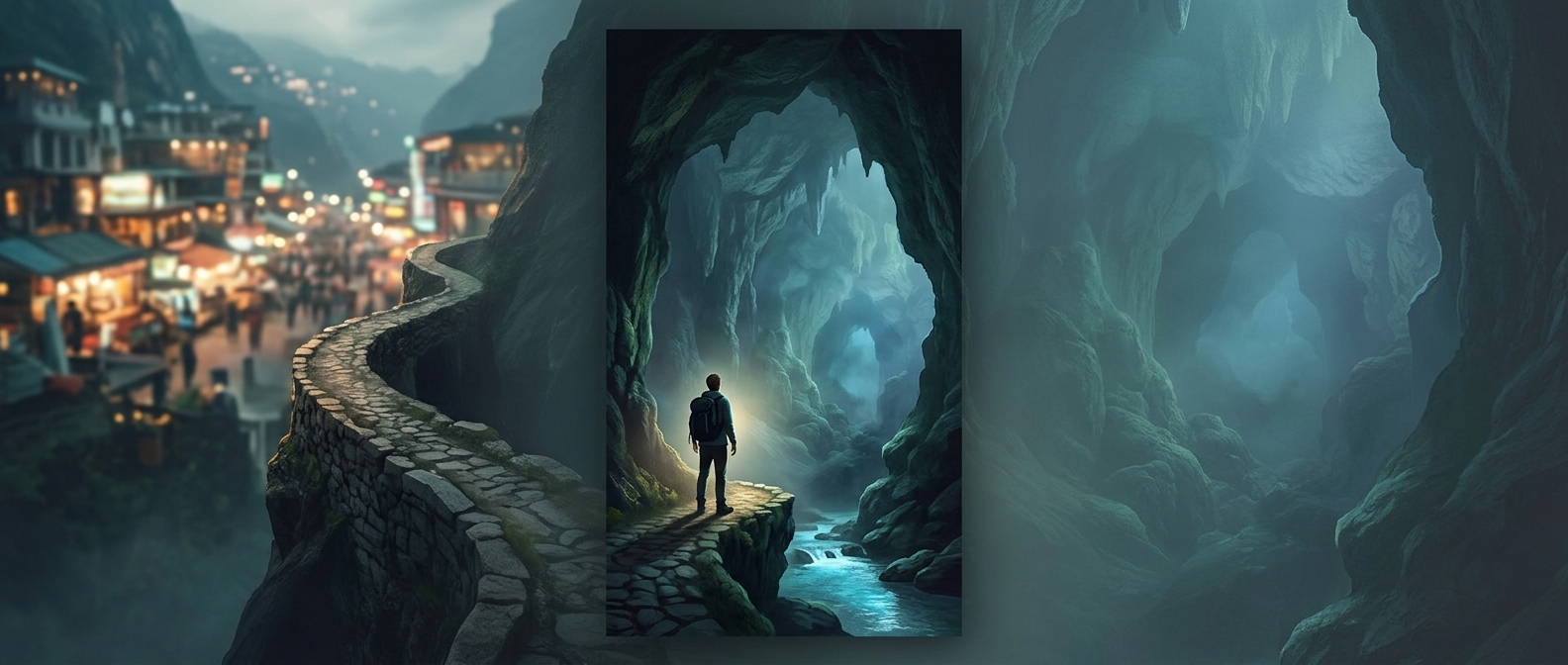
An underground river makes a cave feel less like a still passage and more like a hidden landscape in motion. Water can carve and reshape rock over long periods, while its steady rush fills chambers that would otherwise seem silent. Those chambers also reflect sound, so a footstep or a guide’s voice may linger or swell in ways that are hard to predict from the entrance.
The glow, water, and acoustics depend on the cave’s particular conditions; they are not features every cave shares. That is part of what makes choosing a less familiar site rewarding: the memorable detail may be a living light display, the sound of water around a bend, or the sudden scale of a chamber.
A Fragile Attraction
Cave life is adapted to darkness and can be sensitive to disturbance. Visitors can help preserve the experience by keeping to marked routes and following site guidance about lights, noise, and touching surfaces. In a place where a small animal’s glow depends on the dark, protecting that darkness is part of what lets the cave remain astonishing.