Four panels make a joke easy to follow
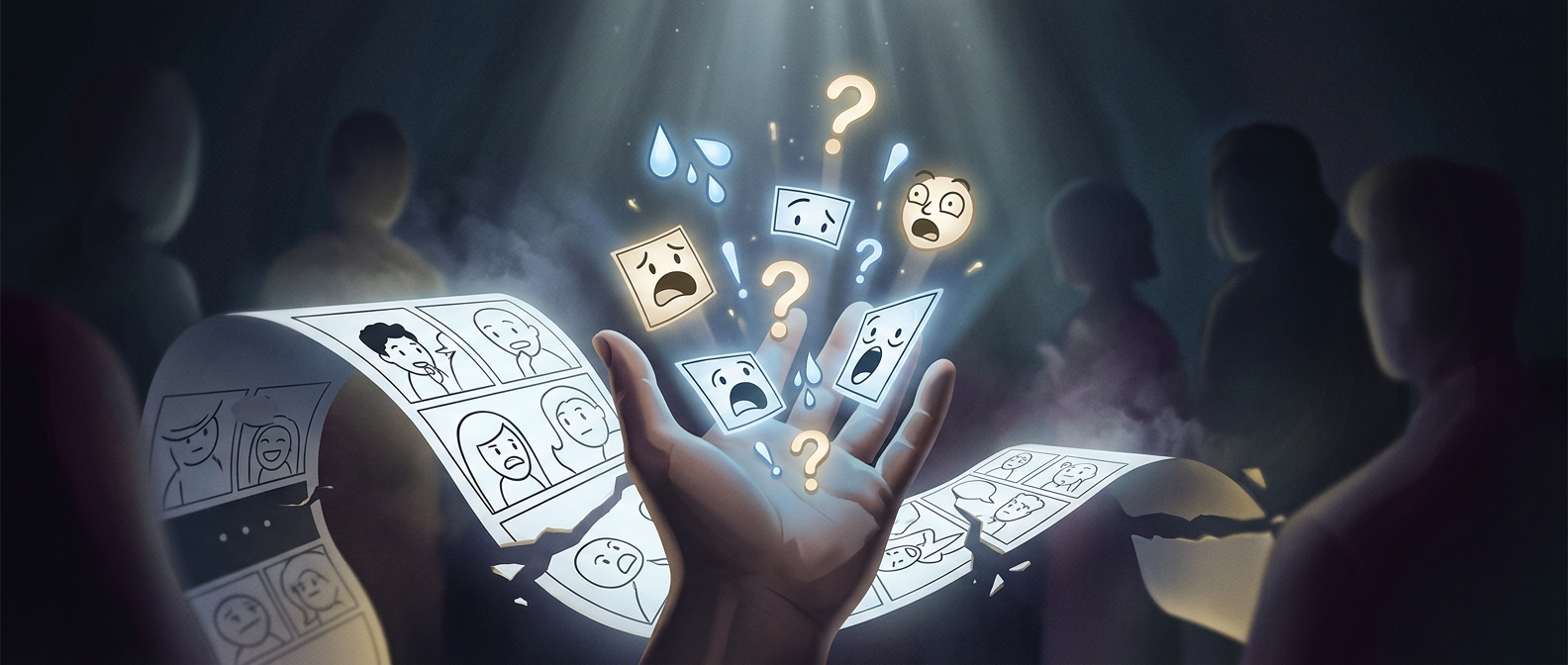
A four-panel comic gives a reader just enough room to recognize a situation, watch it shift, and land on a punchline. The familiar rhythm is setup, development, turn, payoff—but it is flexible. A character’s expression can change the meaning of an earlier line, or the last panel can simply reveal the absurd thought everyone was holding back.
That sequence works especially well for relatable humor. The first panels establish an everyday irritation or social awkwardness; the ending makes the reader feel, “I’ve been there,” often by exaggerating the response. The joke is compact, but the recognition behind it is shared.
A small format travels well
Four panels also impose a useful limit: creators have to make each image do visible work. A glance, a repeated pose, or a short caption can carry the story without elaborate scenery or explanation. Readers can grasp the order at a glance, even when the comic is viewed on a small screen or passed along without its original context.
Online, that structure became a practical model for visual jokes. People could copy the rhythm, adapt the situation, or reuse an image with new wording. The result was not one universal comic formula, but a recognizable way to package a reaction: establish the moment, then give the final panel the job of saying what the reader was already thinking. A tiny sequence could turn a private annoyance into a joke ready to circulate.