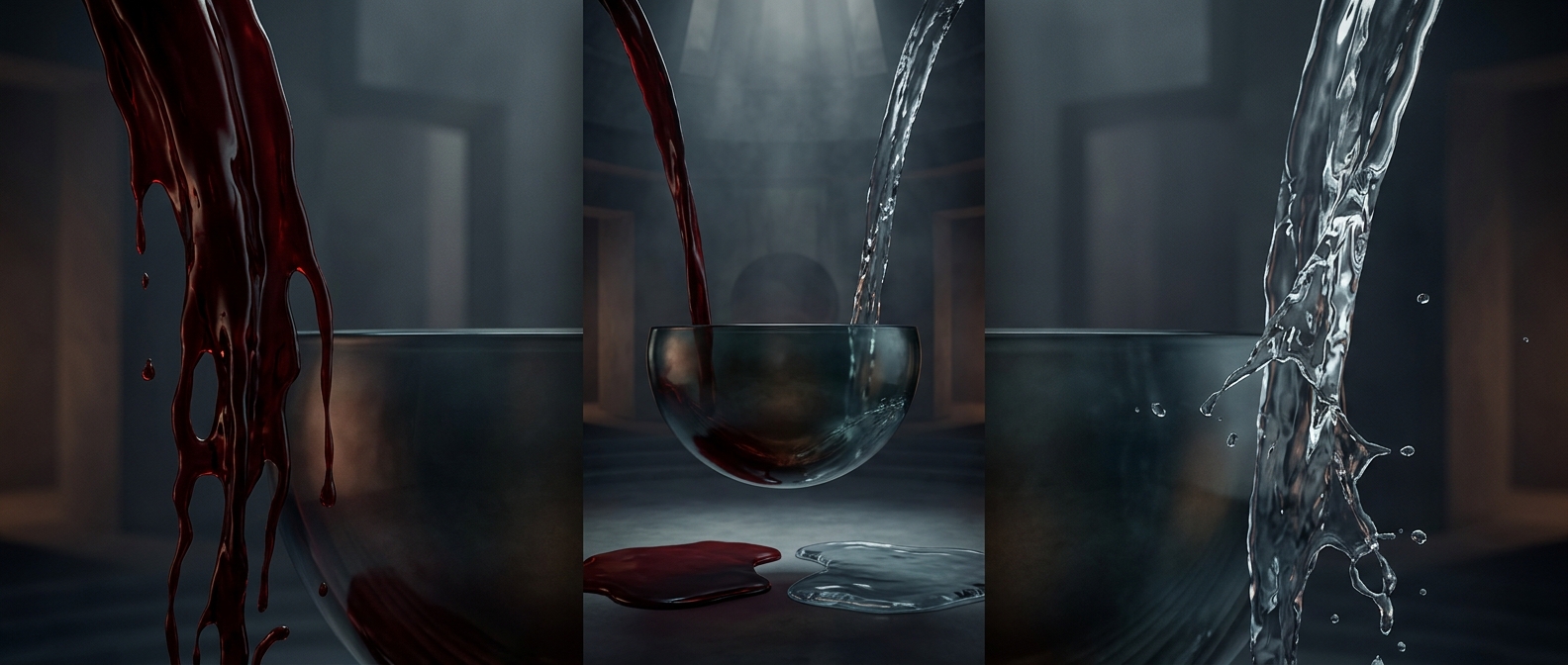
Why blood resists flow
The extra resistance comes mainly from red blood cells, which occupy a large share of blood’s volume. Unlike water molecules, these cells are soft, flexible discs suspended in liquid. They can deform to squeeze through tiny vessels, but they still make blood harder to move than a cell-free fluid. Dissolved proteins also add some resistance.
Blood’s thickness is not a fixed multiple of water’s. It changes with temperature, the proportion of red cells, and how quickly the blood is moving. At faster flow, red cells tend to deform and line up with the stream, so blood becomes easier to push along. This behavior is called shear-thinning: the faster the flow, the lower the resistance.
The tradeoff inside the circulation
That changing resistance matters because the heart must generate pressure to keep blood moving. When resistance rises, the heart has to work harder to maintain flow. But blood cannot simply be made as thin as water: its cells carry oxygen, and its proteins and other components perform essential jobs.
In narrow capillaries, red cells often pass through one at a time, bending as they go. The striking result is that blood can be substantially more resistant to flow in a tube than water, yet still navigate vessels narrower than the cells themselves.