How the bladder helps keep urine moving one way
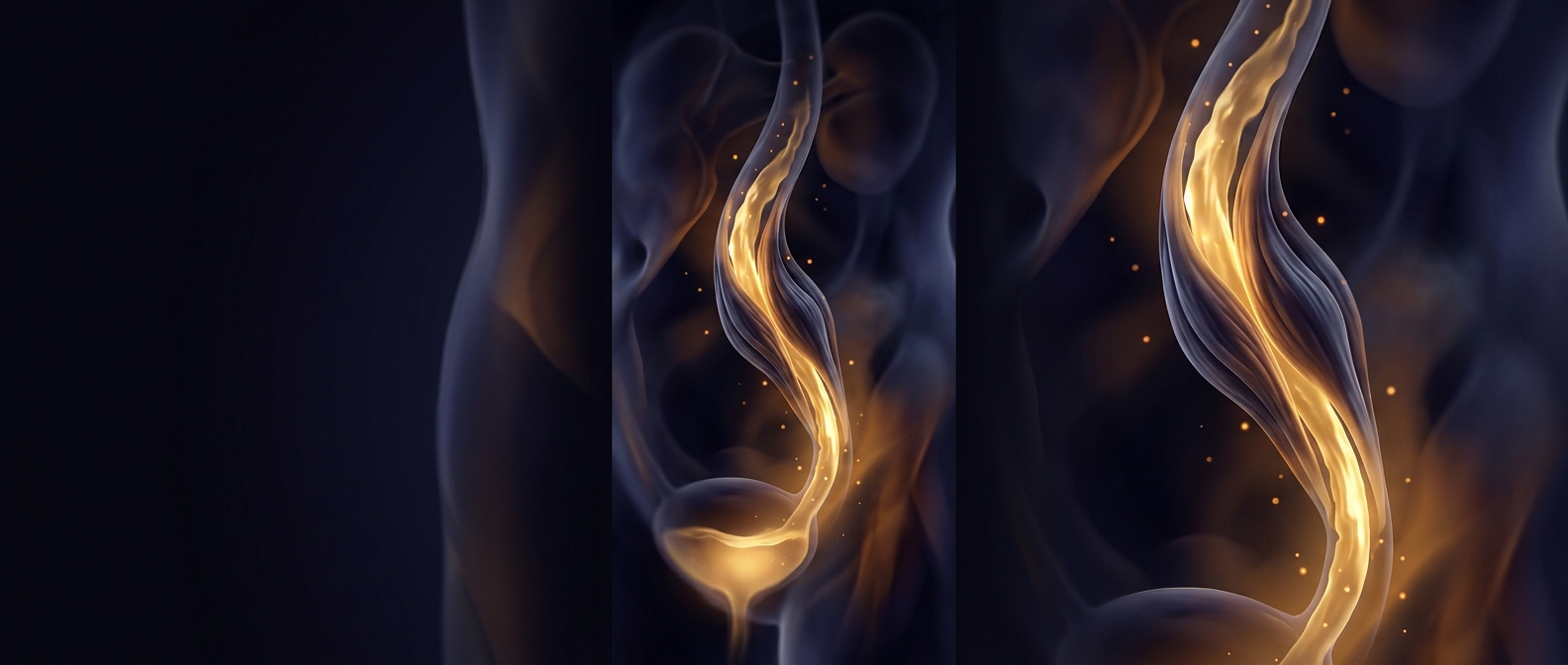
Each ureter—the narrow tube carrying urine from a kidney—does not simply open straight into the bladder. It travels through the bladder wall at an angle before reaching the inside. That short, angled passage creates a simple mechanical advantage: as the bladder fills and its walls stretch, pressure can squeeze the part of the ureter embedded in the wall.
Filling tightens the passage
Urine arriving from a kidney pushes the ureter’s end open briefly so it can drain into the bladder. Between these flows, pressure from the filling bladder presses the tunnel flatter, making it harder for urine to travel backward. The ureter’s muscular contractions also help propel urine toward the bladder. Together, these features limit backflow without requiring a separate flap that opens and shuts like a door.
The arrangement matters because urine normally moves from the kidneys to the bladder, where it can be stored. If urine repeatedly flows the other way, pressure and bacteria can be carried toward the kidneys. The angled, compressible entry is one part of the body’s protection against that route—but it limits backflow rather than forming an absolutely sealed valve.
Why the entry’s shape matters
The effect depends on the ureter passing through enough bladder wall for filling pressure to compress it. If that tunnel is too short or does not close effectively, urine may reflux, or flow backward, toward a kidney. In other words, the bladder’s changing shape is not just a storage feature: it helps turn each increase in fullness into pressure that guards the route behind the incoming urine.