Turning a Shell Casing Into a Ring
An artillery shell casing was not just battlefield debris. Many were made of brass, a metal that can be cut, hammered, and polished with relatively simple tools. Once a casing had been fired and discarded, its curved wall could become raw material for a small object a soldier could carry.
Making a ring meant reducing that large, familiar shape to a narrow strip, then bending and working the metal until it fit a finger. Cutting, filing, and repeated hammering took patience; smoothing the edges and polishing the surface gave the finished piece its shine. Some makers added engraved patterns or initials. The work was practical improvisation, not factory production: each ring depended on the material and tools at hand.
A Keepsake Made From War’s Leftovers
The casing’s origin gave the object an unusual double meaning. It had been part of a weapon, yet a maker reshaped it into something personal—small enough to wear, give away, or keep as a reminder of a person or time. Rings made from enemy casings carried that contrast even more sharply: material associated with danger became a token of attachment.
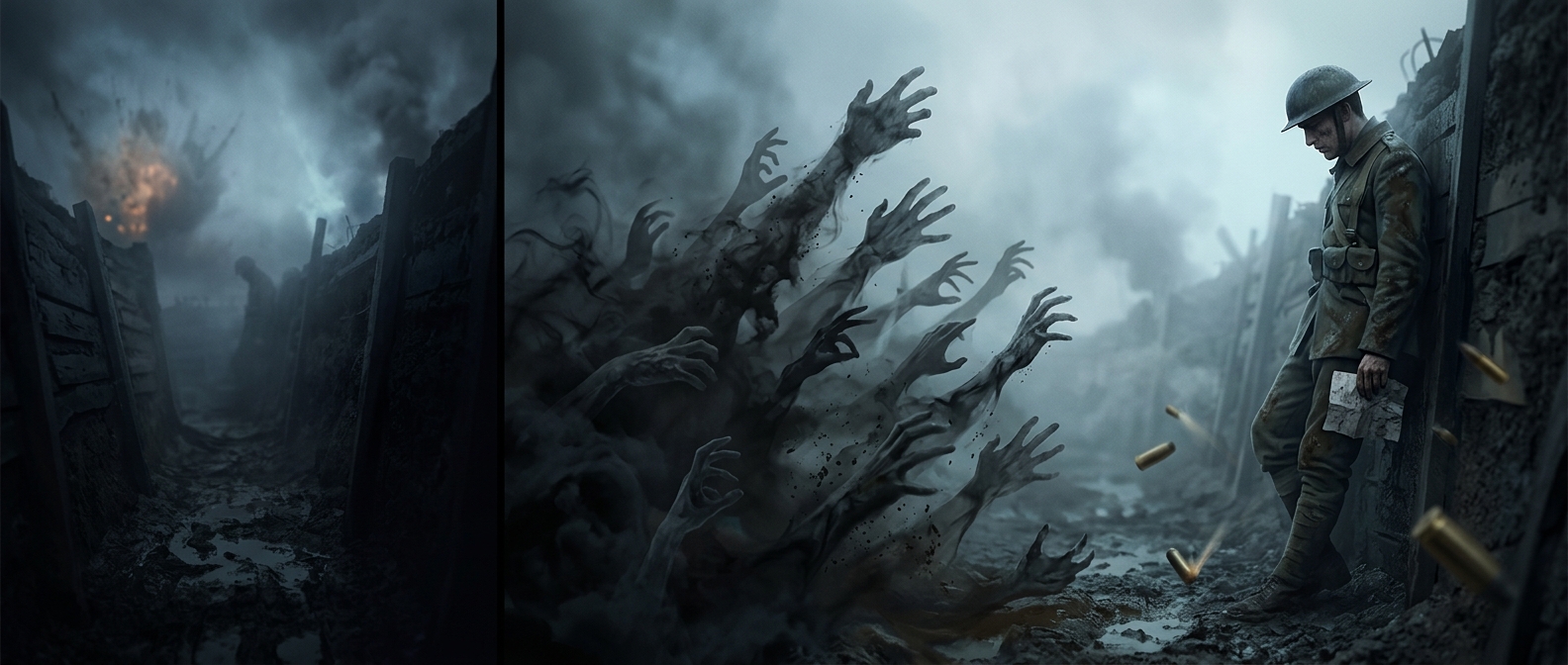
Such objects are part of what is often called trench art: decorative or useful things fashioned from materials made available by war. The name covers many kinds of work and makers, but the basic transformation is striking. A casing that once served a destructive purpose could, through hours of handwork, become an intimate keepsake. Its survival in a collection preserves both the ingenuity of its maker and the material trace of the violence from which it came.