
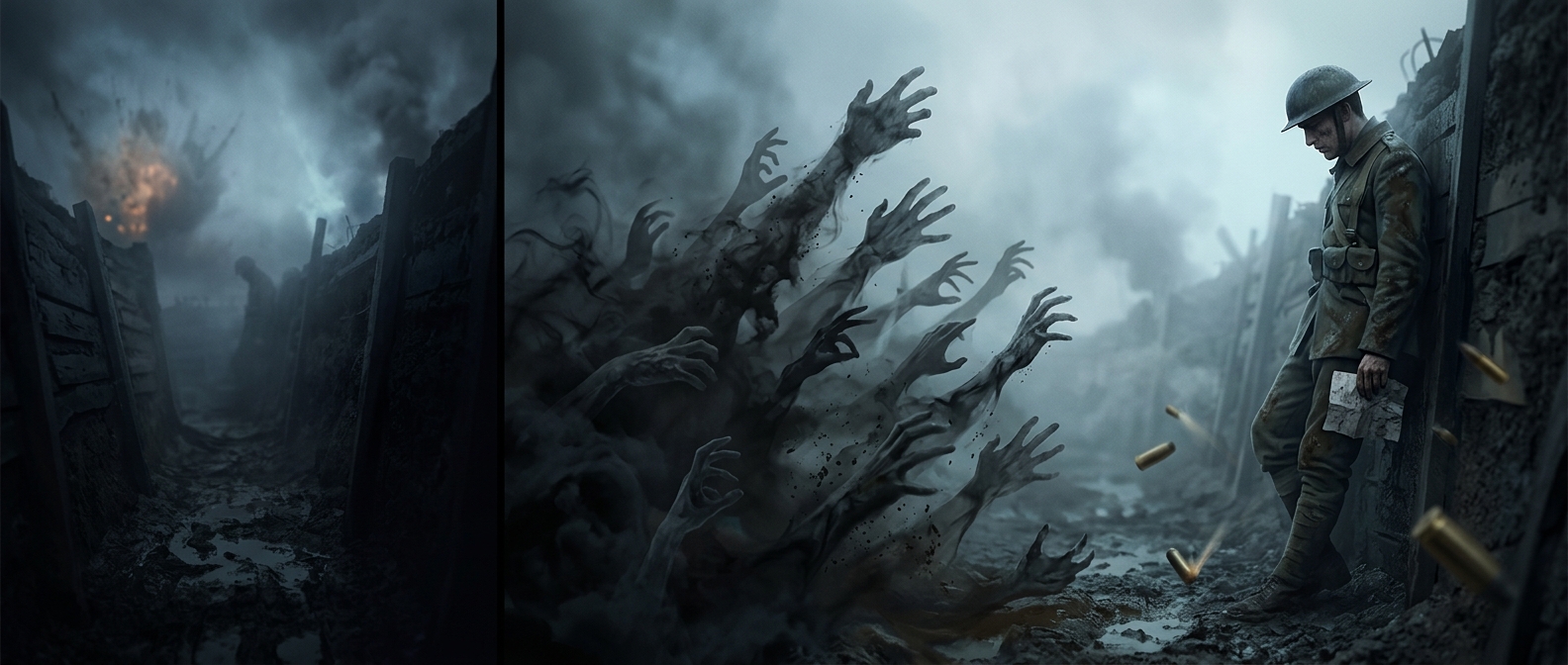
Why Waiting Could Wear Soldiers Down
For many soldiers in the First World War, the front was not a continuous battle. Long spells in trenches or reserve positions meant watching, listening, and waiting—often in cold, wet conditions, with little control over when anything would change. Letters that dwell on mud and dull routine point to a strain that was less dramatic than combat but hard to escape: each day resembled the one before it, and the end of the wait was uncertain.
The Cost of an Unchanging Day
The military routine offered few ordinary ways to reset. A soldier might spend hours on sentry duty, maintaining a trench, carrying supplies, or simply staying ready. Even sleep could be interrupted, while mud and rain made basic tasks harder. These demands consumed energy, but the deeper burden was the lack of choice and variety. There was little privacy, little freedom to move, and no reliable way to know whether quiet meant safety or merely a pause.
Boredom here did not mean that the danger had disappeared. It meant that danger and inactivity existed side by side. A sudden bombardment or order to go forward could break the routine without warning, making it difficult to relax during the quiet stretches.
Why Letters Focused on the Drab Details
Writing home gave soldiers a way to describe a life that could otherwise sound like nothing was happening. Complaints about rain, food, or endless waiting made the daily experience legible to people far away. They also kept a connection with home alive, even when the writer had no larger news to report.
Those details reveal a consequence of trench warfare often missed by accounts centered on attacks: morale could be worn down by repetition as well as by immediate fear. The enemy was not always visible; sometimes the hardest thing to face was another long day with no clear sign of when it would end.
