A payment made from what was at hand
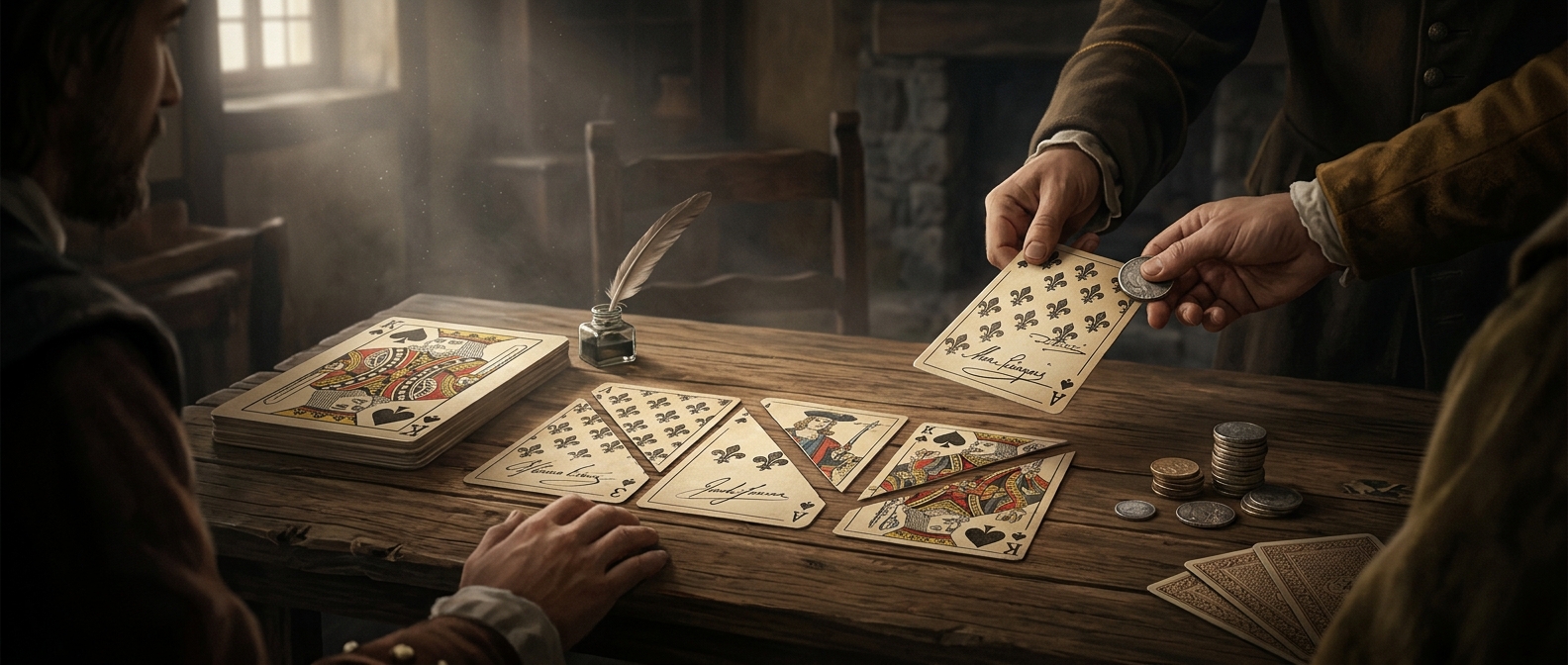
In 1685, New France’s governor, Jacques de Meulles, faced a practical problem: soldiers were owed wages, but the colony lacked enough coins to pay them. Rather than leave the troops unpaid while waiting for hard currency from France, he turned playing cards into a temporary medium of exchange. Cut into pieces and signed, each piece carried a promise that the government would honor it later.
That promise mattered more than the material. A card fragment had little value on its own; its usefulness came from the expectation that the colonial government would accept it as payment or exchange it for coin when funds became available.
How an IOU became spendable
Once soldiers received the cards, they could use them to buy goods instead of waiting for coins. Merchants who accepted them could, in turn, spend them with other people. The cards therefore did more than settle a government payroll: they helped keep transactions moving through a colony where the supply of coin was too small for everyday needs.
This is the key distinction between money and the material it is made from. Money works when people expect others to accept it. Government backing gave the signed cards a reason to circulate; repeated use by soldiers, shopkeepers, and other residents made that acceptance practical.
A useful fix with a lasting legacy
Card money began as a response to a cash shortage, not as a plan to replace coin permanently. But the underlying problem—too little hard currency arriving when payments came due—did not disappear at once. The cards continued to circulate for decades, becoming a familiar part of the colony’s economy rather than a one-time emergency measure.
Their long life shows both the strength and the limit of an IOU currency: it can bridge a gap when people trust the issuer, but that trust depends on the promise remaining credible. In New France, playing cards helped turn an unpaid obligation into money people could actually use.