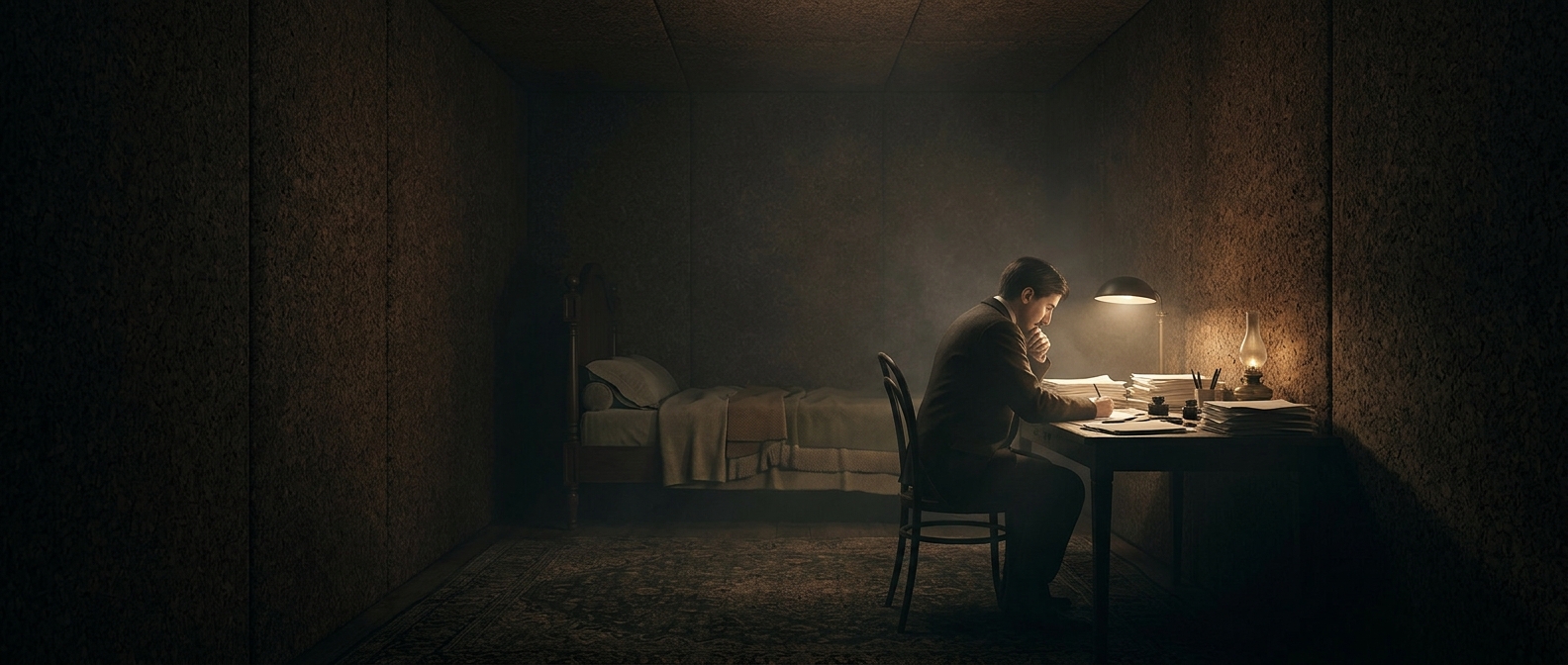
A bedroom turned into a writing refuge
Proust’s cork lining was a practical response to a room that had to serve two purposes: it was where he slept and where he worked. Covering the walls and ceiling gave him a buffer between his desk and the everyday disturbances of a Paris street, including the clatter of horse-drawn traffic and dust entering the room.
The choice mattered because cork does more than cover a surface. Its cellular structure contains many tiny pockets of air, which can absorb some sound energy and soften echoes. A lined room would not become silent, but it could make street noise less intrusive and the interior feel more insulated.
Quiet through a material barrier
The lining also covered broad areas where dust could settle or pass into the room from the surrounding structure. It was a physical intervention in the room itself—not a modern, sealed soundproof booth—and its effectiveness depended on how completely the surfaces were covered. The goal was not to erase the city, but to reduce the interruptions it sent indoors.
That distinction helps explain why the detail is memorable: Proust adapted an ordinary domestic space to the conditions of concentrated work. The bedroom became less an escape from Paris than a carefully buffered place inside it, with cork serving as both wall covering and acoustic cushion.