When arranging becomes a ritual
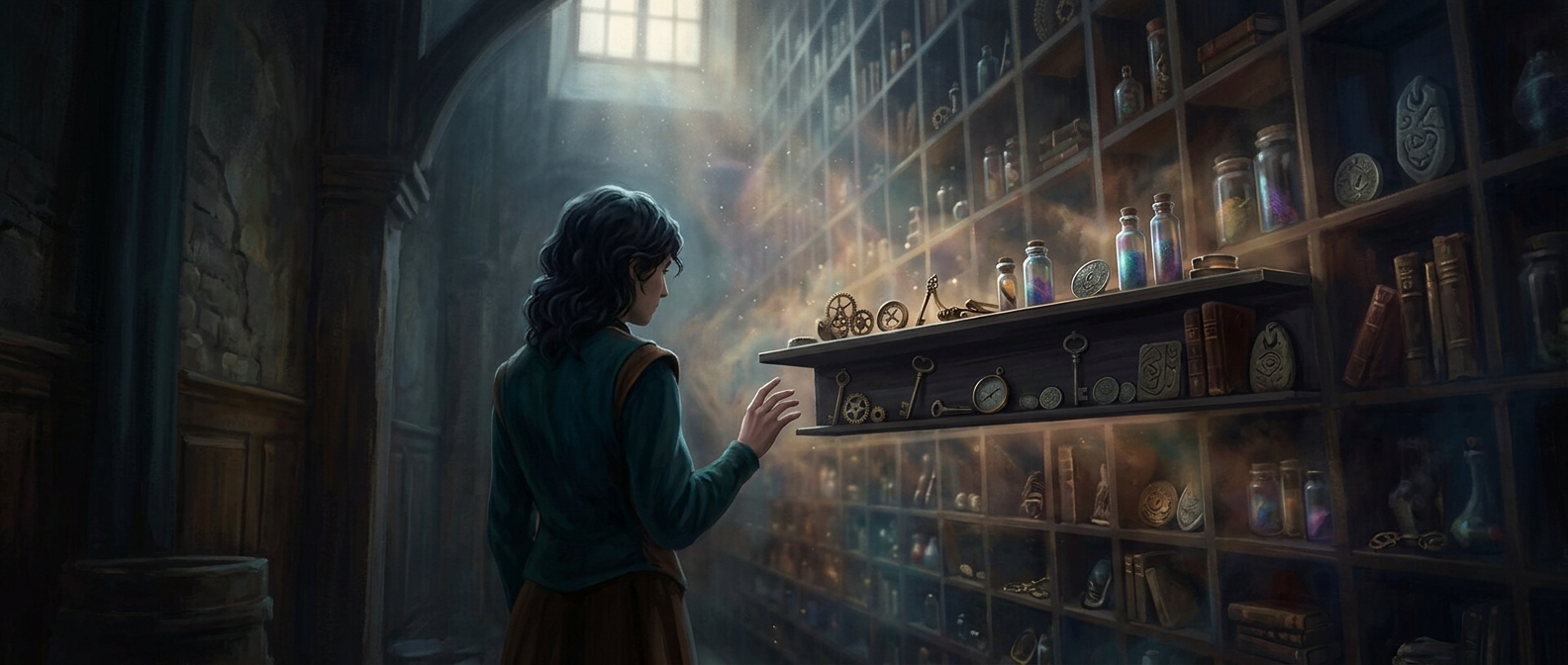
A shelf of small boxes and glass bottles can become more than storage when each object is treated as part of a meaningful arrangement. Moving one item changes its relation to the others: a bottle sits closer to a box, a gap opens, a line looks balanced. The work is physical, but the standard for finishing is inward—whether the arrangement feels right.
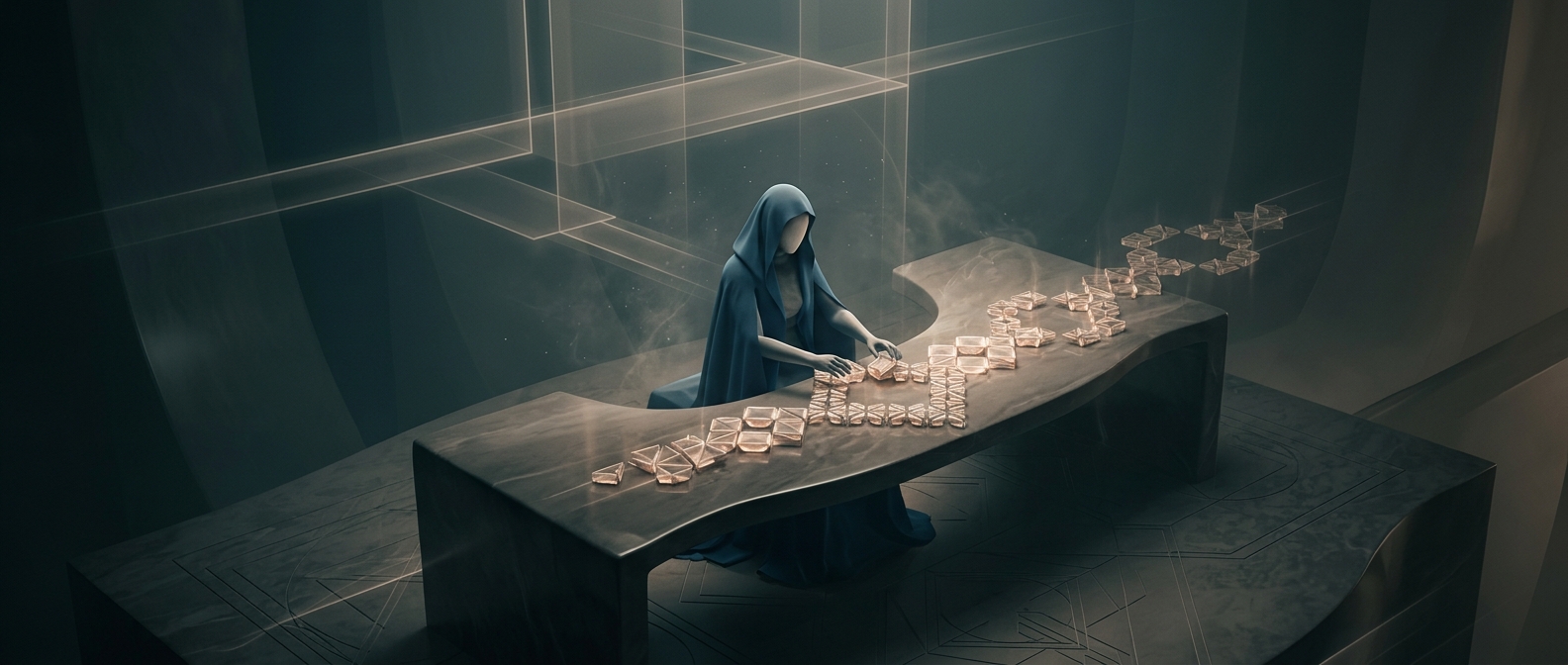
That can make the task absorbing. Unlike a larger job with a clear endpoint, arranging offers an endless series of tiny decisions, each followed by an immediate visual result. A slight adjustment can briefly settle the scene; then another detail catches the eye. The ritual is sustained by that cycle of noticing, correcting, and checking again.
Order that feels consequential
In a mystical frame, arranging objects may serve as a way to focus attention or give intention a visible form. The objects need not have a universally agreed meaning. Their significance can come from what the person associates with them, or simply from the care devoted to placing them. Repetition turns an ordinary shelf into a small, deliberate space.
That same concentration can crowd out other work. The arrangement keeps presenting one more possible improvement, while unfinished tasks elsewhere do not offer the same immediate sense of control. The shelf can feel complete only when it looks right, even though “right” has no fixed stopping point. That is why a ritual meant to create order can quietly consume the day.