Why Salem’s accused witches were hanged
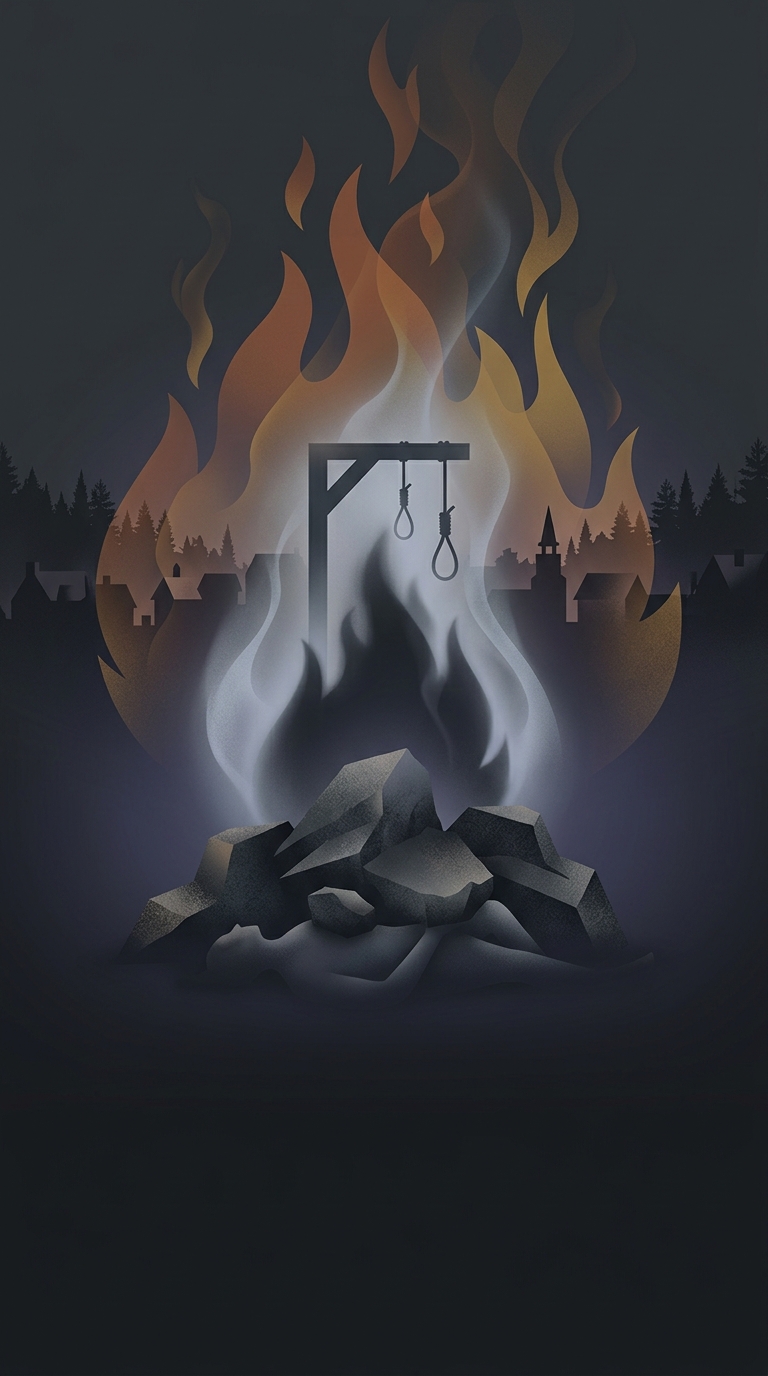
The Salem trials took place under English colonial law, not under a single, uniform European system of witchcraft punishment. In Massachusetts, witchcraft was treated as a capital crime, and the ordinary method of execution for such crimes was hanging. That legal inheritance—not a special “Puritan” execution ritual—accounts for the gallows at Salem.
Across Europe, penalties differed by place and legal tradition. Burning became strongly associated with witch persecutions, but it was not the universal fate of people accused of witchcraft. The image of a witch burned at the stake reflects some European prosecutions more than the practice in Salem.
Giles Corey’s death was a different kind of punishment
One accused man, Giles Corey, was not hanged. He refused to enter a plea, and the court subjected him to pressing: heavy weights were placed on his body to force him to answer. He died under the pressure. This was not a second method used for the other Salem executions; it was a coercive legal procedure applied to a person who would not plead.
The distinction matters because Corey’s death is often folded into the same story as the hangings. In fact, it came from a separate step in the legal process. At Salem, the gallows were the execution method for those convicted, while the stones were used to try to make one unpleaded case proceed.