Room tone gives editors a usable silence
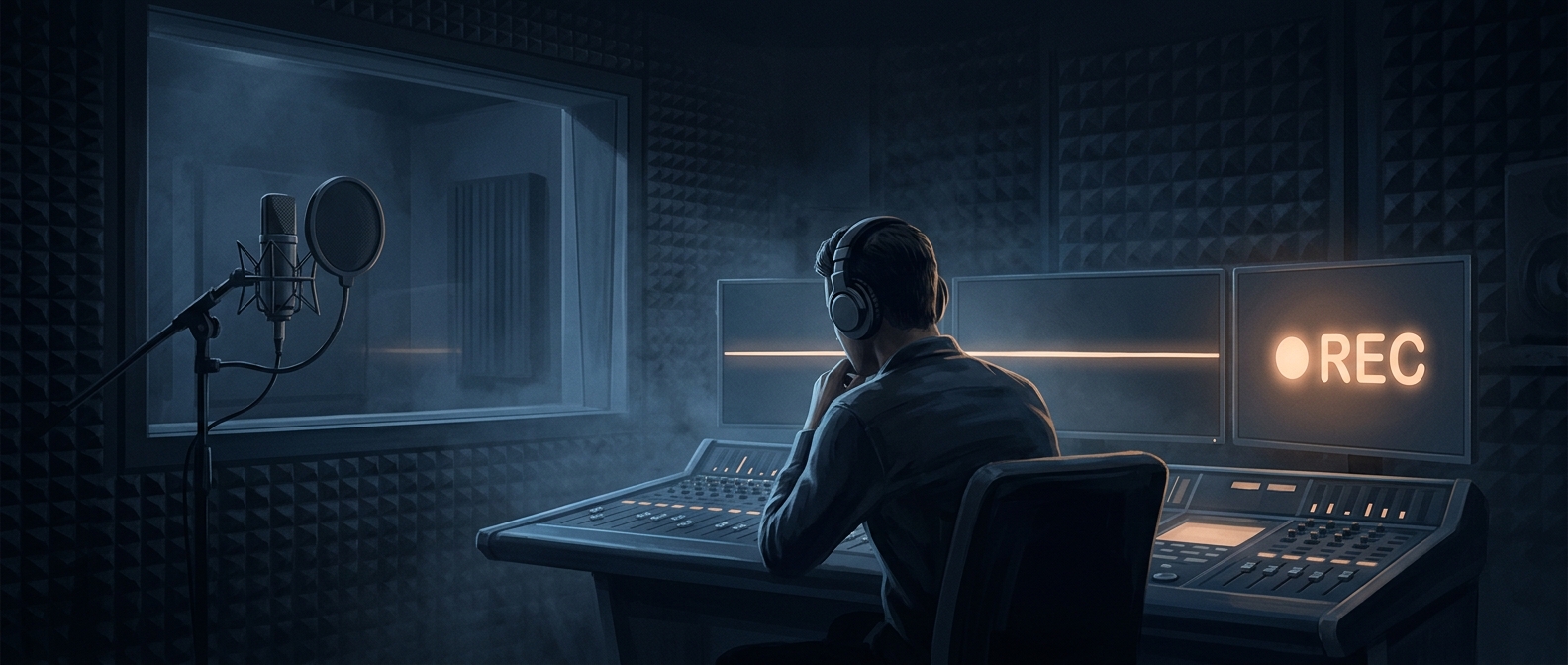
A recording of an empty-sounding room is not actually silent. It contains the soft, steady sound of the location: ventilation, distant traffic, electrical buzz, and the way the room reflects sound. Crews capture this room tone while microphones and other recording conditions are still in place, so editors have a sample of the space without dialogue.
Why a pause can expose an edit
When an editor cuts a line of dialogue, the cut may leave a tiny gap. If the background sound drops to digital silence in that gap, then returns with the next line, the change can feel like a brief jump—even if viewers cannot identify why. A strip of room tone can fill the gap and keep the acoustic bed consistent.
The same recording can help smooth cuts made inside a sentence. Dialogue takes rarely match perfectly: a door may hum more loudly, or a vehicle may pass during one take but not another. An editor can layer room tone beneath the selected lines to soften those differences, while leaving distinct sounds such as footsteps or a passing car to be handled separately.
Silence is part of the sound design
Room tone is not necessarily the final background. A sound editor may replace or reshape it to make a scene feel quieter, busier, or more tense. But the location recording provides a natural starting point—and a way to avoid the telltale sensation that the world switches off whenever a character stops speaking. In a finished scene, a well-matched pause sounds uneventful, which is exactly the point.