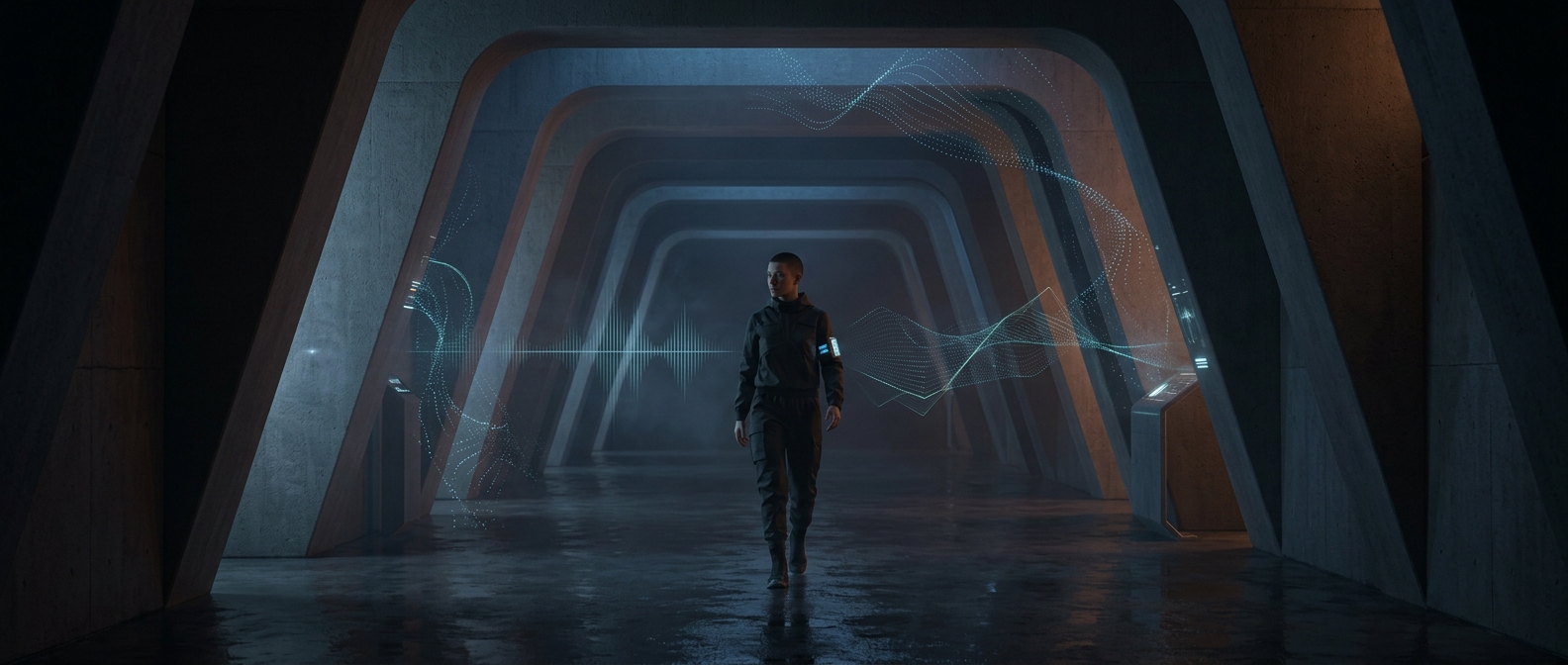
How a Game Cave Gets Its Echo
A cave’s sound can be designed as an audio effect rather than calculated from its walls. The game marks an invisible volume in the level and assigns sounds heard inside it a reverb effect: a processed tail that makes a footstep or shout seem to linger after the original sound stops.
The effect can add delayed, quieter copies of a sound and let them fade over time. Designers tune qualities such as how long the tail lasts and how strongly it colors the sound. A broad cavern might get a long, diffuse wash; a smaller chamber might sound tighter. These settings suggest a space to the player without tracing each reflection from rock surface to rock surface.
Why Use a Zone Instead of Wave Simulation?
A true wave simulation would need to account for how sound travels, reflects, and loses energy across the cave’s geometry. That can demand substantial computation, especially while many sounds and other game systems are running. A reverb zone offers a cheaper, controllable shortcut: the designer chooses the character of the room directly instead of relying on a physical model to produce it.
The zone also gives the sound team predictable results. They can make a cavern feel imposing even if its shape would not naturally create a long echo, or keep dialogue intelligible by limiting the effect. When a player crosses a boundary, the game can blend between the dry sound outside and the reverberant sound inside, avoiding an abrupt change at an invisible line.
The tradeoff is that the effect describes a region, not every surface. Two spots in the same zone may sound broadly alike even if one is beside a wall and the other is in the middle of the chamber. The cave’s echo is therefore part acoustic illusion and part level design: a few carefully chosen settings can make empty space feel enclosed, vast, or unsettling.