From prestige animation to an unlikely assignment
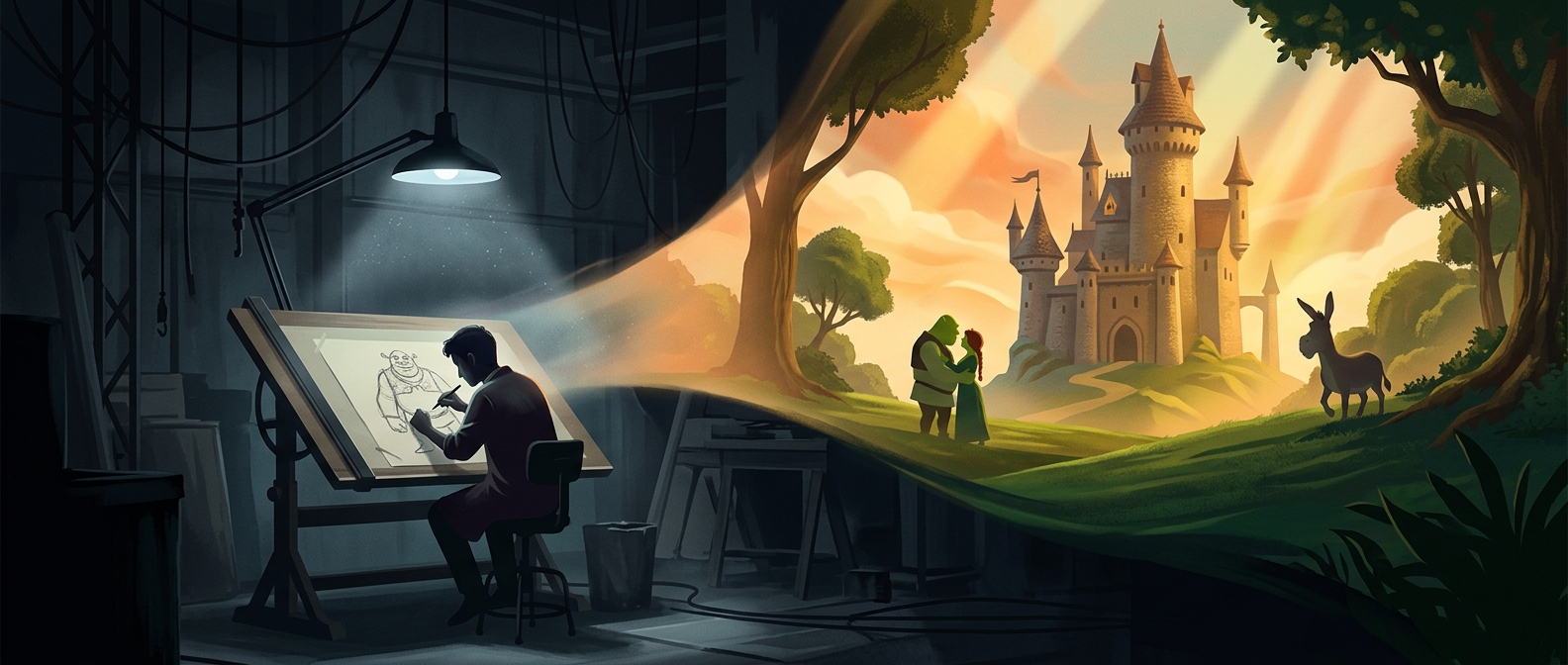
The story turns on a sharp contrast in how the two projects were perceived. The Prince of Egypt was a serious, visually ambitious biblical epic; Shrek, adapted from a children’s book about an ogre, sounded to some animators like a less prestigious follow-up. In that telling, struggling on one film meant being sent to the other—not as a formal punishment, but as a reassignment that workers feared could hurt their standing in the industry.
That fear reflected how much a project’s reputation can shape an artist’s career. Animators build résumés through the films they work on, and a job regarded as a step down may seem like a sign that a studio has lost confidence in them. The irony is that the assignment also put those artists inside a production whose unusual tone would become its defining strength.
The gamble behind Shrek
Rather than treating its fairy-tale setting as solemn or polished, Shrek made room for jokes about familiar storybook conventions and paired them with an unlikely hero. That gave the film a distinct identity: it could entertain children while also letting adults recognize the references and send-ups. The creative challenge was to make irreverence feel like part of the world, not merely a string of jokes.
When Shrek won the first Academy Award for Best Animated Feature, the supposed career detour had become a landmark credit. The anecdote endures because it captures a real tension in creative work: an assignment that looks like a setback from the outside can place a team at the center of a project that changes how its field is recognized.