How a temporary underground wall forms
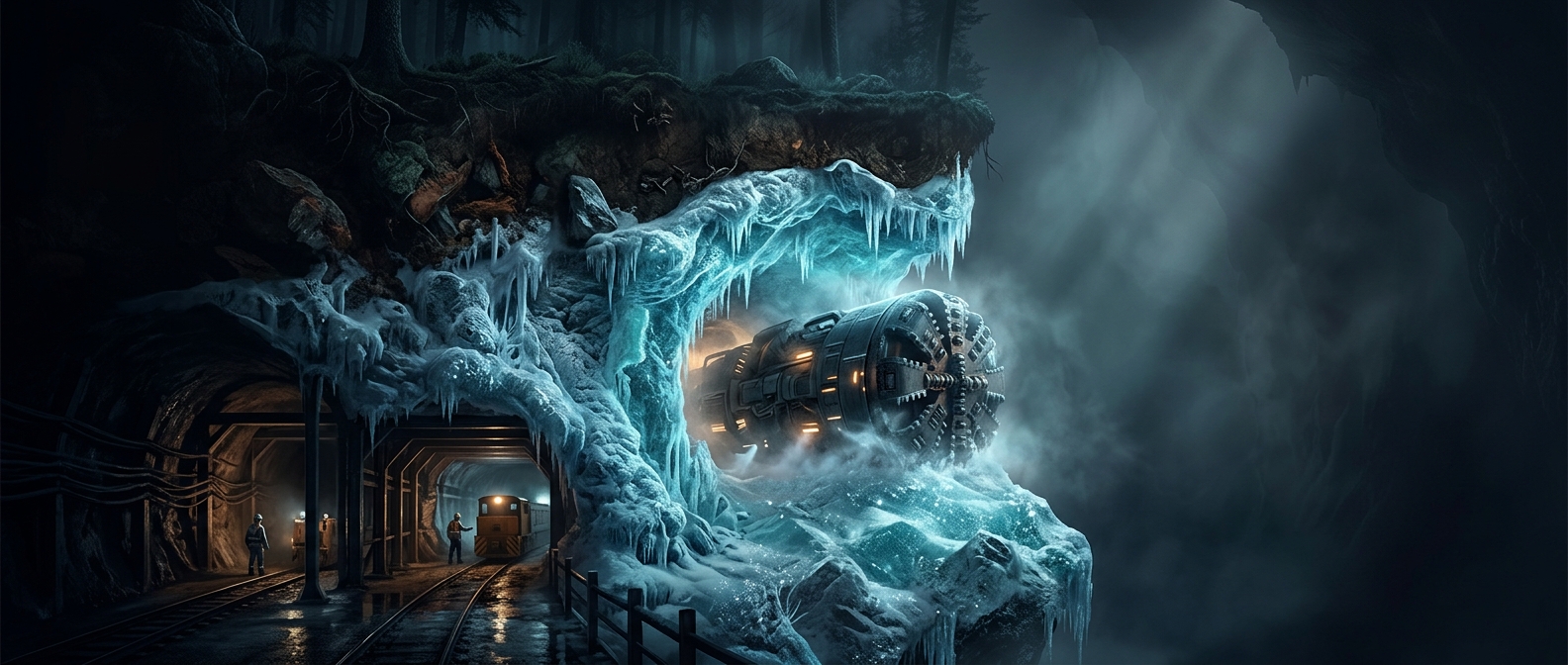
Soil is not a solid block: grains sit among water and air, and groundwater can keep moving through the gaps. When pipes carry a refrigerant through the ground, they draw heat out of the surrounding soil. The cold spreads outward until frozen zones around neighboring pipes meet, creating a continuous shell around the planned excavation.
That shell works in two ways. Ice binds soil grains together, giving loose ground more strength, while frozen pore water blocks the paths groundwater would otherwise follow. The result is a barrier that can support the excavation and limit water inflow without leaving a permanent wall in the ground.
Why freezing is useful—and demanding
Freezing is especially valuable where ordinary excavation would let water wash soil into the opening or where installing a conventional support system would be difficult. But the wall must be thick and continuous enough to do its job. A warm pocket or an unfrozen gap can become a weak point, so crews monitor ground temperatures and keep the refrigeration running as digging advances.
The method also changes the ground temporarily. Water expands as it freezes, which can shift nearby soil or structures; when the ground later thaws, it may settle. Engineers therefore have to manage both the cold barrier and the transition back to unfrozen ground. The “ice fortress” is not simply built and forgotten: its usefulness depends on maintaining it through excavation, then allowing it to disappear without leaving the surrounding ground unstable.