Why Railways Need a Layer of Crushed Rock
A train’s weight reaches the ground through a surprisingly small set of contact points: wheels press on rails, rails rest on sleepers, and sleepers bear on the track bed. Without a stable base, that repeated load would push the sleepers into the soil unevenly, letting the rails sag or shift out of alignment.
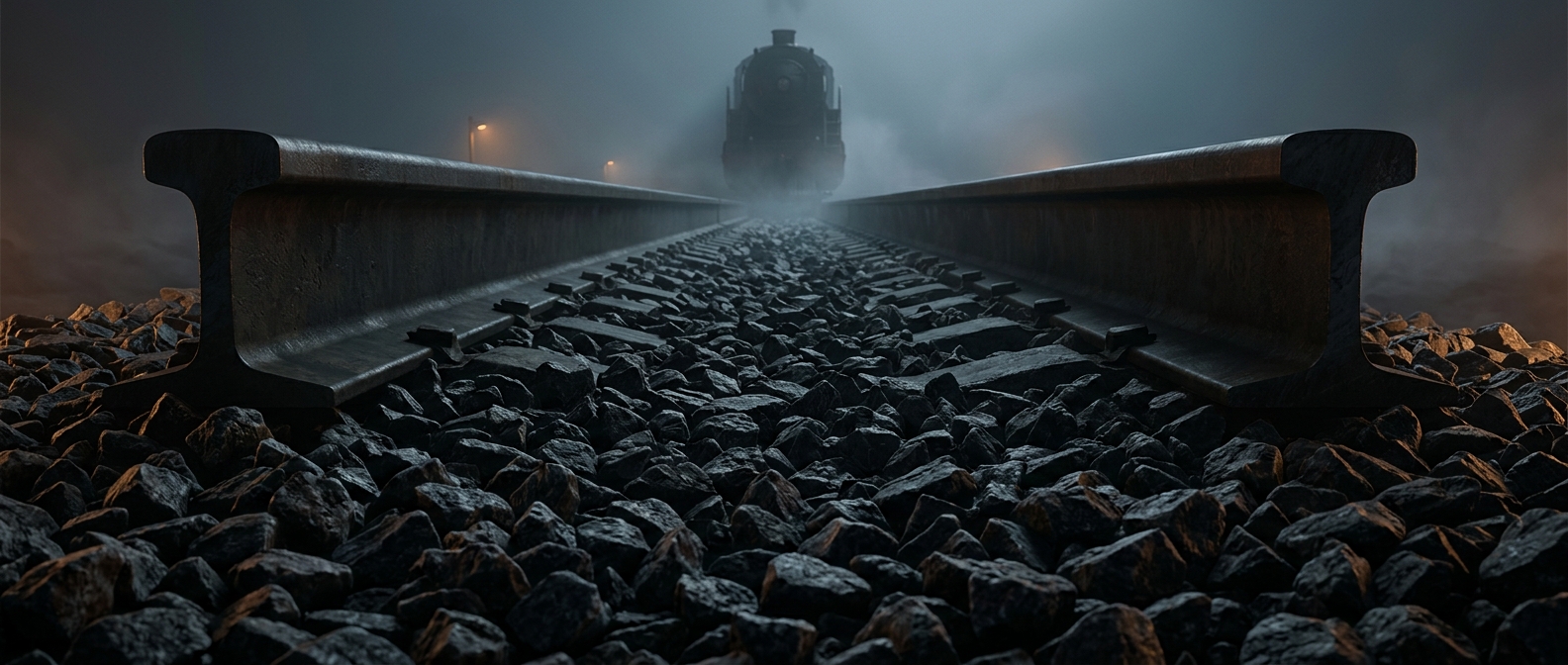
The crushed rock beneath and around the sleepers is called ballast. It spreads their load over a broader area, reducing the pressure on the ground and helping the track keep its shape.
Why the Stones Are Sharp
Ballast is not just any gravel. Its angular pieces catch against one another, resisting sideways movement when a train’s wheels push on the rails. The rock also holds the sleepers down, helping prevent the track from spreading under force or creeping out of position over time.
The gaps between stones matter, too. They let rainwater drain away instead of pooling around the sleepers and weakening the ground beneath them. A layer of loose, fine soil could retain water and shift more easily; coarse ballast helps keep the track bed both drained and mechanically stable.
A Track Bed That Can Be Repaired
Ballast does not make a railway immovable. Passing trains gradually jostle the stones and can disturb the track’s level. Railway crews can lift and realign the rails and sleepers, then pack the ballast back beneath them—a maintenance process that restores support without rebuilding the entire track bed.
So the jagged stones do two jobs at once: they form a drainage layer and a shifting-resistant foundation. Their interlocking shape helps keep the track aligned, while their looseness makes that alignment possible to correct.