Why a tiny self-view can command so much attention
A video call turns the speaker’s face into a persistent visual cue. Instead of checking a mirror and then looking away, people may see their own image while listening, speaking, and reading others’ reactions. That can pull attention inward: a person starts monitoring how they look or sound at the same time they are trying to follow the conversation.
Psychologists call this self-focused attention. In ordinary conversation, attention is mostly directed toward the other person and the exchange. A visible self-image can redirect some of it toward perceived flaws—a tense expression, a stray hair, or a moment of hesitation. The more someone checks for problems, the more likely small details are to feel important.
A live image is not a neutral mirror
The webcam view also differs from how people usually encounter their appearance. It may show a face at close range, from an unflattering angle, under indoor lighting, and in motion. A small preview can make someone fixate on a feature that other participants barely notice. And because the image changes as a person talks, it can invite continuous evaluation rather than a quick glance.
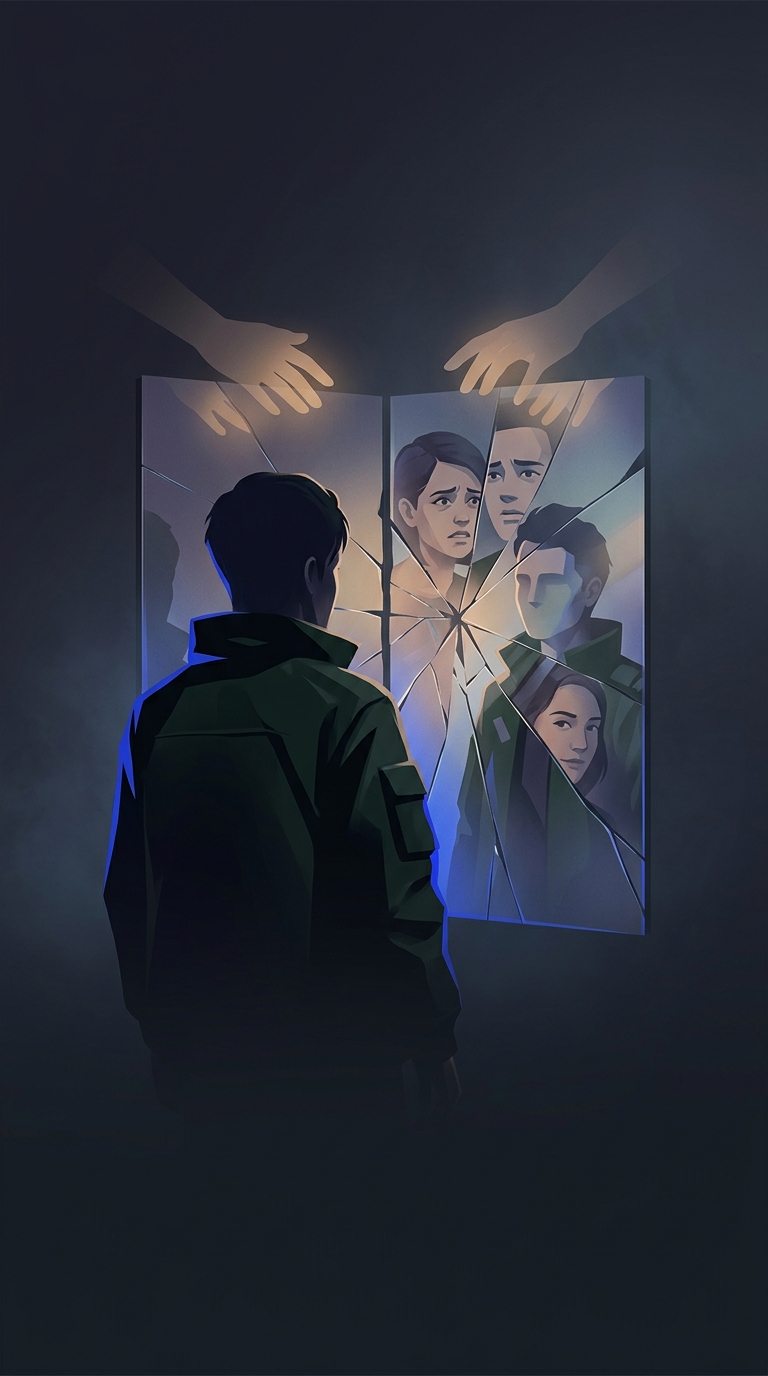
That pattern may contribute to insecurity or a sense of distance from one’s own appearance: the face becomes something to inspect and manage, not simply part of being in a conversation. It is a different kind of pressure from a magazine image, which presents a polished ideal for comparison. A webcam can make scrutiny feel immediate and personal, even though its view is also shaped by camera placement and screen design.
When the preview becomes the audience
The effect is not inevitable, and a self-view alone does not establish that someone has a body-image problem. But for people already prone to appearance worries, repeated exposure can give those worries more chances to take hold. Hiding the self-view, when a platform allows it, can remove one source of distraction while leaving other participants visible. The practical difference is simple: the conversation no longer requires watching yourself have it.