Why Bakelite Stayed Put
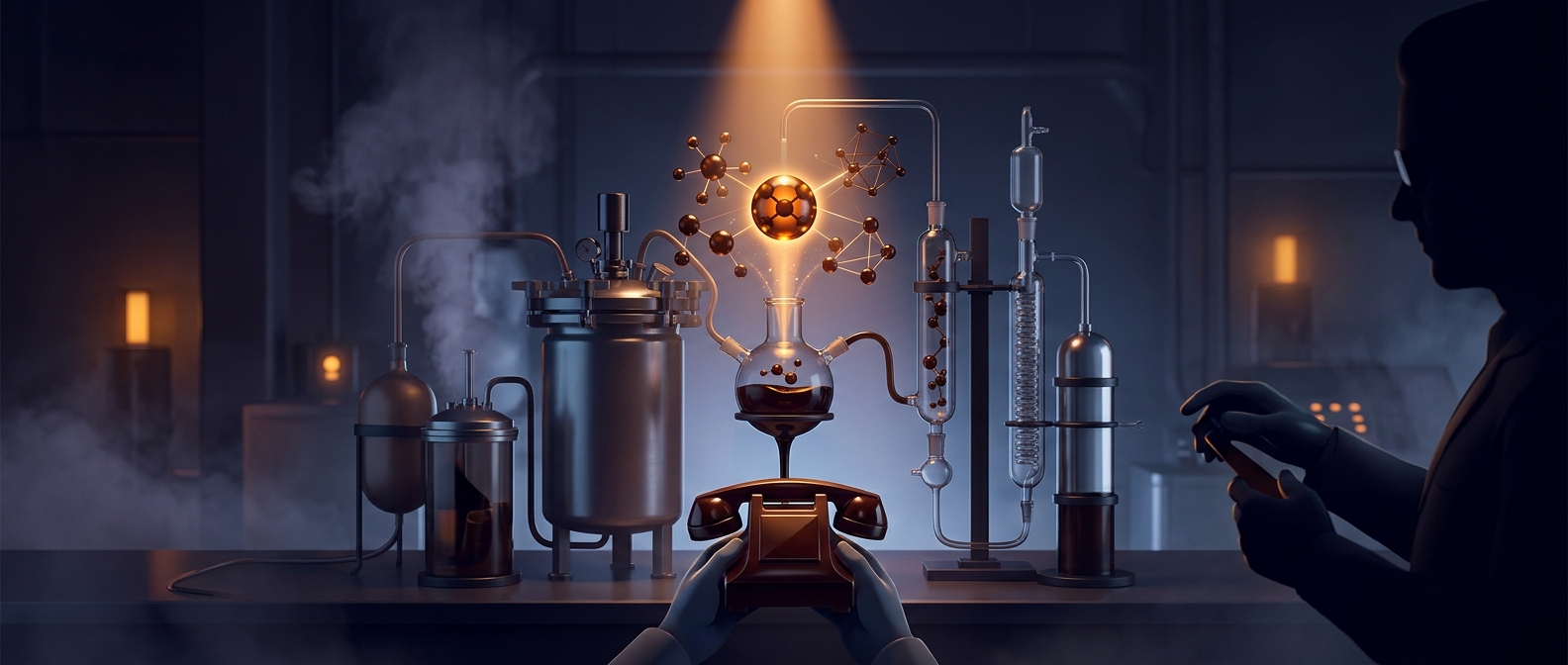
Bakelite belongs to a class of plastics called thermosets. When its ingredients were heated and pressed together, they reacted to form a dense network of linked molecules. That network locked the material into its shape. Unlike a plastic that can be warmed, softened, and molded again, Bakelite could not simply be melted back into a workable mass; too much heat eventually damaged it instead.
From Molding Press to Everyday Object
This one-way change suited factories. Workers could put warm Bakelite into a mold, apply pressure, and produce a hard part with a consistent shape. Once set, it held that shape through ordinary use. The material also resisted heat and did not readily conduct electricity, useful qualities for parts surrounding electrical components.
That combination made Bakelite practical for the casings and handles of radios, telephones, and other electrical goods. A housing had to be more than decorative: it needed to keep its form near warm components and help separate users from live parts. Bakelite offered manufacturers a way to make such pieces directly in a mold, rather than carving each one from a natural material.
The Tradeoff Behind the Hardness
Bakelite’s permanence was also a limitation. A thermoset object could not be reheated and reshaped when a design changed, so its mold fixed the part’s form for good. But for products made in large runs, that constraint could be worthwhile: once a mold was ready, the same durable shape could be produced repeatedly.
The key manufacturing shift was not merely that Bakelite was new. It was that heat could help form an object once—and then leave it stable enough for daily life.