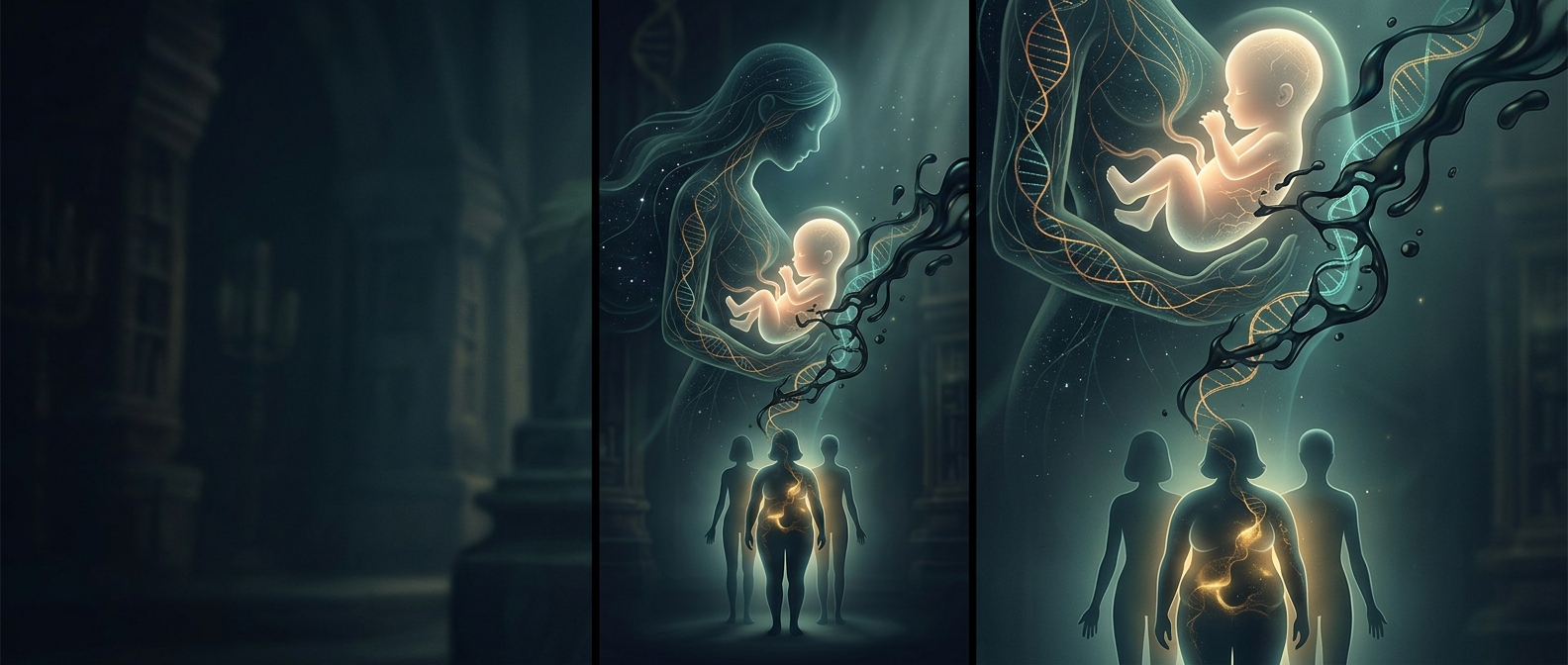
What the Ice Storm Could—and Could Not—Show About Prenatal Stress
The 1998 Quebec ice storm left many households without electricity or heat for days or weeks. Researchers later used this unusually sharp disruption to study a difficult question: can hardship during pregnancy leave measurable traces in a child’s biology?
In Project Ice Storm, researchers followed children whose mothers were pregnant during the disaster. They compared different kinds of exposure, including practical hardship—such as days without power—and mothers’ reported distress. That distinction matters: the storm did not deliver one uniform dose of stress to every pregnancy.
The Biological Clue Was Methylation, Not Rewritten DNA
The researchers examined DNA methylation, a chemical tag that can affect how actively a gene is used without changing the DNA letters themselves. In the children, storm-related prenatal exposure was associated with differences in methylation at some genes involved in immune and metabolic functions.
Stress hormones are one possible link: signals from a stressed body can reach the developing fetus and influence its environment. But it is misleading to describe cortisol as flooding the placenta and permanently switching on particular genes. The study did not establish that chain of events, and methylation is not a simple on-off switch. It can vary by tissue, age, and other conditions.
A Long-Term Association, Not a Biological Sentence
Follow-up research reported associations between prenatal storm exposure and some later measures of health, including metabolic or immune-related outcomes. These findings make the storm a valuable natural experiment, but they do not show that it caused severe obesity, asthma, autism, or any other fixed outcome in an individual child. Nor do they prove that a methylation difference itself produced a health problem.
The lasting insight is more measured: prenatal conditions may be linked to biological patterns detectable years later, while those patterns remain part of a larger story shaped by development and life after birth. A molecular mark can be evidence of exposure—not a forecast of a child’s fate.