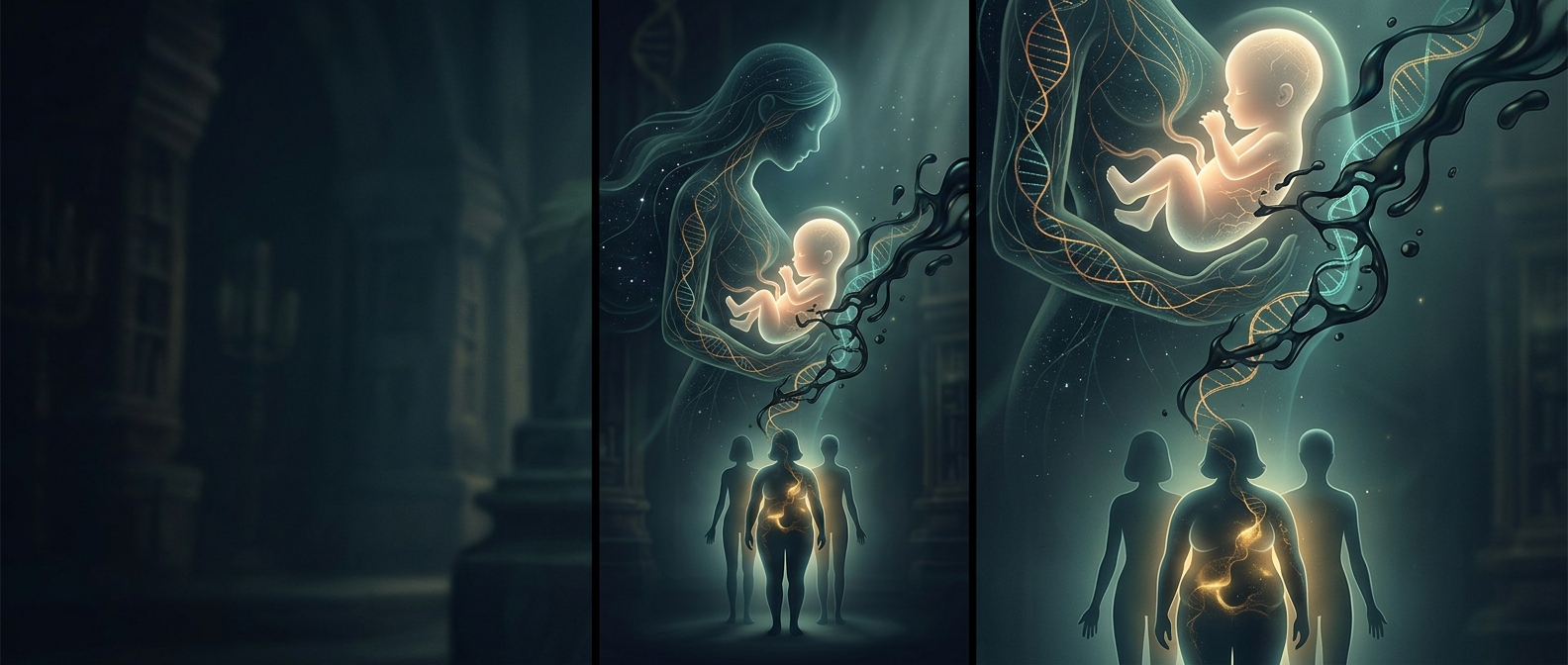
How experience can leave a mark without changing DNA
A DNA sequence is the order of the genetic letters in a cell. But cells also use chemical signals to help decide which genes to read and when. One common signal is DNA methylation: small chemical groups attach to DNA and can make a gene easier or harder for a cell to use. Other marks affect the proteins DNA is wrapped around, changing how accessible a gene is.
These marks are part of gene regulation, not edits to the genetic code. A severe stressor—such as prolonged deprivation or exposure to a harmful substance—can alter biological systems and, in some circumstances, influence these regulatory patterns. The effect depends on the tissue and the circumstances; a mark in one kind of cell does not automatically appear throughout the body.
What it takes for a mark to reach another generation
For an effect to be inherited, it must somehow persist through sperm or eggs and the earliest stages of development. That is a difficult passage: many chemical marks are erased and reset as embryos develop. Some may escape this reprogramming, and an ancestor’s experience can also affect descendants indirectly—for example, by changing a pregnant parent’s body or the environment in which a child is raised. Those routes are biologically different from a mark passed through the germ cells.
That distinction matters when interpreting claims about family history. A pattern seen across generations does not by itself show that a chemical mark was inherited; genes, shared surroundings, and conditions during pregnancy can also contribute. Researchers study these pathways, but the particular experience and effect matter, and not every stress leaves a lasting or transmissible mark.
The striking possibility is therefore narrower than “memories in DNA”: an experience can sometimes change how biological instructions are read, and some effects may outlast the person who first experienced it—without changing the instructions themselves.