Irritation as characterization
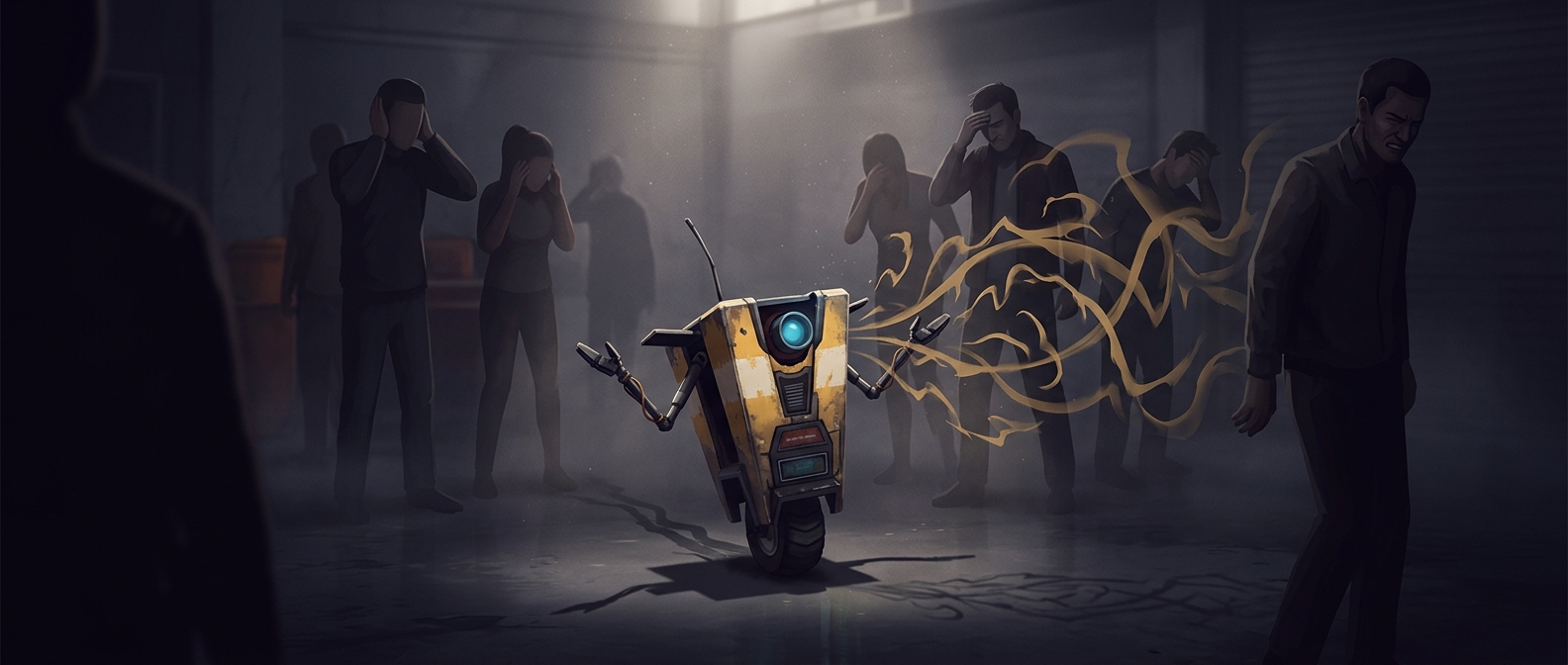
Claptrap’s interruptions do more than establish that he is irritating: they make the irritation part of how players understand him. A pop-up message pulls attention away from the immediate task; dancing and smug text keep the robot performing even when the player has little reason to pay attention. The joke depends on a familiar mismatch: Claptrap acts as though he is charming and important while the player may wish he would stop.
A character built to interrupt
In a game, a character’s personality is usually delivered through dialogue, animation, and timing. Claptrap’s design makes those tools hard to ignore. His messages appear on screen, his movement is conspicuous, and his self-satisfied tone gives even a brief encounter a point of friction. The annoyance is not an accidental side effect of an otherwise lovable helper; it is part of the performance.
That choice also gives players something to react to. A character who reliably gets under their skin can become memorable precisely because he is difficult to tune out. The irritation creates a comic contrast between the robot’s confidence and the player’s impatience, turning a small interruption into a recurring character trait. Claptrap is designed not merely to be seen, but to make players feel that he is demanding their attention—and to make that demand the joke.