The pocket is part of the shot
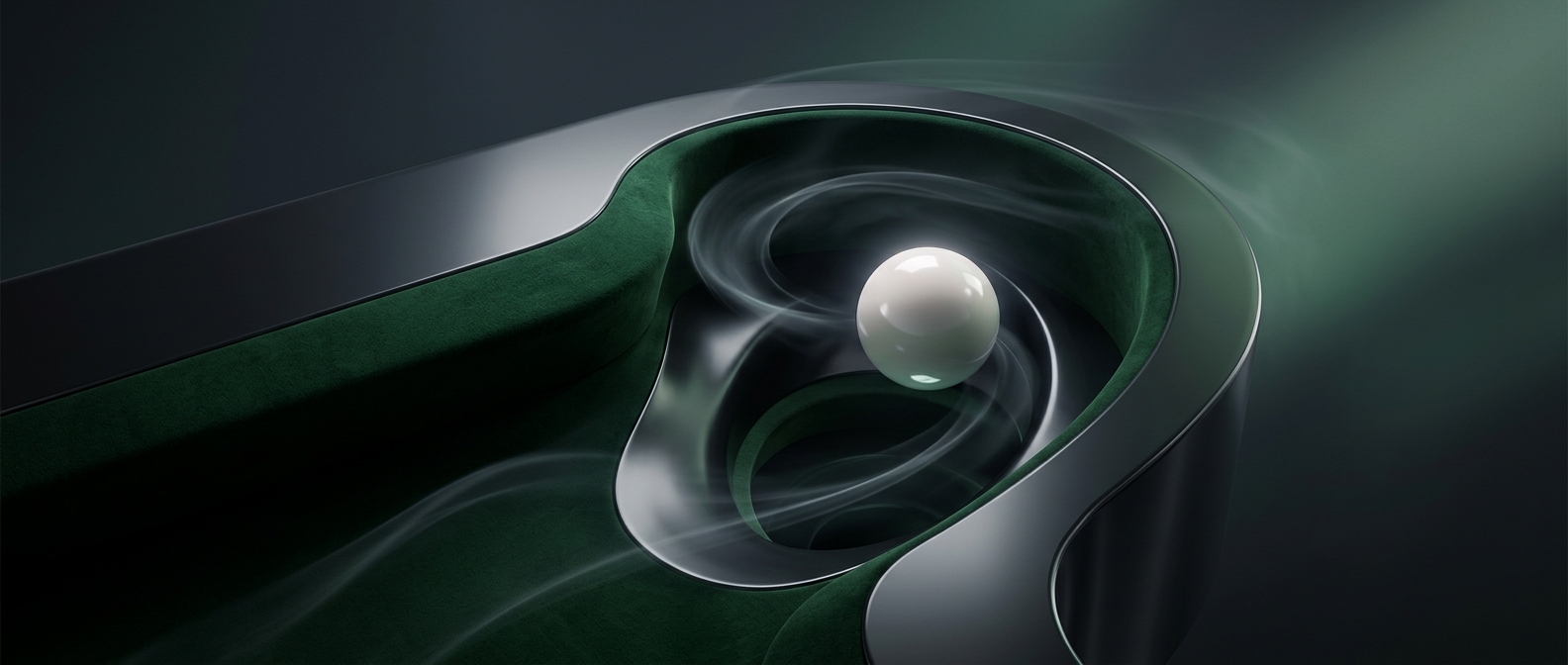
A snooker pocket is not simply a hole cut into the table. Its opening is formed by jaws: the shaped, cloth-covered cushion edges on either side of the mouth. When a ball arrives near an edge, it can strike a jaw before it has fully crossed into the pocket.
That contact changes the ball’s direction. A cleanly lined-up shot passes through; a ball that catches the jaw can be sent back onto the table instead of falling. The rounded shape makes the result sensitive to the ball’s path, so aiming roughly at the opening is not always enough.
Why a near miss can still be a miss
The outcome depends on more than whether the ball appears to fit through the mouth. Its angle and pace determine where it meets the jaw and how it leaves that contact. A small error in aim can turn a shot that looks close into a rebound, while a well-judged path carries the ball past the cushion edge and into the pocket.
That changes how players plan: they must allow for the opening’s shape, not just target its center. The jaws make pocketing a test of precision even when the ball seems to be headed straight for the hole.