A Larger Table Changes the Shape of the Game
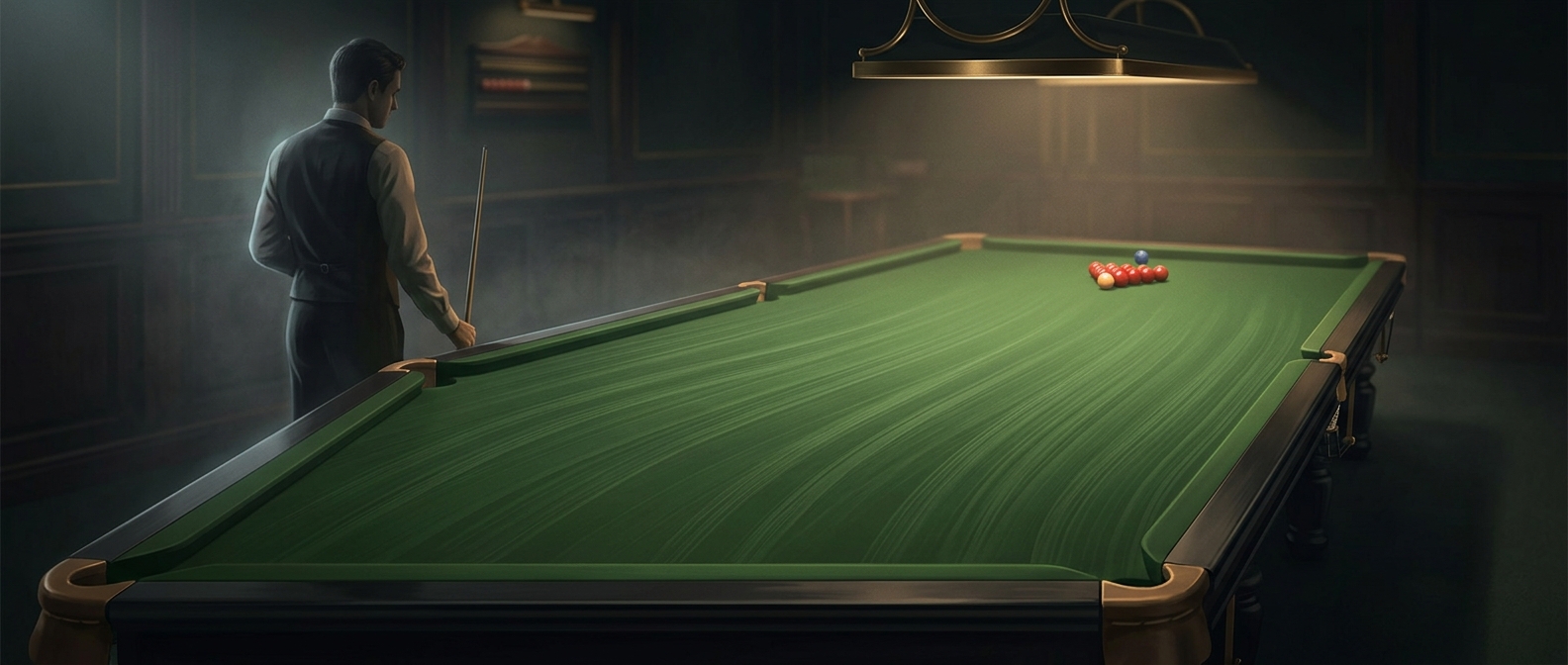
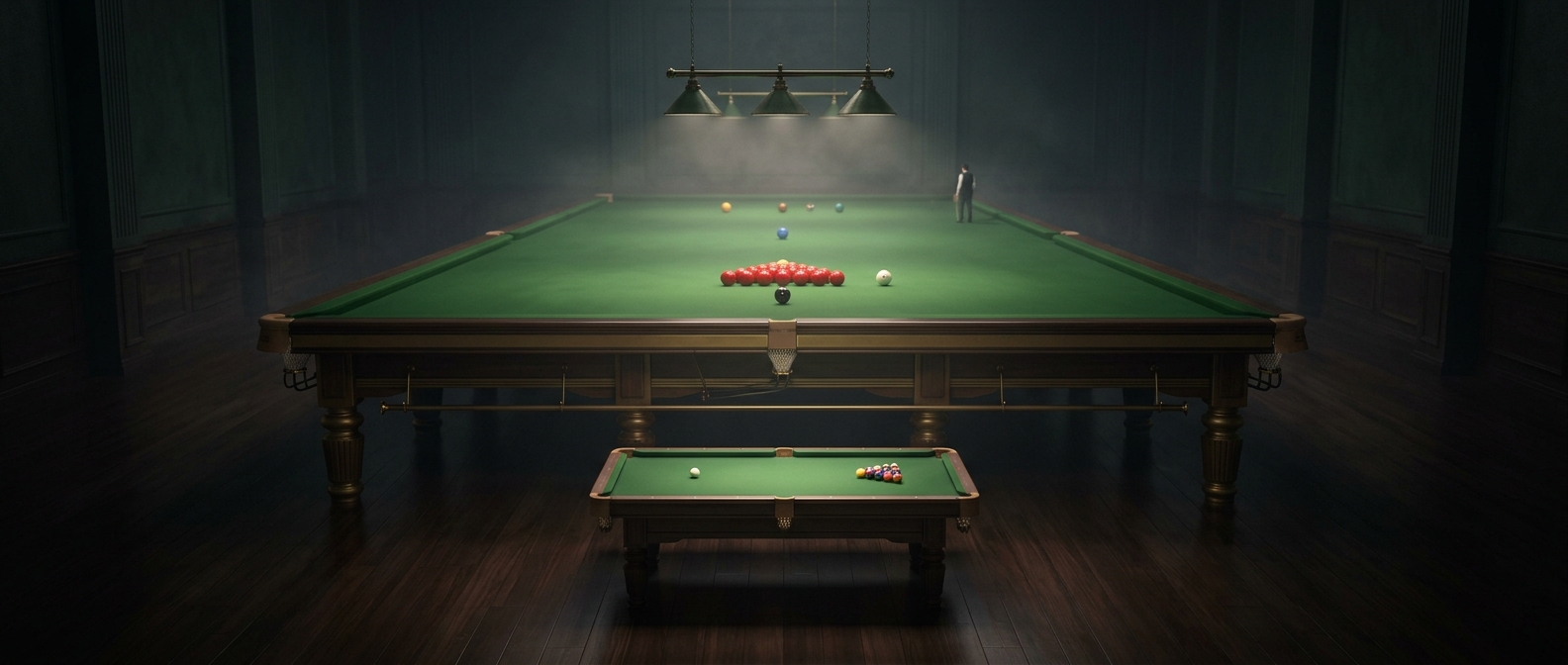
A snooker table’s extra length is not simply more room to play. It turns distance into a recurring challenge: a ball that looks close on a smaller pool table may require a carefully controlled stroke across several feet of cloth. The cue ball must travel that distance and still arrive at the right angle and speed for the next shot.
That second part is called position play—choosing where the cue ball will stop after a shot. In snooker, potting a ball is only part of the task. A player often needs to leave the cue ball near the next target, and a small error in pace can make that follow-up much harder on such a broad surface.
Space Demands Precision
The table’s size also makes long shots more prominent. Over a greater distance, slight misjudgments in aim or cue-ball movement become easier to expose. Players must judge not just whether a target can be reached, but how the shot will affect the sequence that follows.
That scale helps give snooker its distinctive rhythm: players build breaks by moving among targets while managing the cue ball’s path, rather than treating each successful pot as an isolated achievement. On a table that stretches 12 feet by 6 feet, controlling where the cue ball ends up can matter as much as getting a ball into a pocket.