A gym’s architecture set the challenge
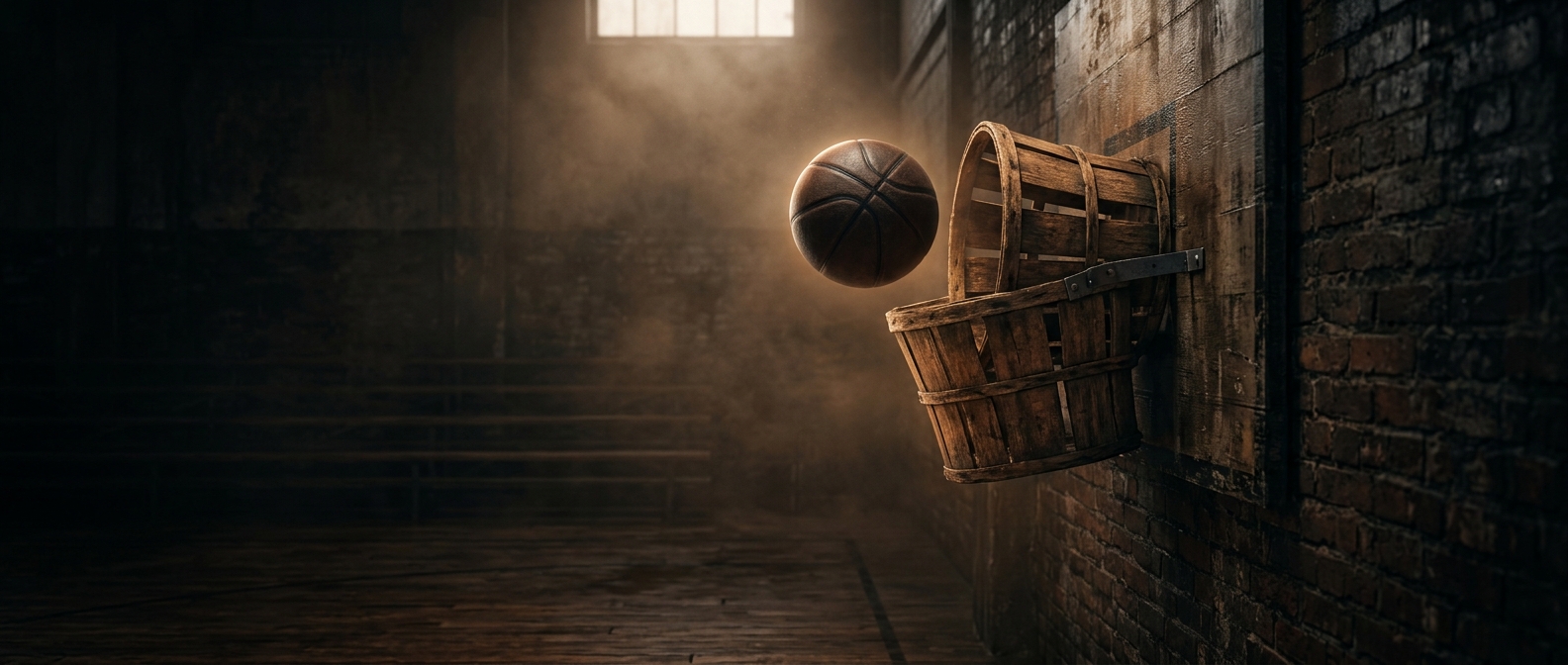
When James Naismith introduced basketball in 1891, the goal was to throw a soccer ball into a peach basket fixed high above the floor. The basket’s height came from the gym’s layout, not from a calculation about ideal shooting difficulty. Players had to loft the ball upward, and when they scored, someone retrieved it from the basket; the original baskets had closed bottoms.
That setup made height part of the game from the start. A target near the floor would have invited a different kind of contest, built around kicking or rolling the ball in. Raising it favored an arcing throw and gave defenders a reason to contest shots without simply guarding a low opening.
A fixed target, a changing game
As the equipment changed, the height remained. Baskets eventually gave way to open metal hoops and nets, so the ball could fall through instead of getting stuck. But moving the target would have altered the challenge players had learned to solve. The ten-foot rim became a stable reference point while rules, strategies, and athleticism developed around it.
That continuity has practical consequences: players can compare shots and records across eras because the target is still at the same height. It also keeps the original physical puzzle intact. A shooter must send the ball high enough to clear the rim, yet control its arc and angle so it drops through—an enduring test that began with a basket mounted in a gym.