A basket that kept the ball
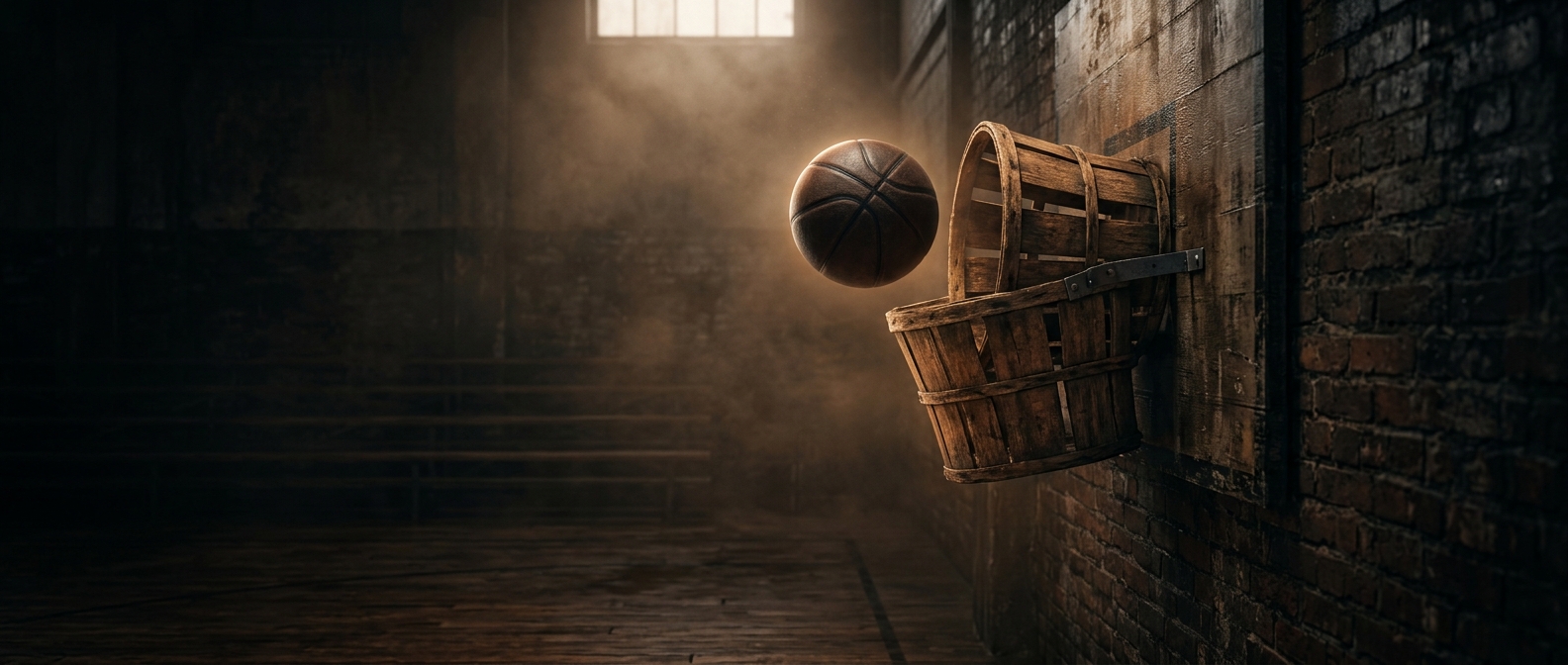
The early hoop was a literal container, not the open ring familiar today. A fruit basket’s solid bottom stopped the ball from dropping through, so a successful shot did not return the ball to the court. Someone had to recover it by hand before the next possession could begin.
That small design detail changed the rhythm of the game. Instead of moving straight from a score into a rebound or inbound, play paused while the ball was fetched. The basket could record a goal, but it could not yet support the quick, continuous flow that basketball would come to depend on.
The hoop had to become a passage
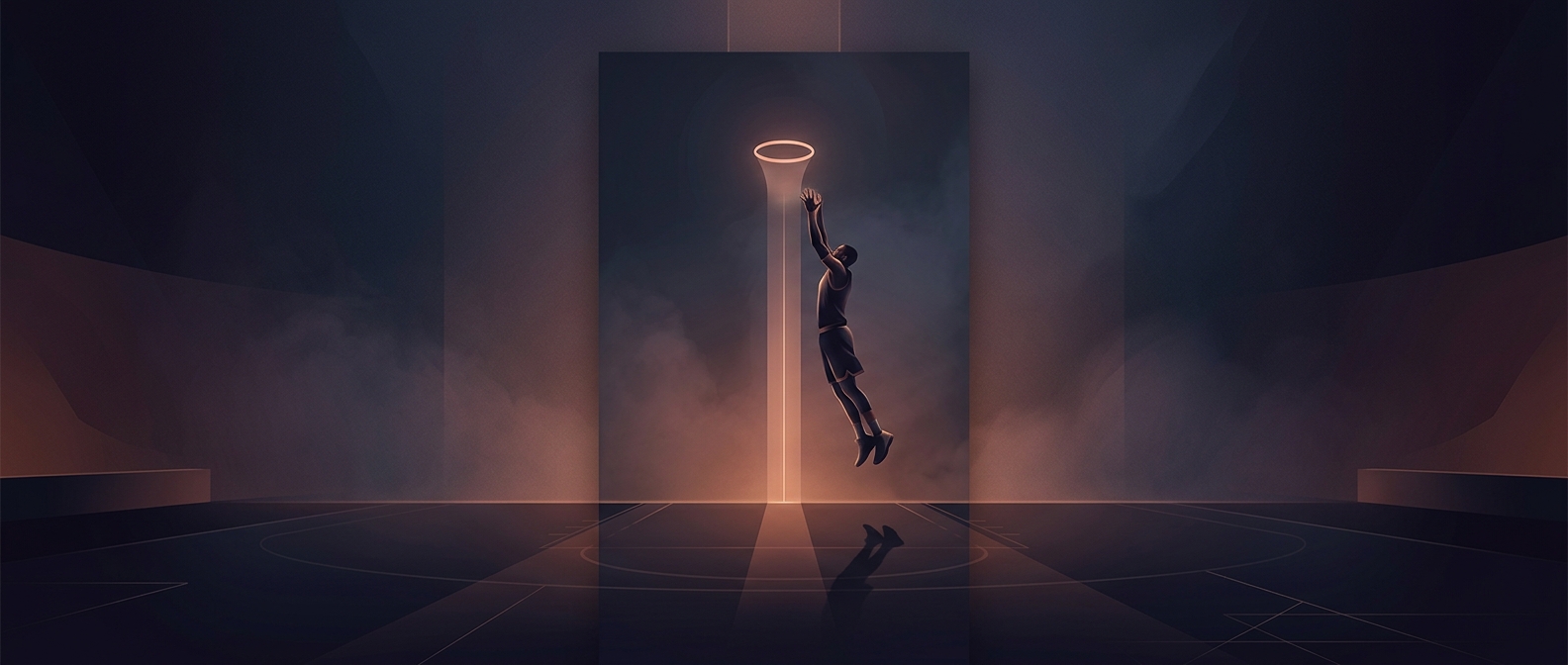
Removing the bottom solved the immediate problem: the ball could fall back to the floor after passing through the target. The goal shifted from a container that held a made shot to an opening that registered one and returned the ball to play.
That was more than a convenience. Once the ball could drop through, players and officials no longer needed a ladder between scores, and the game could restart without that interruption. The familiar open hoop is therefore not just a cleaner-looking target; it is a piece of game design that lets the next play begin as soon as the last shot is made.