Why Put Players on Barrels?
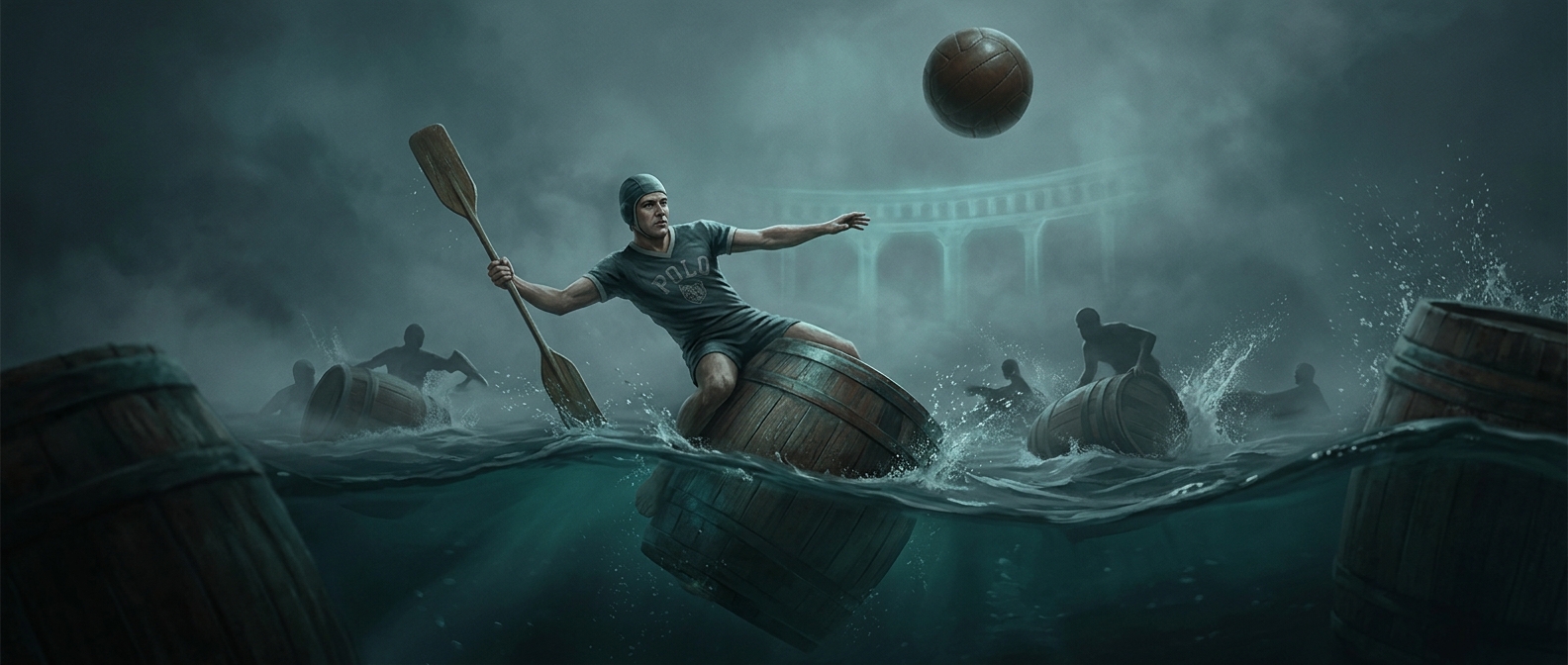
Early water polo was not always a contest of swimmers racing through open water. In one version, each player sat astride a floating wooden barrel painted to resemble a horse. The barrel kept its rider above the surface, while an oar supplied both movement and a way to strike the ball.
That arrangement turned the water into an obstacle course. A player had to steer a bobbing, slow-to-turn craft while keeping balance and tracking the ball. Even a simple change of direction could take effort; an opponent’s approach could threaten both the rider’s position and control of the barrel.
From Aquatic Jousting to a Swimming Game
The barrels changed what skill mattered. Instead of relying mainly on swimming speed and staying afloat, players had to manage a small craft and use its oar in a crowded, unstable space. The horse paint made the scene look like a mounted contest, but the practical effect was to make the game part race, part ball sport, and part balancing act.
Modern water polo depends on players moving through the water under their own power, so the barrel version belongs to a very different style of play. Its memorable image captures how experimental a game can look before its basic equipment and movement settle into the form people recognize: here, the “horse” was a painted wooden float, and every attempt to chase the ball began with steering it.