A Ring Treated as Sacred Ground
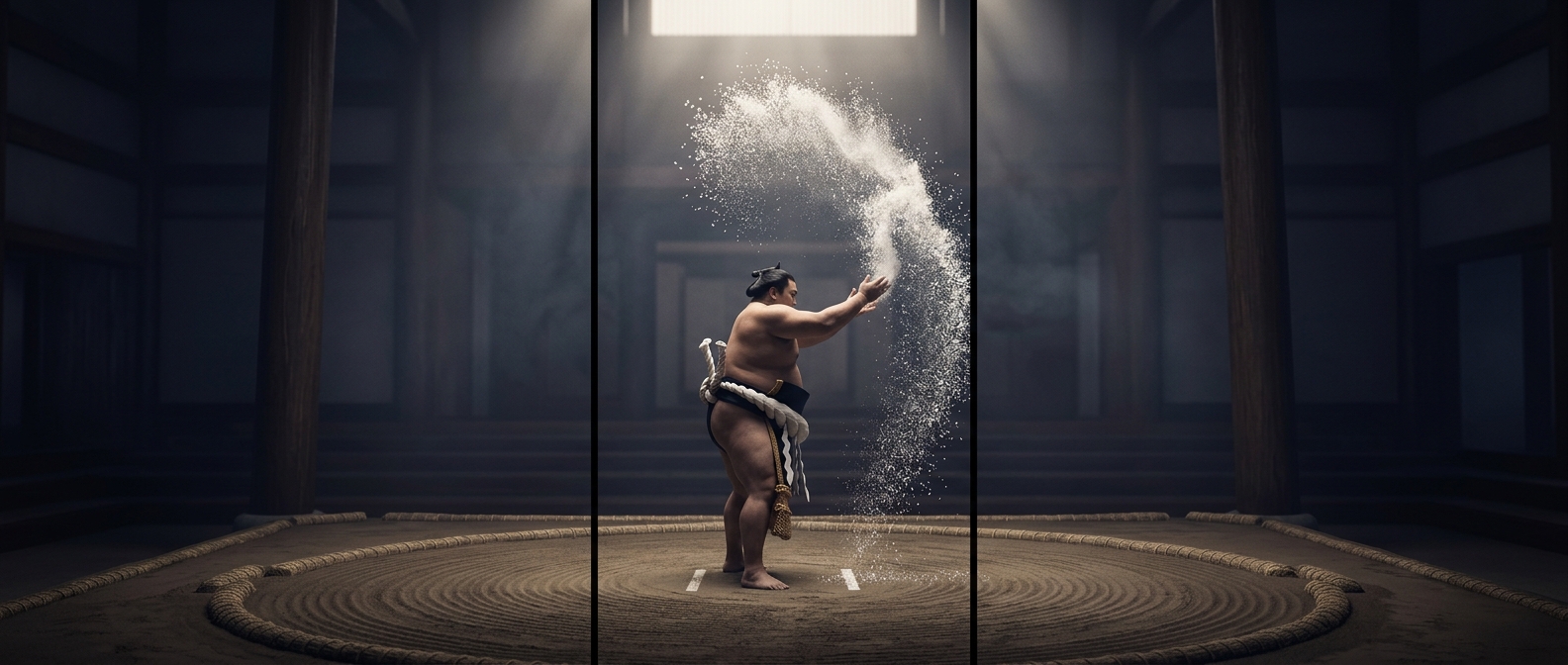
Sumo’s raised clay ring, or dohyō, is more than a place to compete. The ceremony around it reflects the sport’s roots in Shinto, a Japanese tradition in which purification rituals prepare people and places for sacred activity. Salt is used in some of those rituals as a cleansing symbol, so a wrestler’s handful is a way of marking the ring as ready for the contest.
The gesture does not change the ring physically or guarantee a result. Its meaning is ceremonial: the bout is about to begin in a space set apart from ordinary life. That helps explain why salt appears alongside the wrestlers’ other pre-match rituals, rather than as part of the match itself.
A Small Gesture in a Larger Ritual
Before a bout, wrestlers face each other, stamp their feet, and perform other formal movements. These actions give both competitors time to prepare and make the match’s opening feel deliberate rather than abrupt. Salt throwing belongs to that same ritual framework, connecting a sporting contest to older ideas of cleanliness, respect, and protection from harmful influences.
The result is a visible pause between ceremony and combat: a pinch of salt scatters across the clay, and the wrestlers continue their preparations. In sumo, even that brief movement signals that the ring is not just a surface to fight on—it is a space whose meaning is renewed before competition.