How Foosball Brought Soccer to the Hospital Bed
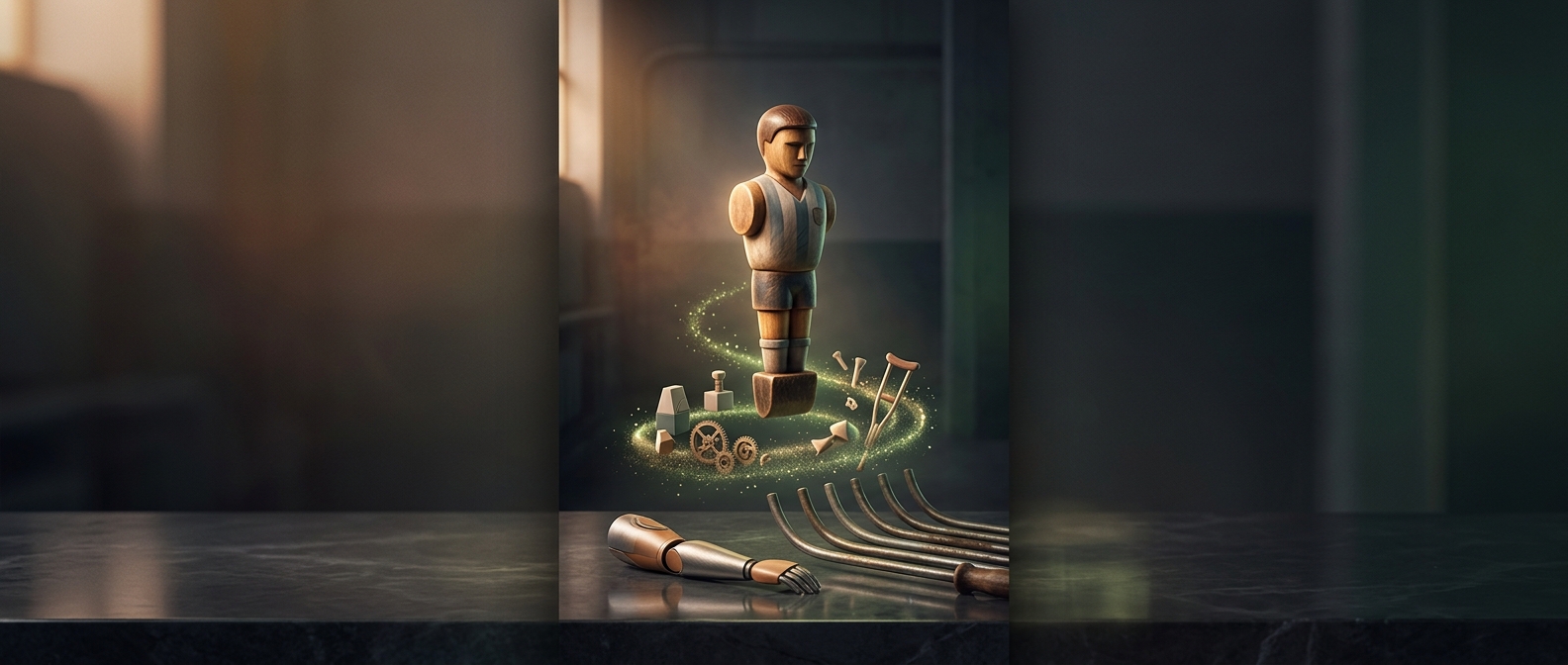
After being injured during the Spanish Civil War, poet Alejandro Finisterre designed a way for severely wounded hospital patients to play soccer without needing to run, kick, or even use their legs. The idea was to preserve the contest and teamwork of the sport while moving the action onto a table.
Turning a Field into a Table
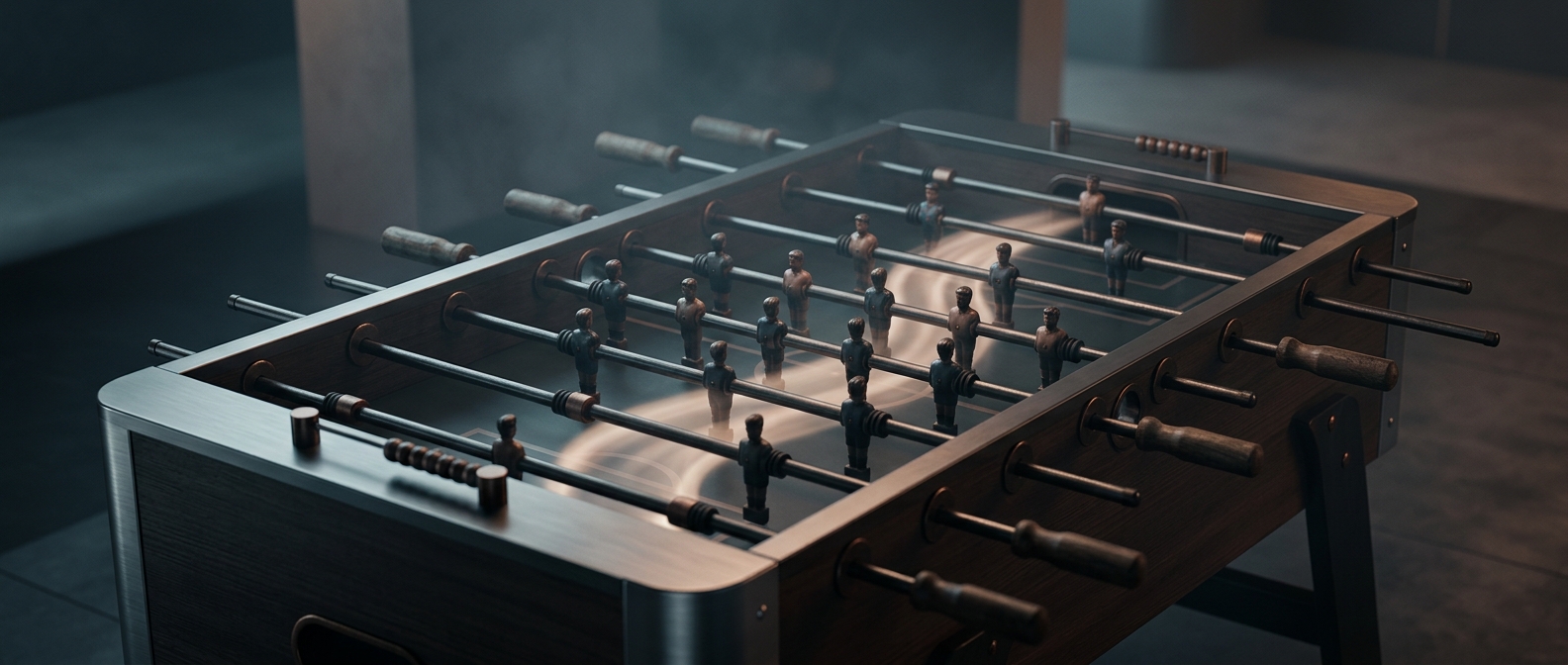
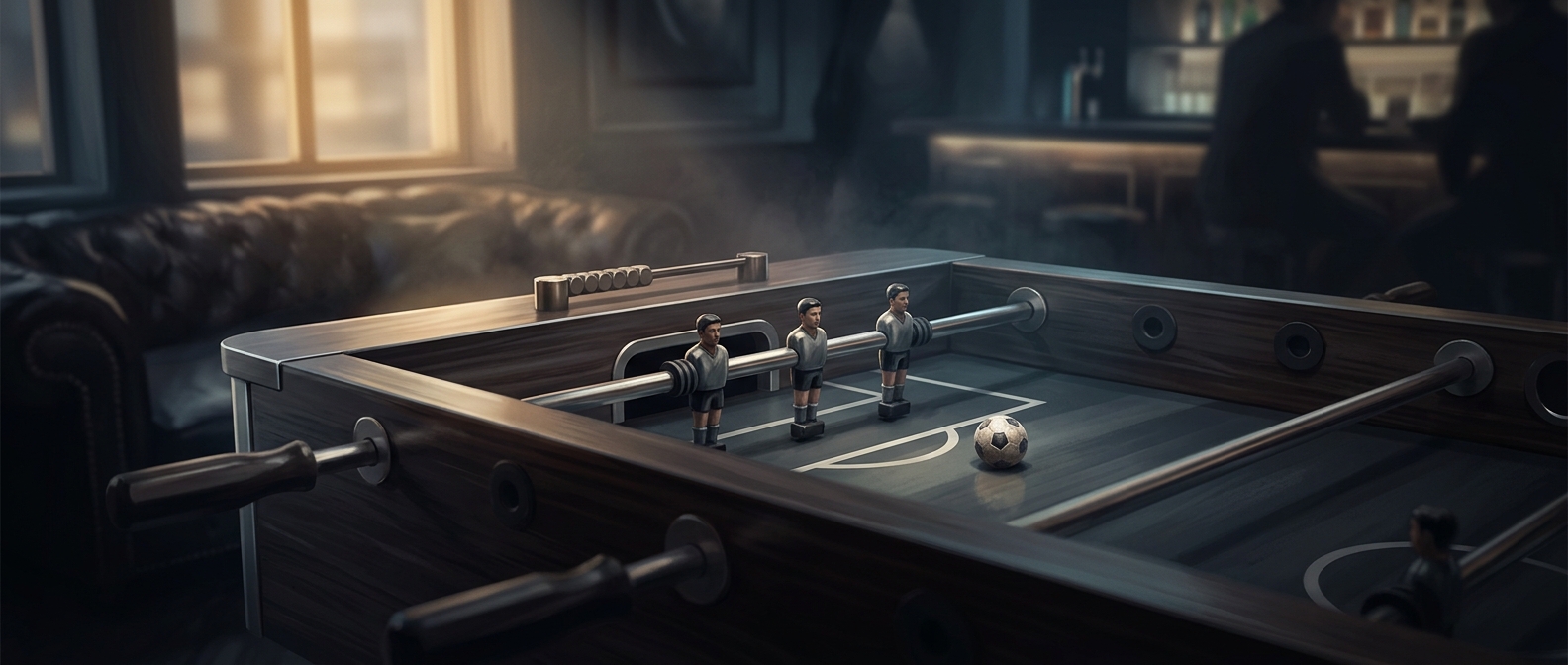
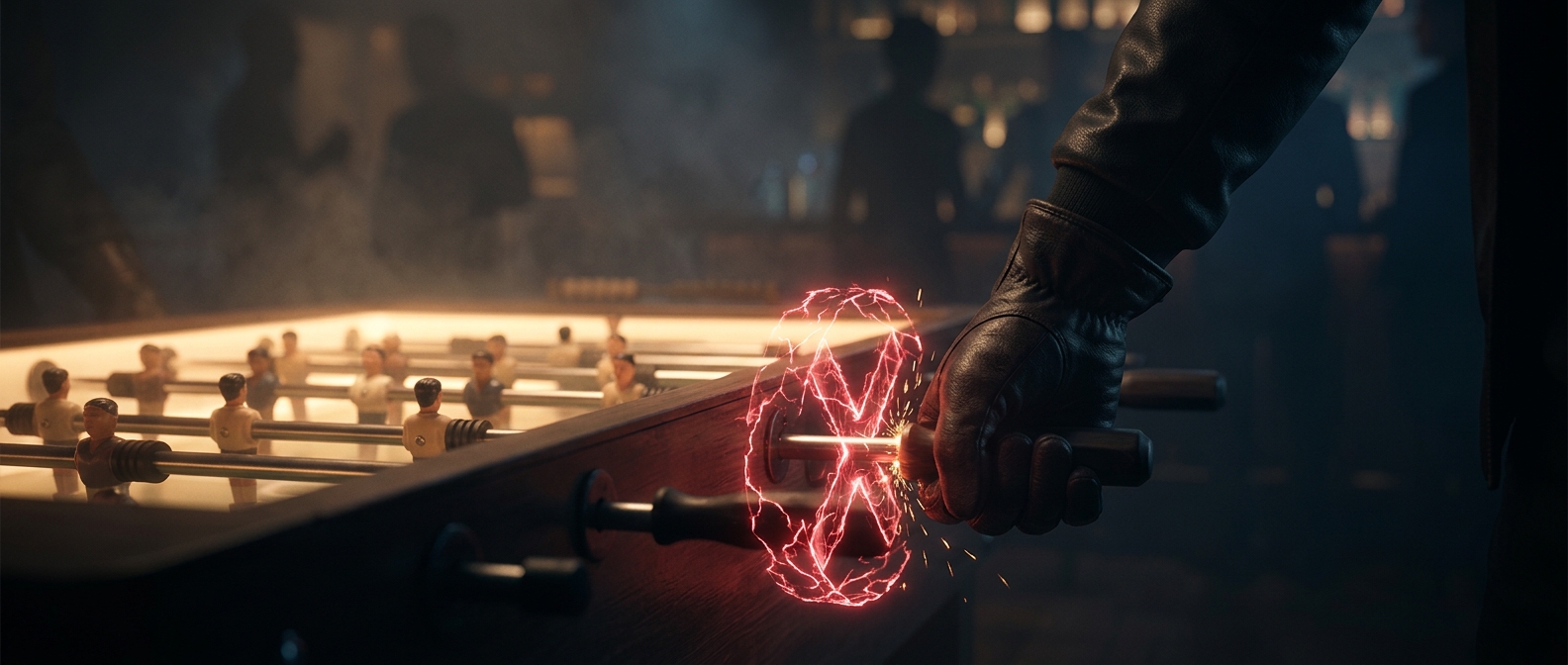
In foosball, miniature players are fixed to rods that pass through the sides of the table. Players grip and turn the rods to move their figures, blocking shots and sending the ball toward the opposing goal. The rods let someone control a whole line of players with their hands, replacing soccer’s running and kicking with quick choices about positioning, timing, and direction.
That change was more than a smaller playing surface: it changed who could take part. A patient confined to bed could still compete, react to an opponent, and help a team score. The table made the game’s central challenge—controlling space and creating a chance to score—possible without controlling the ball with one’s feet.
From an Adaptation to a Game of Its Own
Foosball keeps soccer’s goals and opposing teams, but its compact setup creates a different kind of match. The ball moves through a crowded field of fixed figures, and a player’s hands must work the rods rather than steer individual teammates freely. That makes coordination and fast decisions central to play.
Finisterre’s design shows how a familiar sport can be adapted around a physical constraint without losing its competitive core. What began as a way for injured patients to join in the pleasure of soccer became a game that people could play around a table—whether or not they had ever set foot on a field.