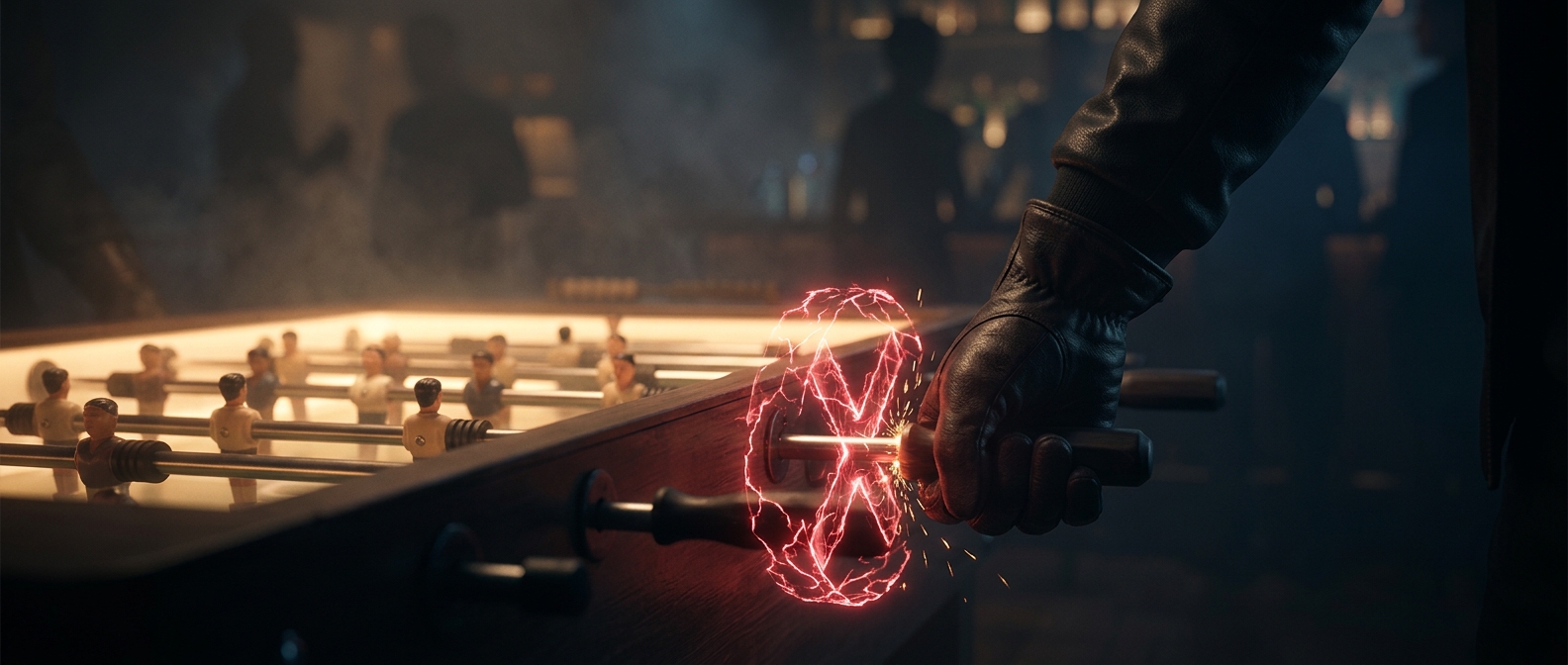
Why a spinning rod breaks the game
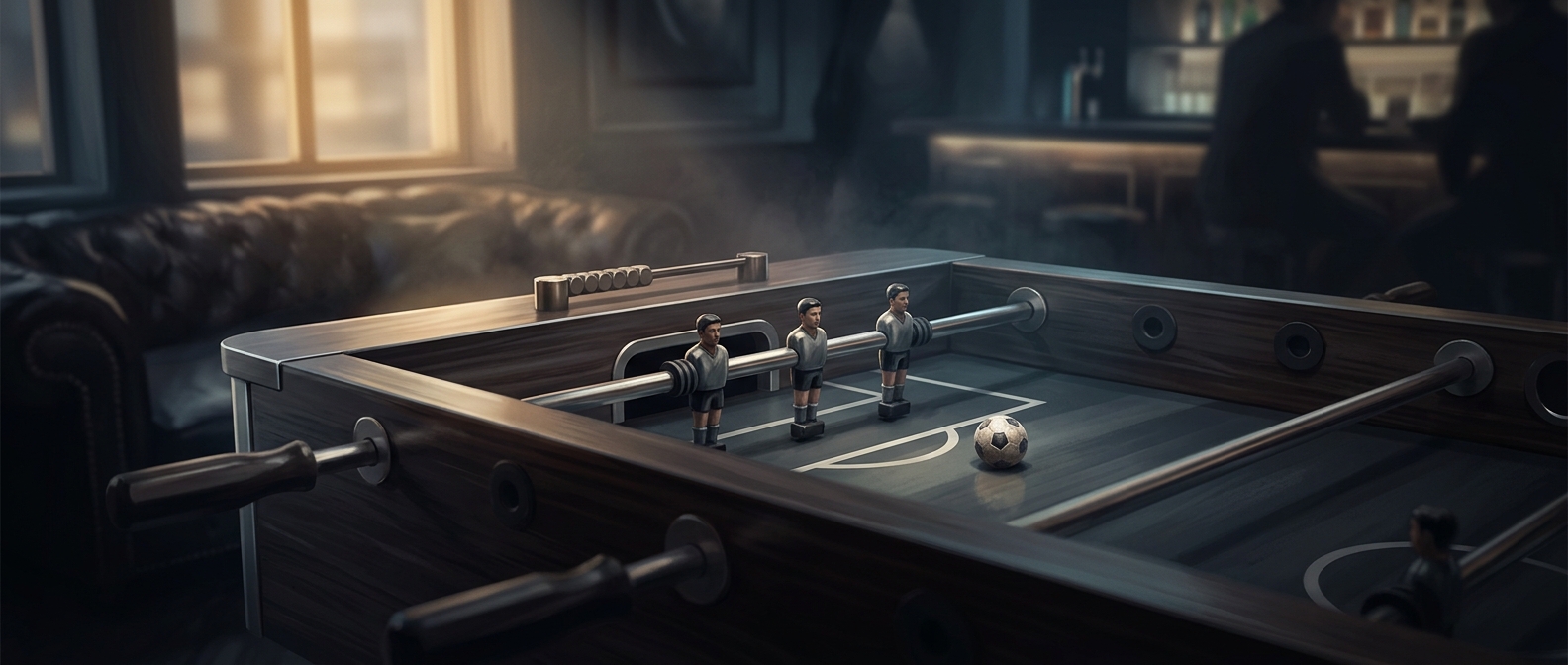
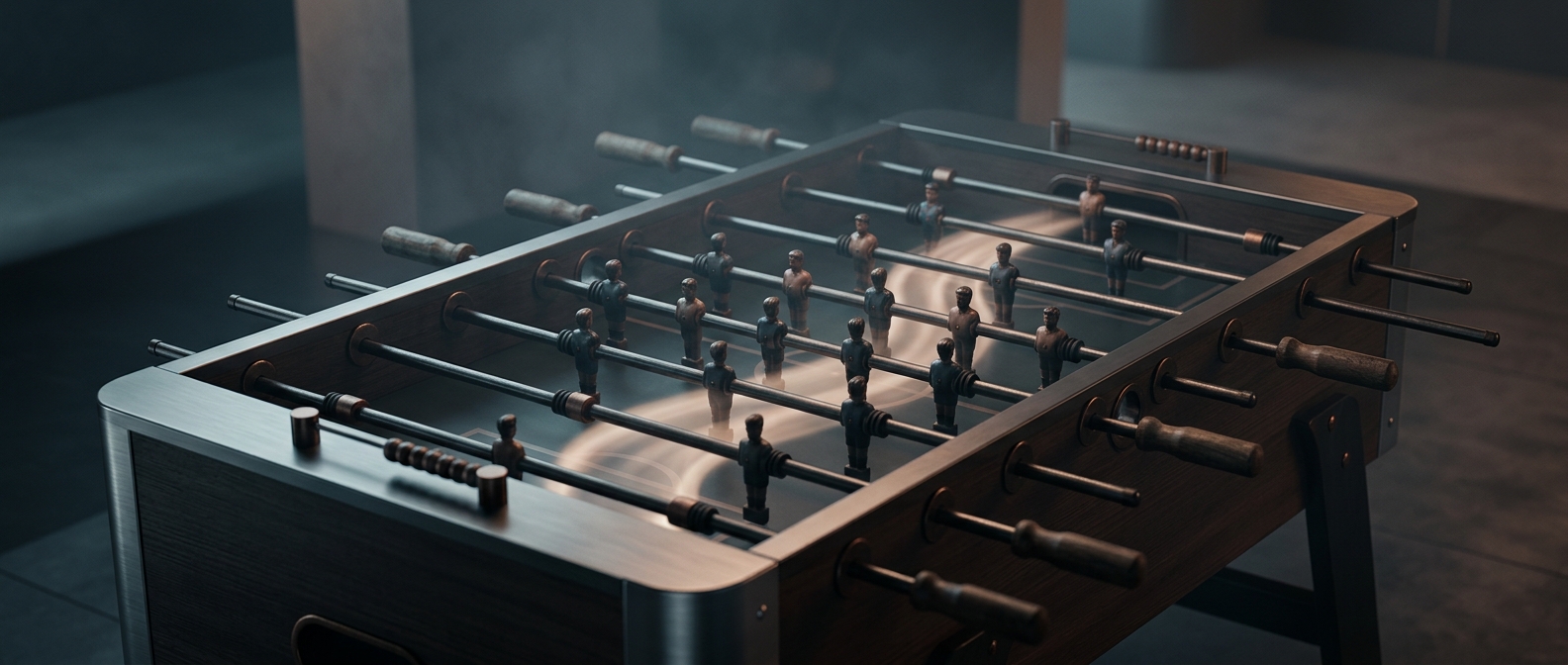
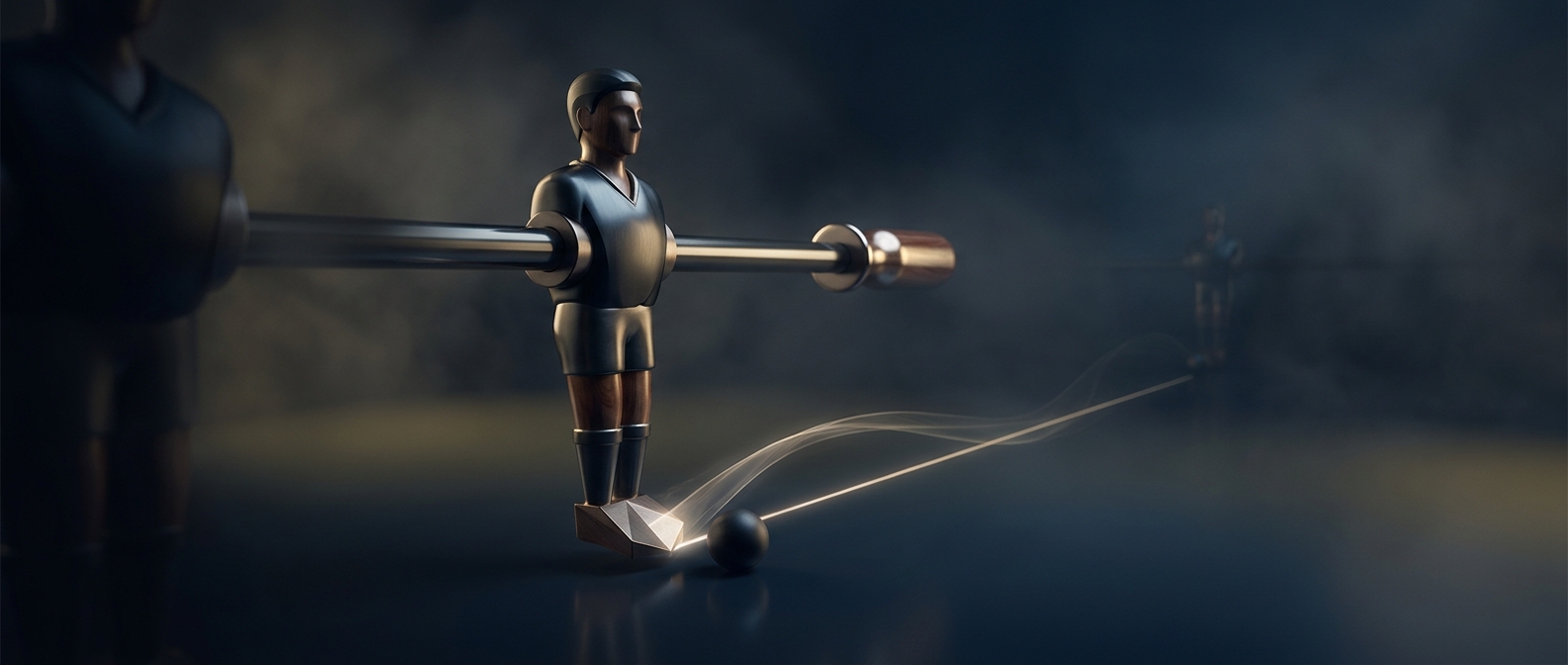
In foosball, the rod is meant to move a row of figures forward and back across the table. A player can slide it to position a figure, then turn the rod to swing that figure’s foot at the ball. A spin replaces that aimed swing with a full, rapid rotation—like a tiny helicopter rotor.
The difference is control. With a limited turn, the player has to line up the figure and time the kick. Spinning can send the foot whipping through the ball with much less precision, making the shot harder to read and defend. It also lets rotation, rather than careful positioning and timing, do more of the work.
A rule about skill, not physics
Tournament rules treat spinning as a violation, not because the rod cannot physically turn, but because unrestricted rotation changes what the game rewards. Players are expected to move the ball with controlled shots and passes that opponents can anticipate, challenge, and answer. The restriction keeps those exchanges central to play.
That is why a quick, forceful kick is not automatically a spin: the key distinction is whether the rod is being deliberately whirled rather than used for a controlled strike. The rule turns a simple-looking motion into a meaningful test of technique—and keeps a match from becoming a contest in who can whirl a rod fastest.