The crowd changes with the camera distance
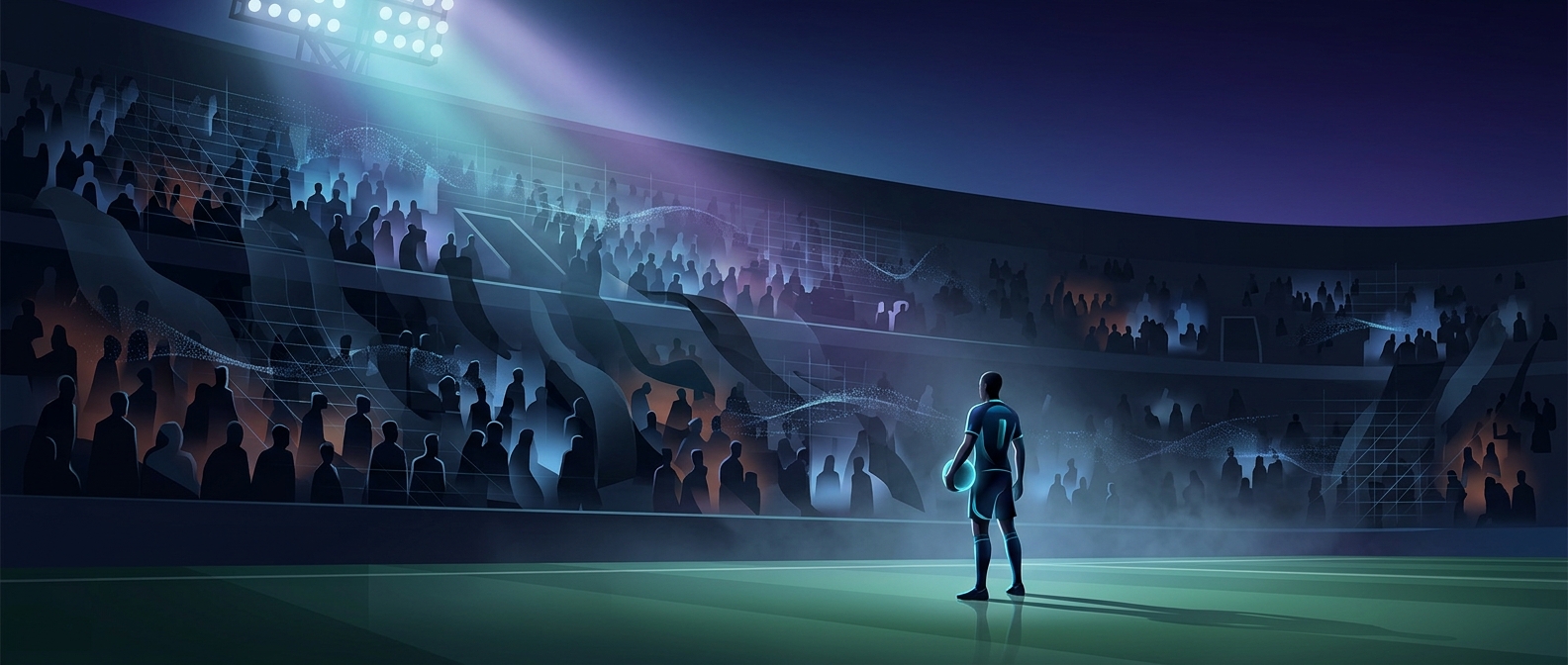
A stadium may appear packed, but the game does not need to build every spectator as a complete, animated person. Nearby figures can be modeled in 3D, while distant ones are represented by flat images—often called billboards—placed in the scene. Some billboards turn to face the camera; others use a small set of views so they still look plausible as the camera moves.
This is a form of level of detail: the game uses simpler representations for objects that occupy fewer pixels on screen. Far away, a person’s face, clothing folds, and individual gestures are too small for most players to make out. A textured shape with a little motion can read as a spectator without the cost of rendering a fully detailed body.
Small figures, multiplied costs
The savings matter because crowds contain so many people. A fully modeled spectator can require geometry, animation, lighting, and sometimes shadows. Repeat that work across thousands of figures and the crowd competes with the players, stadium, and other action for the graphics processor’s time. Simpler representations let the game spend more of its budget on the parts of the scene that are large and easy to notice.
The trick is to hide the simplification. A distant crowd can move in broad waves—raising arms, shifting, or reacting together—rather than giving every person a unique performance. As the camera approaches, the game can replace the flat figures with more detailed models. If that handoff is too abrupt, spectators may appear to pop into shape; if it is well timed, the crowd feels continuous even though its underlying representation has changed.