Rotting food gives digital decay a believable timeline
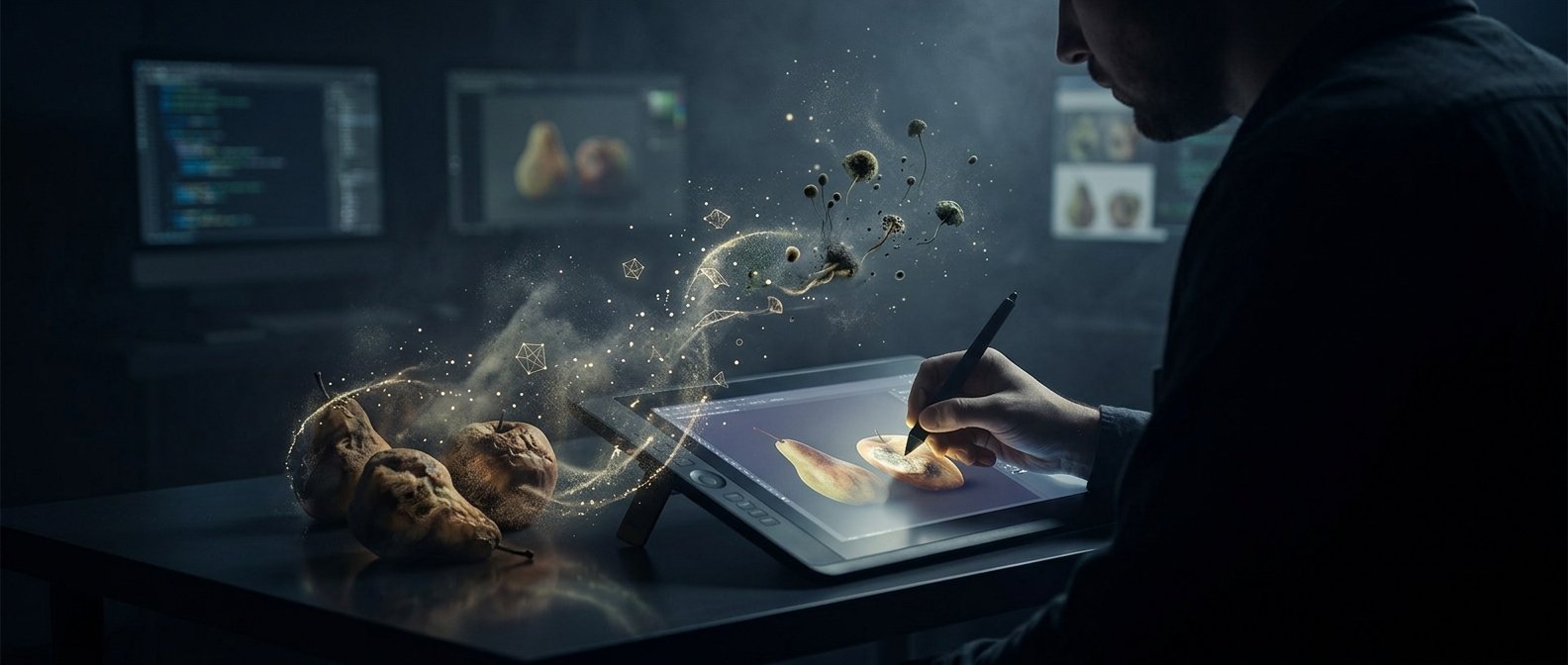
A digital object does not become convincing just because an artist adds a green patch or dark stain. Decay is a sequence: a surface changes unevenly, soft areas collapse, edges discolor, and mold spreads in irregular clusters. Photographs of spoiled food let animators study how those changes build up instead of inventing a single “rotten” look.
The useful detail is the variation
A real apple rarely rots as a neat, evenly colored sphere. Bruises and damaged spots can darken first; mold may appear in separate fuzzy colonies; the skin wrinkles as the flesh loses structure. Meat breaks down differently, with its own shifts in color, surface texture, and shape. These small inconsistencies help artists avoid the clean, repeated patterns that can make computer-generated decay look artificial.
The photographs also capture stages that are hard to hold in memory. Comparing images over time gives an artist a visual guide to what changes first and what follows, useful when building a sequence in which a fresh object gradually becomes spoiled.
Reference is a guide, not a recipe
The goal is not necessarily to reproduce one particular apple or piece of meat exactly. A production may need decay to read clearly on screen, fit a specific lighting setup, or progress at a pace that serves the scene. Artists can borrow the real-world textures and progression, then exaggerate or simplify them for the shot.
That is why a rotting sample can be more useful than a polished reference image: it records not just what decay looks like, but how its messy details accumulate. The result can make a digital transformation feel observed rather than merely decorated.