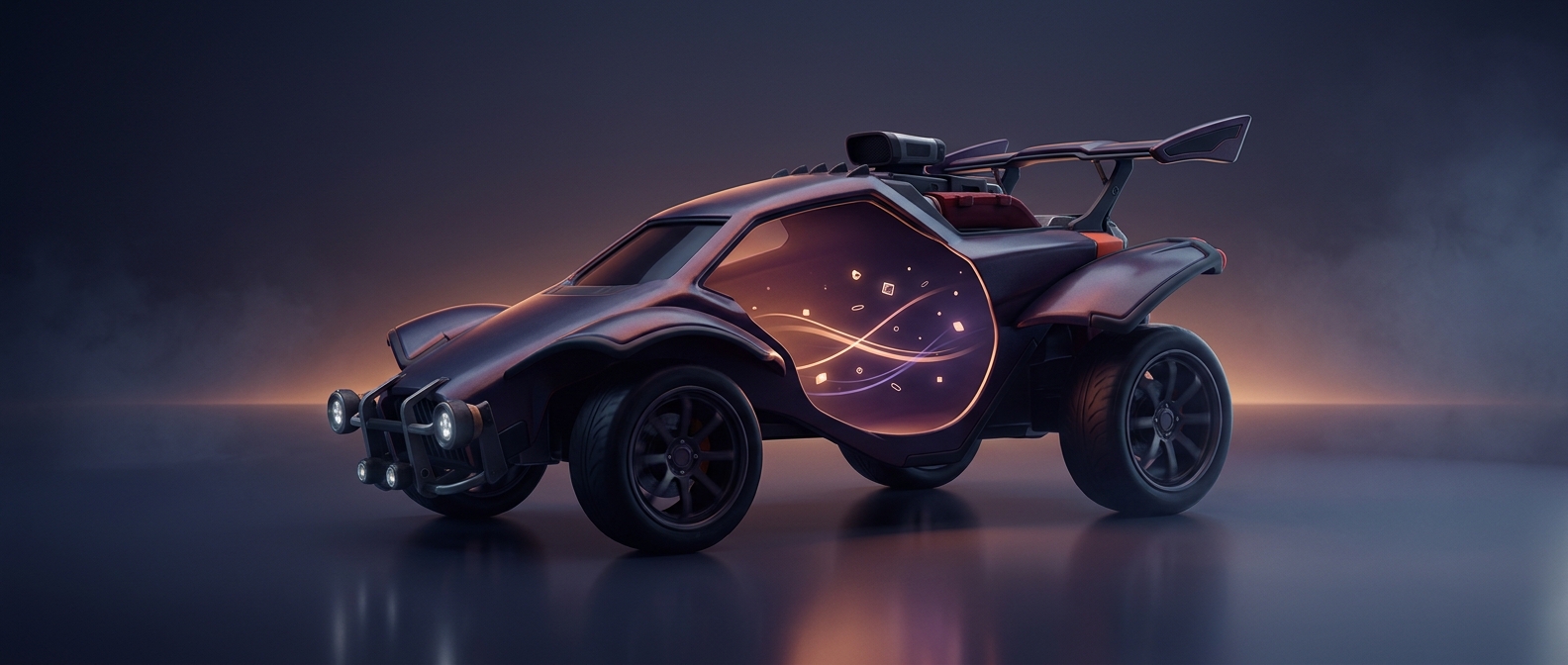
Cars Built for the Ball, Not the Cockpit
In Rocket League, a car behaves less like a vehicle carrying a person and more like a game piece with its own physics. Players steer, jump, flip, and boost the car directly; the game never needs to show a driver reaching for controls or reacting inside the cabin. That keeps attention on the car’s movement and its contact with the ball.
A Clearer View of the Action
A visible driver or steering wheel would add detail without changing what players can do. The camera follows the car from outside, so the important cues are its direction, speed, and orientation—not the position of someone inside it. When a car turns upside down to make a shot or launches into the air, its shape and motion remain easy to read from the stadium.
The empty shell also fits the game’s deliberately uncomplicated premise: these are cars that can leap, fly, and hit a ball, without a human-scale driving scene around them. The result is a vehicle that serves as both player avatar and sports equipment. On the field, the car’s acrobatic movement tells you everything you need to know about who is playing—and what they are trying to do.