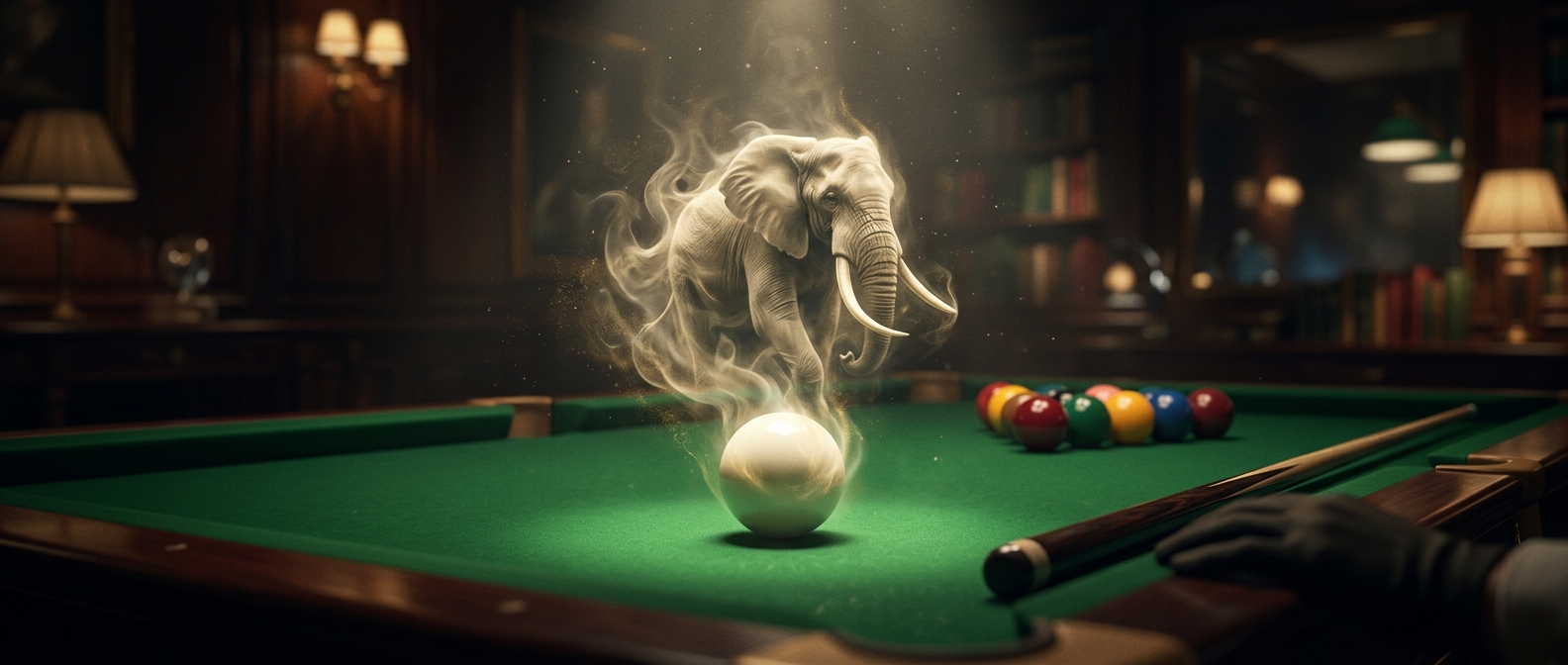
Why ivory worked on a billiard table
A billiard ball has to do more than look polished: it must roll smoothly, keep its shape, and transfer force predictably when it hits another ball. Ivory was hard enough to take a fine polish and dense enough to feel substantial in play. Those qualities made it a useful material in an era before manufacturers had reliable synthetic alternatives.
But ivory was not a uniform, factory-made substance. Its internal structure varied, so turning each ball into a consistent sphere took skilled work—and the finished balls could still differ slightly. In a game where a ball’s speed and direction depend on clean contact, small differences mattered.
The material shaped the game’s future
Ivory’s appeal came with a built-in limit: it depended on elephant tusks, a scarce and increasingly troubling source for a popular pastime. That made billiard-ball production costly and difficult to scale. As manufacturers sought substitutes, they experimented with materials that could be shaped into more consistent balls without relying on ivory.
The change was not simply from an old-fashioned material to a modern one. It was a shift in what ball makers could control. Manufactured materials made it possible to produce larger quantities with more predictable properties—an advantage for both players and the businesses supplying tables and equipment.