A Small Lens, a Big Social Signal
A monocle was practical eyewear, often used to correct vision in just one eye. Unlike spectacles, it had no arms resting over the ears: the lens sat in the eye socket and was held there by pressure from the surrounding muscles. Keeping it in place could make the wearer’s face look deliberately tense or arranged.
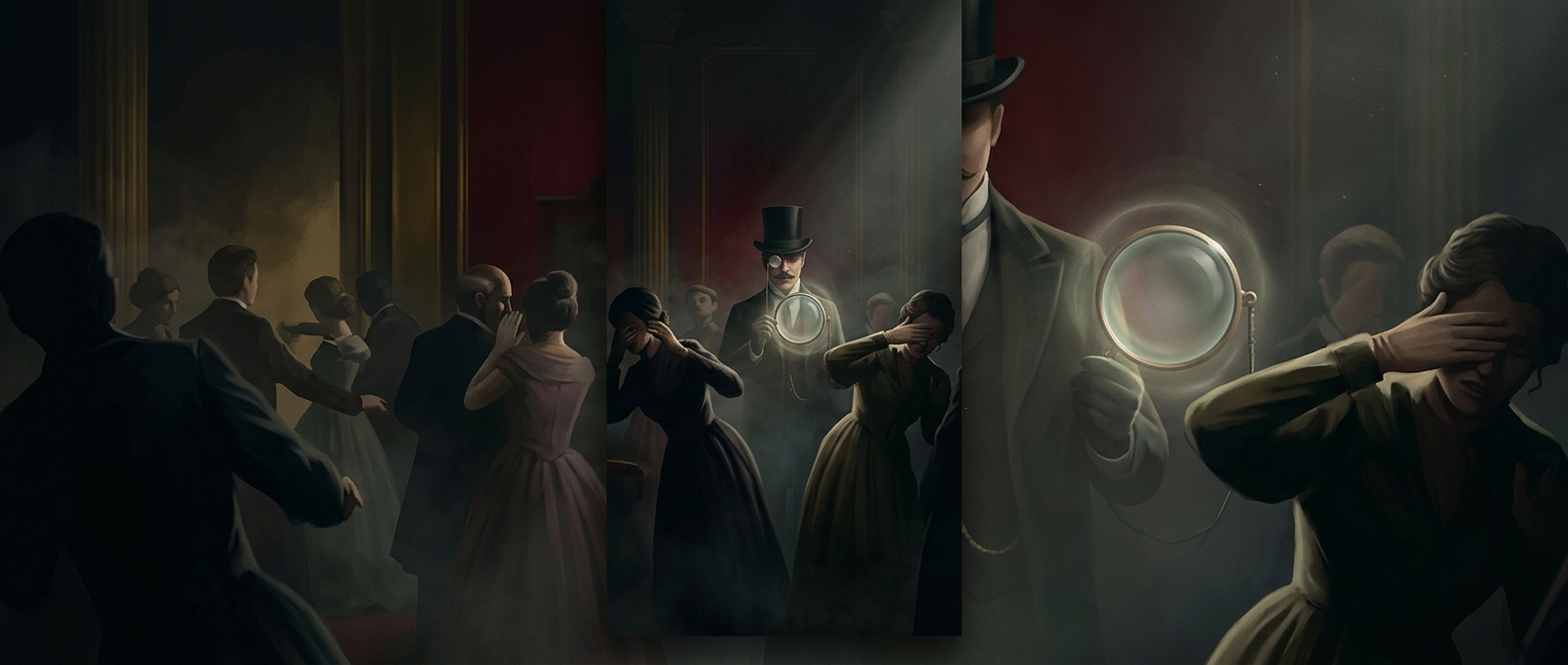
That made the monocle unusually expressive. A wearer might tip their head, narrow one eye, or pause to set the lens before looking at someone. The motion could make an ordinary glance seem like an inspection—as though the wearer were deciding whether the other person measured up.
How the Look Became a Caricature
The monocle also became associated in popular imagery with wealthy, socially powerful men. Cartoonists and performers amplified the association, using the lens as a quick visual shorthand for a snob or an aristocrat who expected deference. The object did not automatically signal contempt; the surrounding posture and the audience’s expectations supplied that meaning.
Because the lens was so conspicuous, it could turn a subtle expression into a public display. What might have been a moment of poor vision or careful adjustment could read as a performance of superiority—especially when paired with a cool, appraising stare.