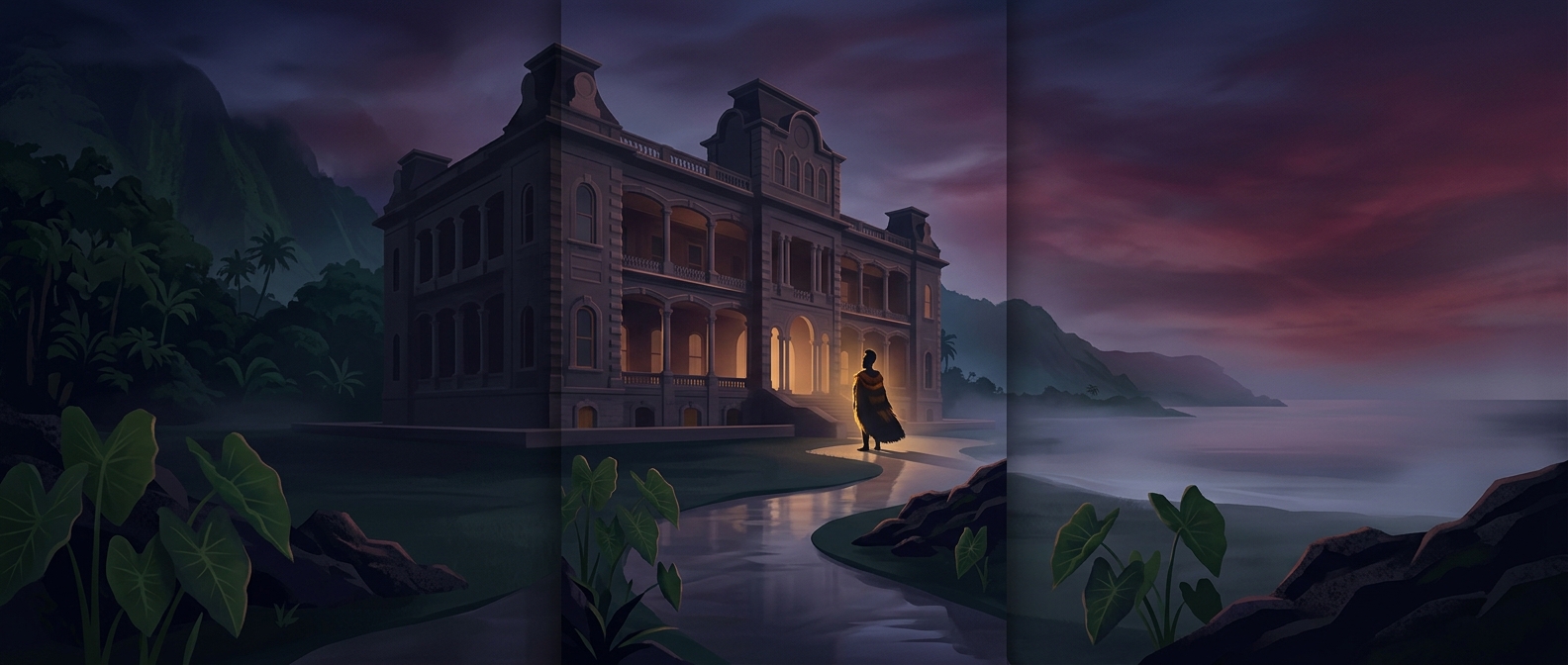
A palace built to run a modern kingdom
Iolani Palace was more than a royal residence: it was a working seat of government for the Kingdom of Hawaii. Its modern systems made a practical statement about how the monarchy wanted the kingdom to function—as a sovereign nation engaged with the technologies of its era, not an isolated island society.
Electric lighting required more than fitting bulbs into rooms. A power source had to feed wiring and fixtures throughout the building, replacing the limits of daylight and flame with light that could be switched on where and when it was needed. For palace staff and officials, that meant a new kind of control over the interior: work and formal events no longer depended as closely on lamps or the setting sun.
Technology as a tool of state
Telephones added another kind of reach. They could carry a message between rooms or locations without waiting for a messenger to cross the grounds or streets. Together, electric light and telephone service changed the palace’s daily operation, while also making modern infrastructure visible to visitors and foreign representatives.
That visibility mattered in a period when Hawaii’s monarchy was conducting diplomacy and managing a changing kingdom. The palace’s technology was not simply a luxury; it was part of the machinery of government and a demonstration of the kingdom’s capacity to adopt new systems. The contrast with the White House is striking because it reverses a familiar assumption about which institutions were first to embrace modern conveniences: in Honolulu, the royal palace was already wired for a new age while the U.S. president’s residence had not yet adopted electric lighting.