From Cosmic Vegetable to a Face You Could Read
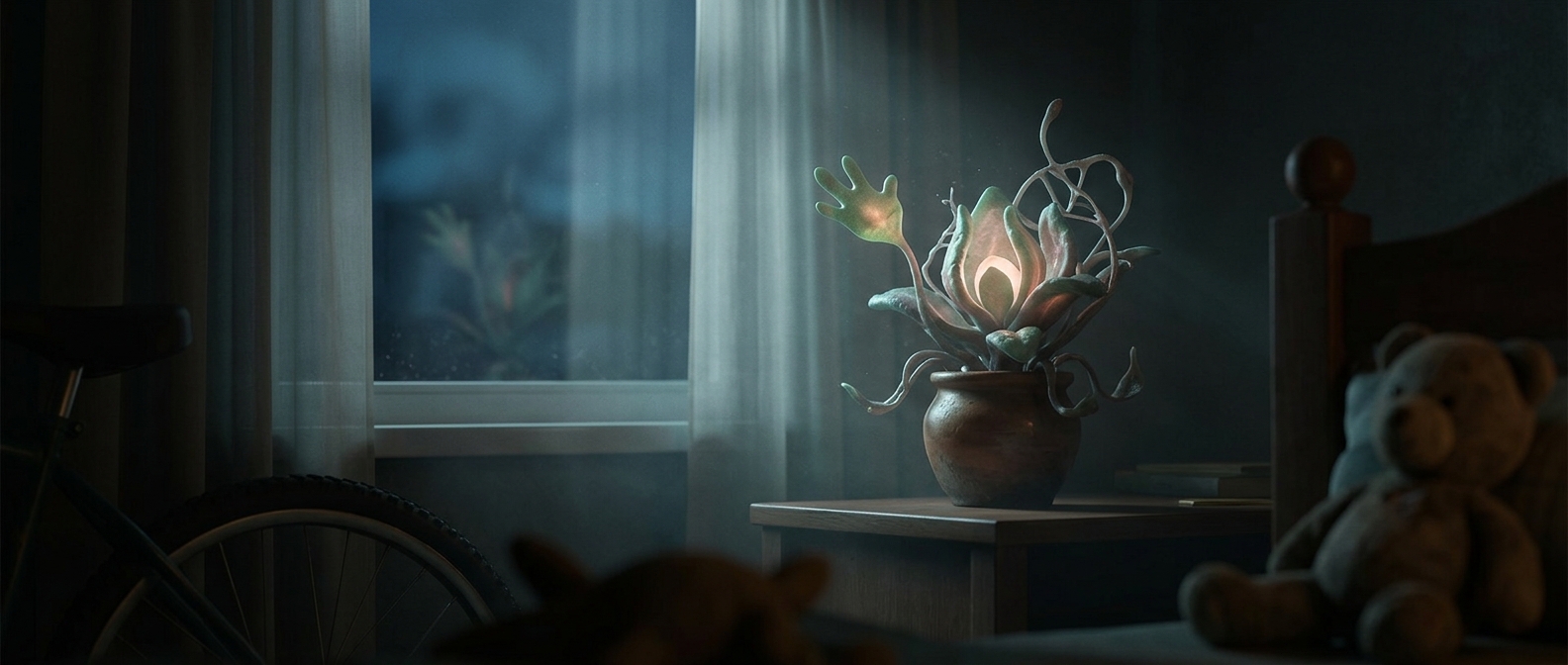
During early development of E.T., Steven Spielberg considered making the visitor an advanced kind of cosmic vegetable. The idea would have pushed the alien toward something radically unlike an animal: a being whose life might not resemble human life at all.
The finished creature took a different route. E.T. has a wrinkled face, a small body, and a glowing finger—features that make him strange, but still legible on screen. A face can turn, droop, or look toward another character; a hand can reach out. Those simple movements let viewers follow a nonhuman character’s feelings without needing him to explain them in words.
The Design Changes the Story’s Emotional Scale
A plantlike visitor could have made the film’s central relationship more abstract: audiences would have had to interpret an unfamiliar form of life before connecting with it. E.T.’s final design instead gives the story a physical point of contact. His glowing finger can become a visible gesture, and his face can register vulnerability, making the alien feel both mysterious and approachable.
That contrast is what makes the discarded idea memorable. The film could have presented extraterrestrial life as something almost impossible to read. Instead, it gave the cosmos a face a child—and an audience—could recognize.