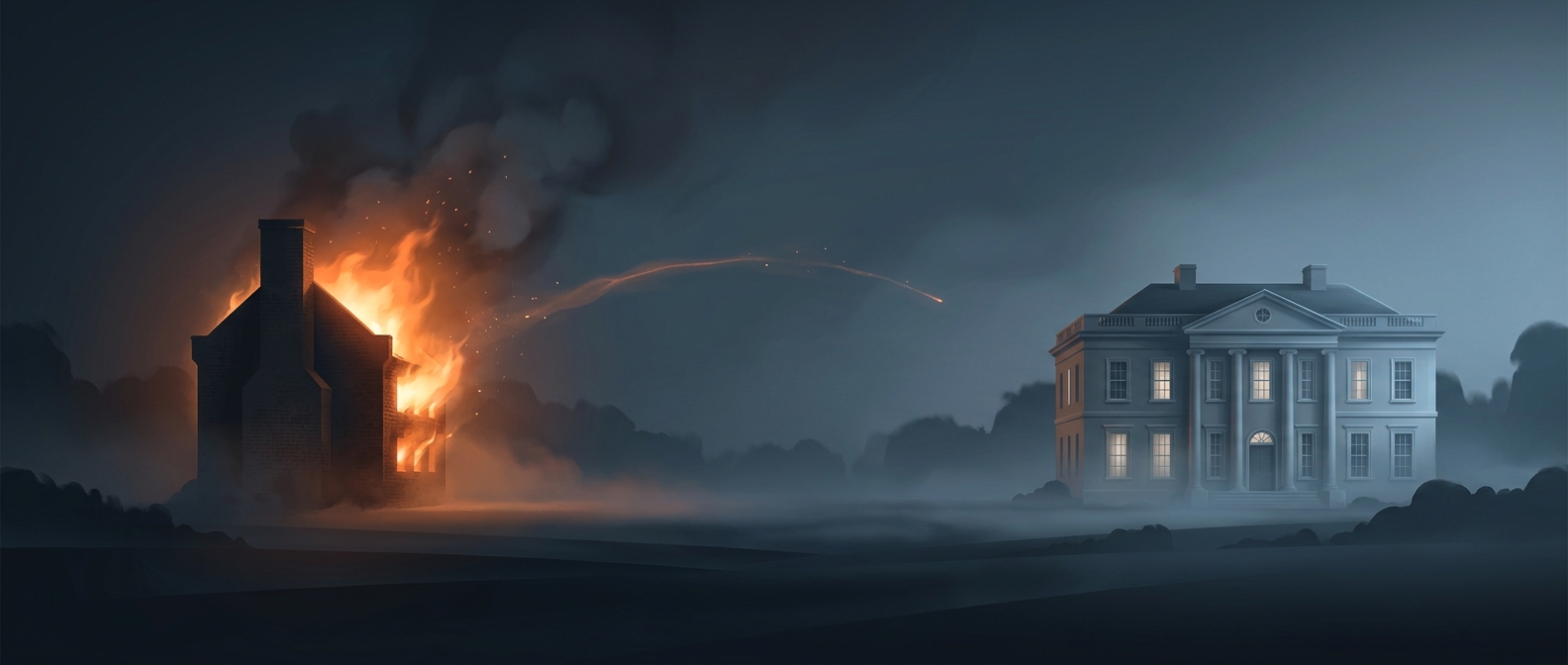
A wall could not contain a kitchen fire
In a house built from timber, thatch, or other combustible materials, the danger was not limited to a cooking flame touching a wall. A hearth or open fire could send sparks onto dry roofing, while heat and flames could ignite nearby wood. Once part of a building caught, its connected beams, walls, and roof gave fire a path through the structure.
Moving the cooking fire into a separate building broke that path. The gap between kitchen and home acted as a firebreak: a space with no continuous wooden structure for flames to follow. If the kitchen burned, the house was less likely to ignite immediately through shared walls or roof timbers.
Separation changed the risk, not the danger
A detached kitchen did not make cooking safe or guarantee that a fire would stay put. Sparks could still reach the house, and burning material or wind could carry fire across the gap. But separating the buildings reduced the chance that an accident at the hearth would spread directly into the place where people slept and stored belongings.
The arrangement also shaped everyday life. Cooking required a walk between buildings, and the kitchen needed tending as its own space. That inconvenience was a practical trade: put the most routine source of indoor flame outside the main house, and a fire in one building might leave the other standing.