When an abstraction could become divine
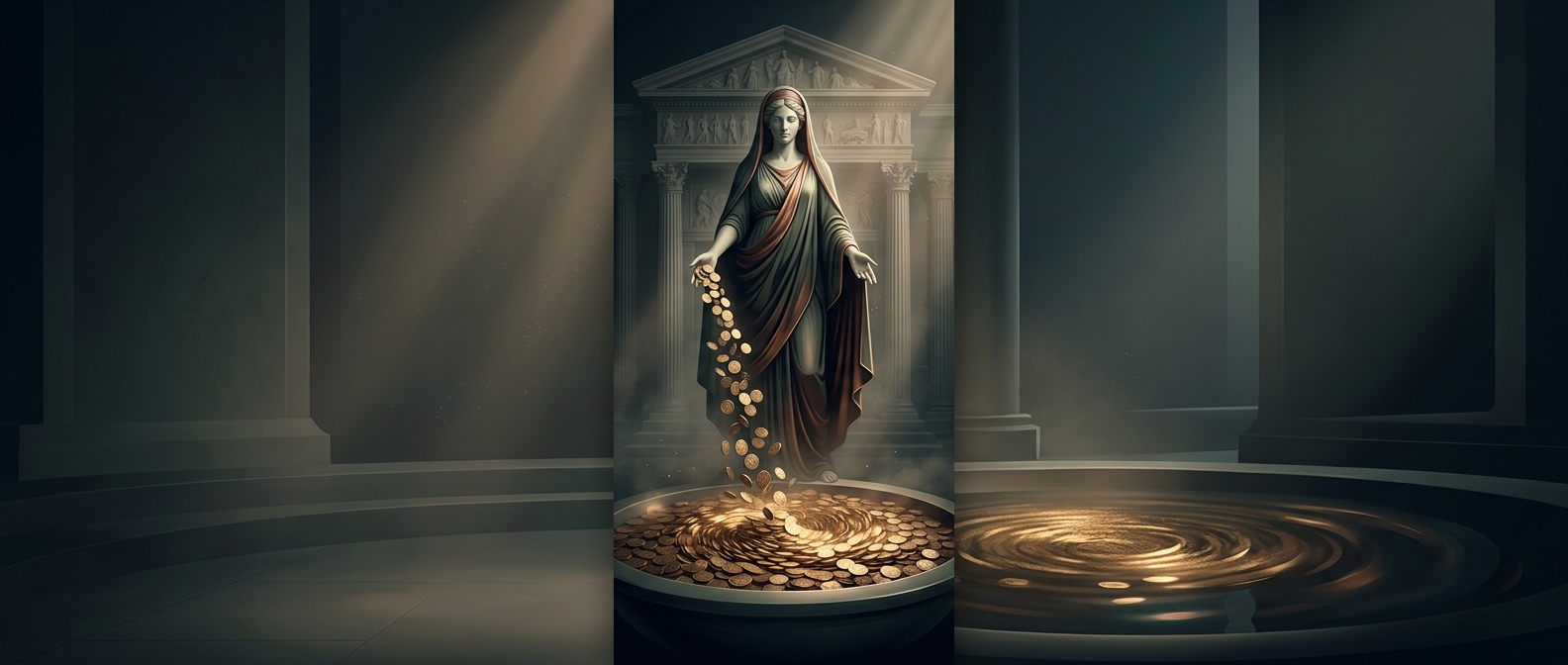
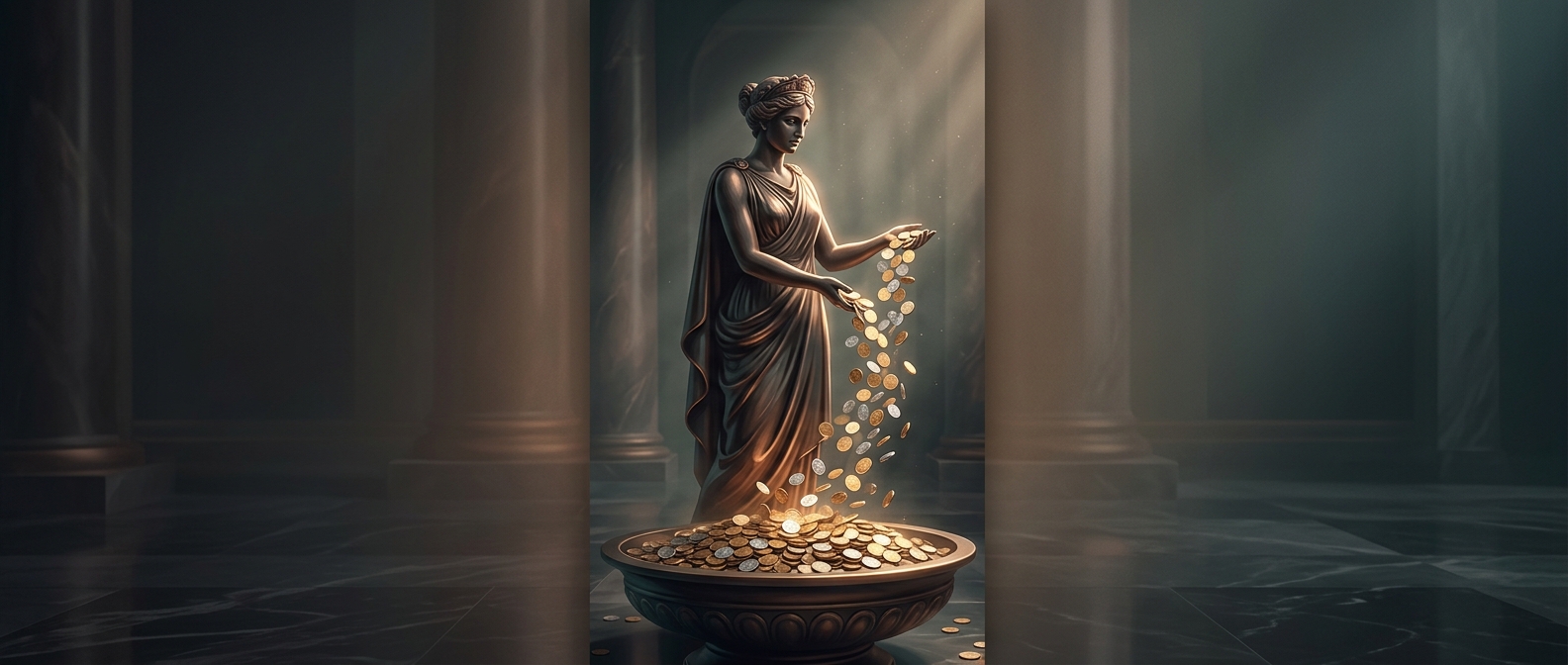
Roman religion included more than gods tied to natural forces or particular places. It could also give a divine identity to an abstract idea: virtues, good fortune, and other powers that shaped daily life. Pecunia belonged to this world of personification. Her name is closely connected to the Latin word pecunia, meaning money or wealth.
That connection matters because money was not simply a pile of coins. It represented the ability to obtain goods, meet obligations, and influence what happened next. To appeal to Pecunia was to treat financial success as something that depended not only on a person’s effort but also on a power beyond their control.
The power behind a payment
Roman money moved through a society of trade, taxes, debts, and public finance. A successful transaction could bring opportunity; a shortage could limit what a household or enterprise could do. Personifying wealth gave that uncertain force a name and a divine character, making it something people could address through religious practice.
The idea is revealing even without imagining money as a modern abstraction detached from everyday life. For Romans, wealth could be both a practical resource and a power worthy of reverence. A payment changed hands; Pecunia gave a name to the larger force that made such changes consequential.