A Mint worker’s eagle became a design model
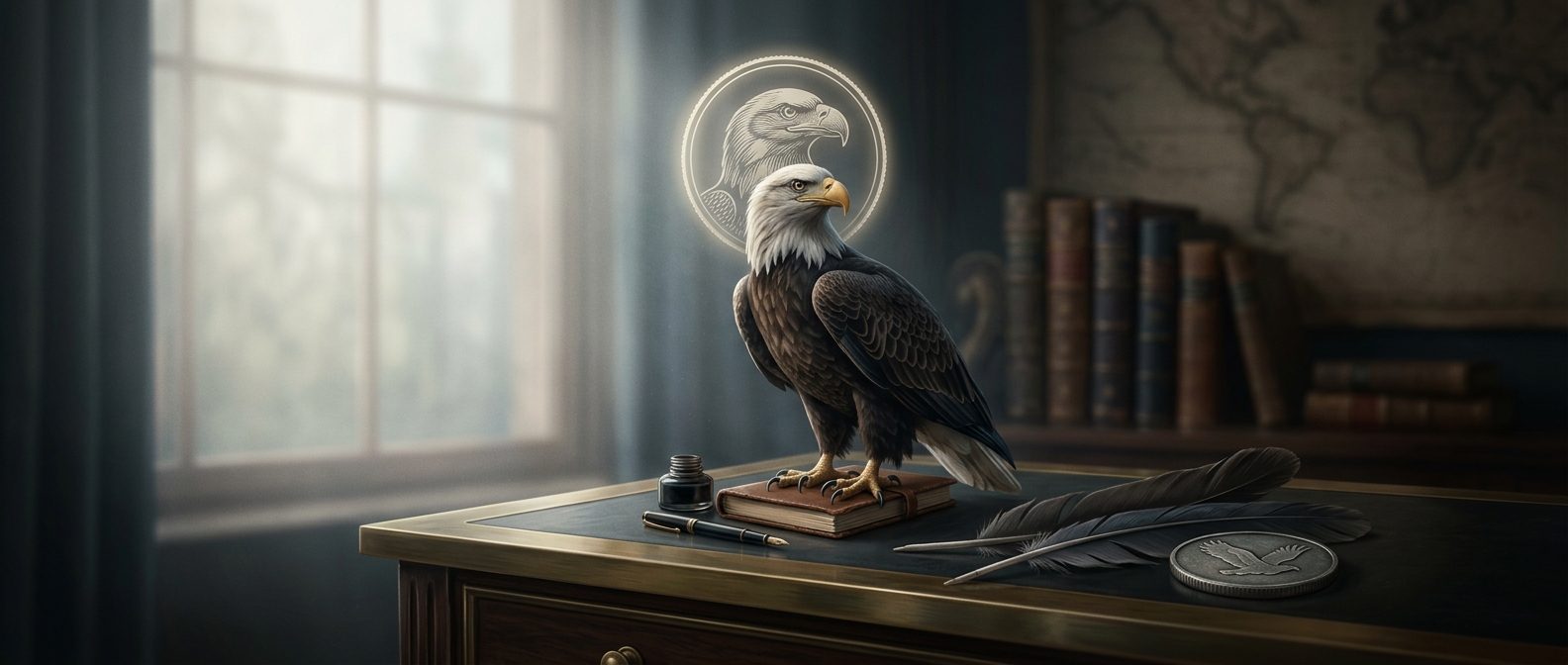
The bald eagle on an early U.S. quarter was not drawn entirely from imagination. At the Philadelphia Mint, a living eagle named Peter had made the building his territory. Workers reportedly used him as a model for the bird they wanted to put on the nation’s coinage.
That choice connected a familiar national symbol to the place where money was made. Instead of relying only on an artist’s idea of an eagle, the Mint had an actual bird nearby to observe. Peter’s presence gave the design a physical reference: the shape and posture of a real animal, rather than a purely decorative emblem.
An accident made the reference permanent
Peter was caught in a coining press and killed. A coining press stamps designs into metal blanks under great force, so an animal caught in its machinery could not survive. Afterward, workers had Peter’s body preserved by taxidermy—prepared and stuffed so it could be kept—and used it as a reference for the eagle design.
The episode gives the quarter’s image an unexpectedly practical origin. A bird that had wandered through the Mint became a model first in life, then in preserved form. The eagle on the coin was meant to stand for the country, but its visual starting point was one particular bird whose daily presence had brought it into the workers’ orbit.