Why the Eye Sits Above an Unfinished Pyramid
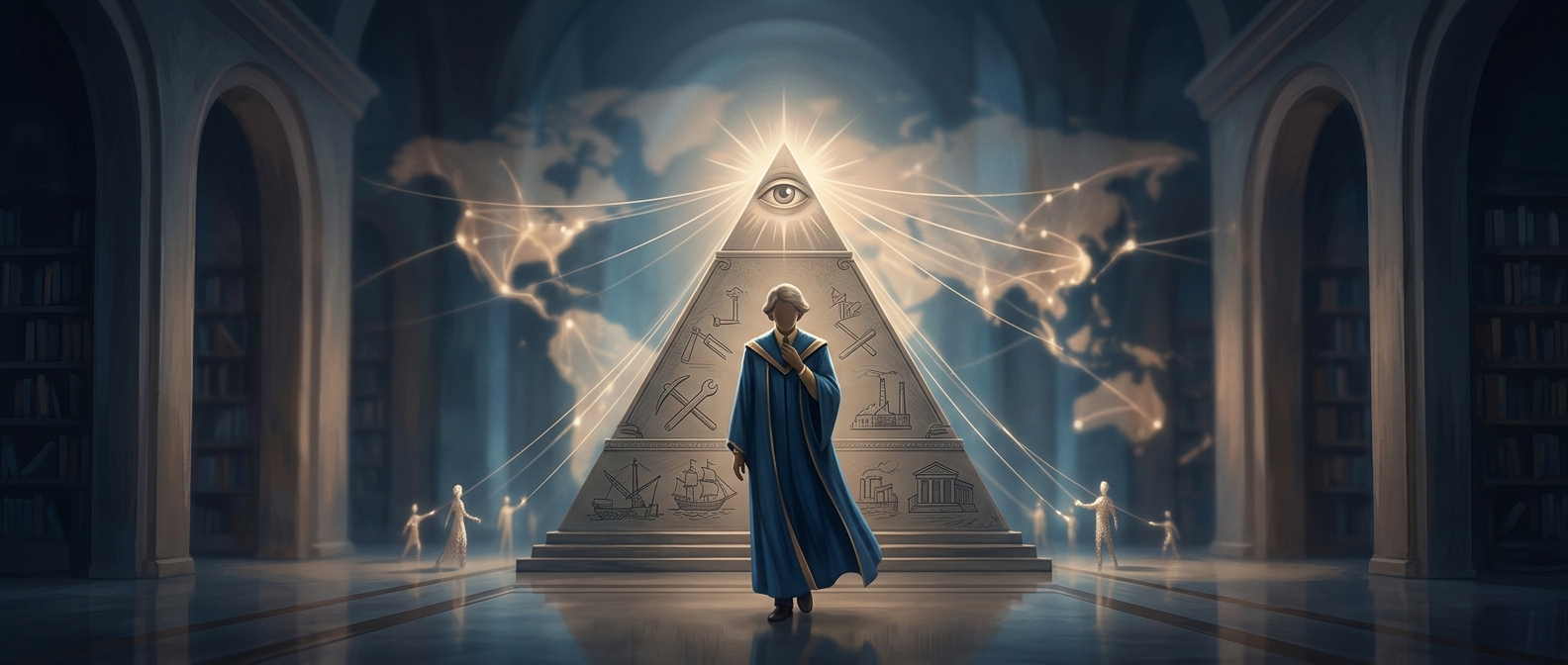
The image is part of the reverse of the Great Seal of the United States, the emblem used to authenticate official government documents. Congress approved the seal in 1782, after years of proposals and revisions. Its designers paired the Eye of Providence with a pyramid whose top is unfinished: the country, newly formed, could be understood as a structure still being built.
The pyramid’s 13 courses refer to the original states. Its broad base suggests durability, while the open top leaves room for the eye to look down on the work below. Together, the elements connect a political project—the creation of a lasting republic—with the idea of divine oversight.
From National Seal to Pocket-Sized Emblem
The seal’s reverse was not always familiar to the public. In 1935, the Treasury placed both sides of the Great Seal on the one-dollar bill, bringing the pyramid and eye into everyday circulation. The design is still there, though many people recognize the eye without knowing it belongs to a larger government emblem.
Two Latin mottos help complete the image. Annuit Coeptis means roughly “He has favored our undertakings,” and Novus Ordo Seclorum means “a new order of the ages.” These phrases frame the eye as a symbol of providence and the pyramid as a symbol of the nation’s continuing project—not as a secret mark, but as an official statement of how the founders’ generation chose to represent the republic.
That distinction matters: the dollar’s eye is inherited civic symbolism, not a claim that the government itself is divine. A design made for a formal seal became one of the country’s most widely seen images simply by being printed on money.