A proposal, not a signing ceremony
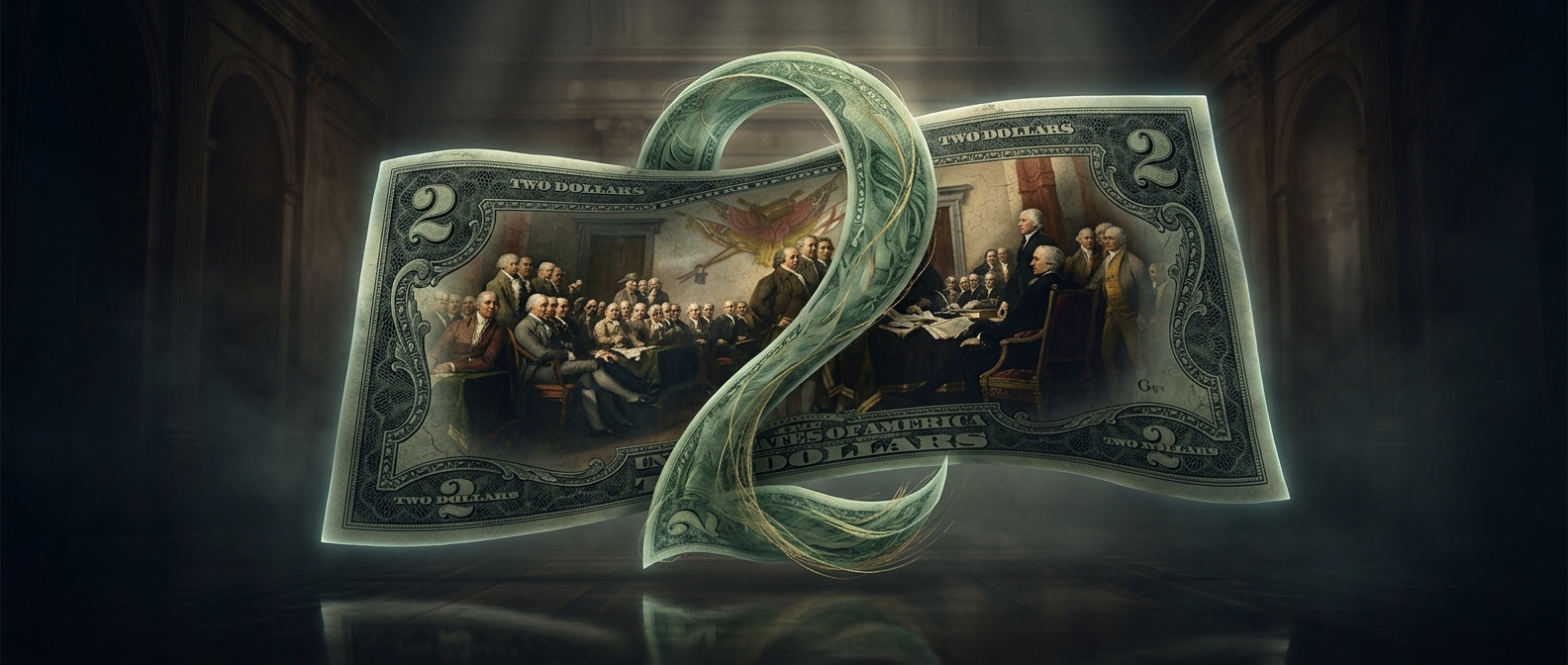
John Trumbull’s painting is often read as a scene of the Declaration being signed. It actually shows a different moment: the committee that drafted the document presenting it to the Second Continental Congress in 1776. The distinction matters. The image captures the political work that came before the famous signatures—the proposal entering a room where representatives could debate and approve it.
Trumbull painted the scene decades later, arranging historical figures in a deliberate group portrait. That gave the image a clear visual story, but not the quality of a snapshot: the figures’ placement serves the composition, and the painting represents a pivotal exchange rather than documenting every detail of one meeting.
From monumental canvas to engraved detail
A banknote cannot reproduce the canvas at its original scale. To put the scene on the $2 bill, engravers had to translate painted forms into fine lines that would remain legible on a small, printed surface. Faces, clothing, and architecture become patterns of light and dark; the broad arrangement does much of the work of identifying the scene.
That change in scale also changes how the image is viewed. In the painting, a viewer can take in a large room and its many figures; on the bill, the scene fits in a hand, inviting a closer look at a moment of collective decision. The tiny reproduction preserves the painting’s central idea—not a room full of signers, but a proposal being placed before Congress.