Alcabitius divides the sky by rising time
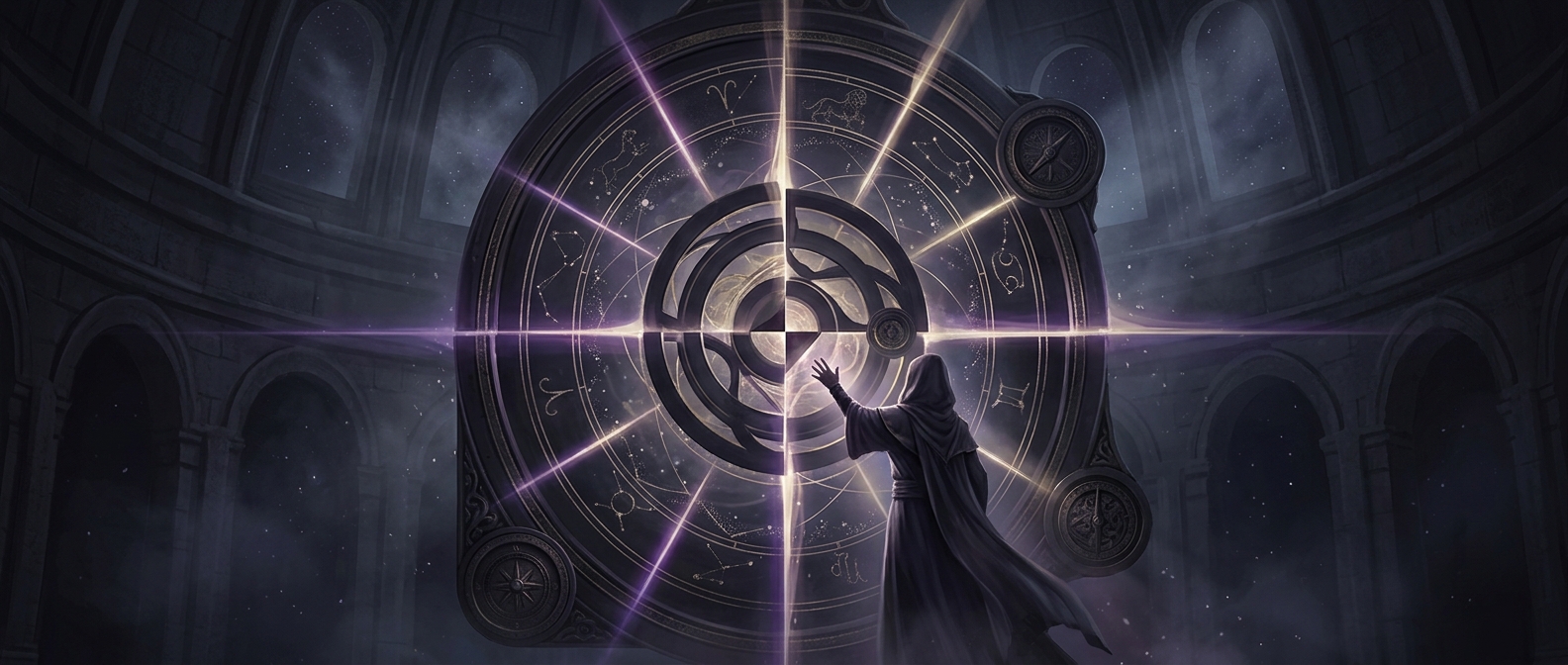
In astrology, a house system is a method for drawing the twelve house boundaries on a birth chart. Alcabitius is a time-based method: rather than dividing the ecliptic—the Sun’s apparent path across the sky—into twelve equal slices, it uses how long parts of the sky take to move between key positions.
The system starts with the chart’s angles, including the Ascendant, the point on the eastern horizon, and the Midheaven, the point highest in the sky. It divides the relevant arcs of apparent daily motion into thirds, then translates those divisions into house cusps, the lines marking where one house ends and another begins. Because the sky’s apparent motion is not evenly represented by equal stretches along the ecliptic, the resulting houses can vary in size.
Why the chart’s structure changes
A planet’s position in the sky does not change when a different house system is chosen. What changes is the set of boundaries used to assign that planet to a house. A planet near a cusp may therefore fall into a different house in an Alcabitius chart than in a chart drawn with another method.
That makes the choice consequential within astrological interpretation: houses are used to organize topics such as relationships, work, and home life, so shifting a planet’s house changes where an astrologer places emphasis. Alcabitius offers one traditional way to structure those topics, not a different sky.